
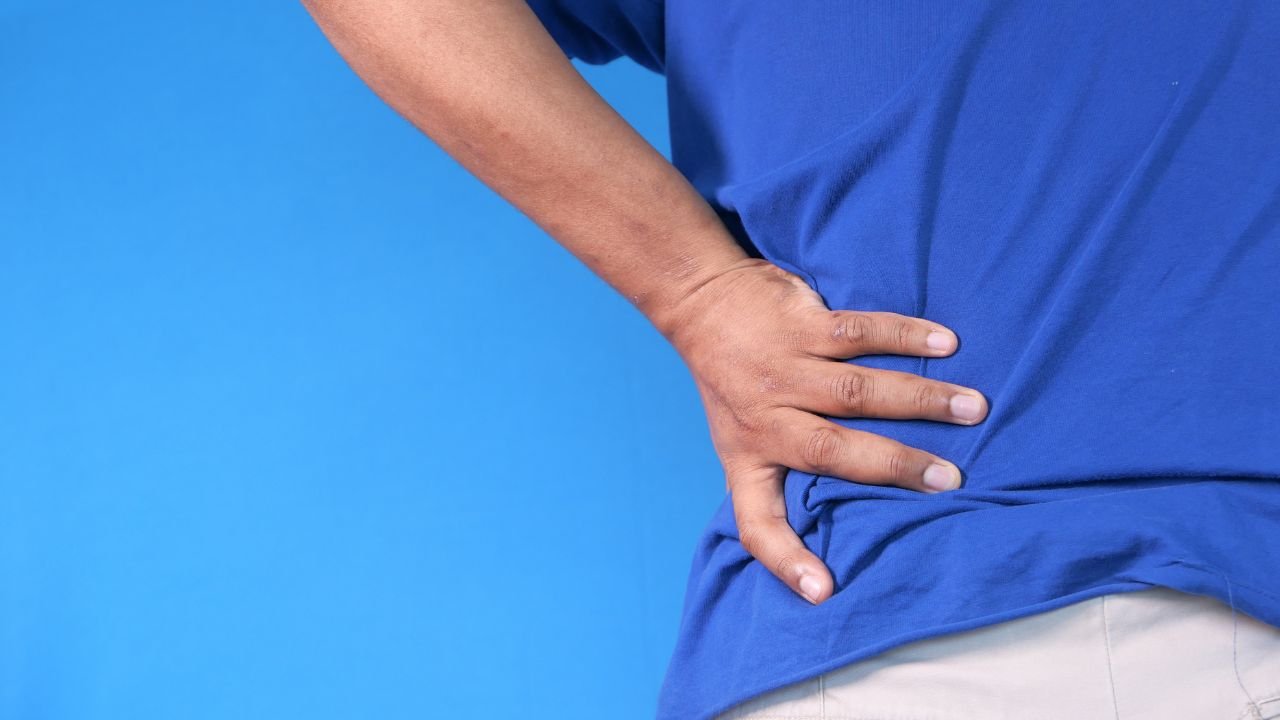
Lower back spasms are sudden, involuntary muscle contractions that can stop you mid-movement and create intense discomfort. These contractions occur when your back muscles tighten protectively in response to injury, inflammation, or structural problems in your spine.
You might be told that muscle spasms are just part of getting older or that you need to live with them. That’s not true. Pain specialists address lower back spasms by identifying what’s actually causing them, not just treating the symptom. Through systematic evaluation and evidence-based treatment, the goal is to restore your function and help you return to the activities you enjoy.
Key Takeaways:
- Lower back spasms are involuntary muscle contractions triggered by spinal conditions like disc herniation, stenosis, or muscle strain
- Adults aged 65 and over report the highest back pain prevalence at 45.6%, though active individuals of all ages can experience acute spasms
- Diagnosis requires correlating imaging findings with clinical symptoms to identify the actual source of muscle spasms
- Regenerative treatments like PRP therapy and advanced laser therapy support natural healing without surgery or long-term medication
- Minimally invasive procedures show 92% positive outcomes when appropriate, but most patients respond well to conservative care
What Causes Lower Back Muscle Spasms?
Muscle spasm causes vary, but they share a common pattern: your nervous system perceives a threat and contracts muscles protectively to prevent further damage. Understanding what triggers this response helps determine the right treatment approach.
Spinal stenosis narrows the spinal canal and compresses nerve roots. This age-related condition creates inflammation that prompts your muscles to contract around affected vertebral segments. The compression irritates nerves, and your body responds by tightening muscles to stabilize the area.
Degenerative disc disease develops through progressive breakdown of the cushioning between your vertebrae. As discs lose height and hydration, they provide less shock absorption. Bulging or herniated discs can displace material outward, pressing on nerves and triggering involuntary muscle responses throughout your lower back.
Acute muscle strain from lifting, twisting, or sudden movements can tear muscle fibers. Your body responds to this micro-trauma with protective spasms that restrict movement around the injured area. Even minor strains trigger this response if the injury affects stabilizing muscles.
Facet joint inflammation develops when the small joints along your spine become irritated or arthritic. These joints guide spinal movement, and when they’re inflamed, surrounding muscles contract to limit motion and protect the joint.
How Do Muscle Spasms Affect Your Spinal Health?
Muscle spasms create a cycle where protective contractions actually increase pressure on the structures they’re trying to protect. This added compression worsens inflammation and nerve irritation, which then perpetuates more spasm responses.
When spasms persist, you naturally alter how you move to avoid pain. You might shift your weight, change your gait, or avoid certain positions entirely. These compensatory movement patterns place abnormal stress on adjacent spinal segments, potentially accelerating degenerative changes over time.
Chronic spasms also weaken the affected muscles. While the muscle is contracting involuntarily, it’s not functioning normally. This creates an imbalance where some muscles become tight, and others become weak, a pattern that increases your risk of future injury.
What Symptoms Signal You Need Specialist Care?
Sudden onset of sharp pain and muscle tightness characterizes lower back spasms. You might describe it as a locked sensation that restricts your ability to bend forward, twist, or even stand upright comfortably. The muscle feels rock-hard when you touch it.
Radiating pain into your buttocks or legs indicates nerve involvement beyond simple muscle contraction. This suggests the spasm is secondary to nerve compression from a disc herniation or stenosis. If you experience numbness, tingling, or weakness along with the spasm, that’s a signal to see a specialist promptly.
Spasms that don’t improve with rest and over-the-counter medication within 48-72 hours warrant professional evaluation. While acute spasms often resolve on their own, persistent symptoms suggest an underlying condition that needs to be addressed.
Recurrent spasms, where you experience repeated episodes over weeks or months, indicate a pattern that requires investigation. It’s important to get answers to your common questions about back pain to understand what’s causing the cycle to repeat.
Who Is Most Likely To Experience Lower Back Spasms?
Back pain prevalence data shows that 39.0% of adults aged 18 and over experienced back muscle pain within the past three months. Individual susceptibility varies based on age, gender, lifestyle factors, and activity level.
Adults aged 65 and over report the highest back pain prevalence at 45.6% due to cumulative spinal degeneration. Those aged 45-64 follow closely at 44.3%, reflecting the onset of degenerative disc changes that make muscles more prone to protective spasms.
Women experience back pain at 40.6% compared to men at 37.2%. Hormonal factors, pregnancy history, and differences in muscle mass contribute to this gender disparity. Women may also experience spasms related to pelvic floor dysfunction that refers pain to the lower back.
Active individuals, golfers, pickleball players, weightlifters, hikers, face unique spasm triggers. Repetitive rotation during golf swings, quick lateral movements in court sports, or heavy lifting can all strain back muscles. The good news: these 5 ways to prevent back pain are particularly effective for athletes and active adults.
Sedentary work environments increase spasm risk by weakening the core muscles that support your lumbar spine. Prolonged sitting creates sustained disc pressure that can trigger protective muscle contractions. Heavy manual labor and repetitive lifting place direct mechanical stress on spinal structures, increasing inflammation and micro-trauma that predispose you to acute spasm episodes.
Rural adults report back pain at 42.8%, higher than the 37.3% observed in large metropolitan areas. Limited access to preventive care and higher rates of physically demanding occupations contribute to this difference.
How Do Pain Specialists Diagnose What’s Causing Your Spasms?
Pain specialists begin with a comprehensive clinical evaluation that includes your symptom history, physical examination, and functional assessment. The goal is to understand not just where it hurts, but what triggers your spasms, what makes them better or worse, and how they’re affecting your daily life.
Accurate diagnosis requires distinguishing primary muscle spasms, where the muscle itself is injured, from secondary responses to underlying spinal pathology. This differentiation is critical because it completely changes the treatment approach. Treating a muscle spasm caused by nerve compression requires addressing the nerve, not just relaxing the muscle.
Diagnostic Tools Include:
Range-of-motion testing reveals which movements trigger spasms and identifies restrictions. Neurological examination checks reflexes, strength, and sensation to identify affected nerve roots. These clinical findings guide imaging decisions.
MRI imaging provides detailed visualization of soft tissue structures, including discs, ligaments, nerves, and muscle. This reveals herniated discs, spinal stenosis, or ligament injuries that might be causing protective muscle spasms.
X-rays show bone alignment, vertebral spacing, and degenerative changes. While X-rays don’t visualize muscles directly, they reveal structural abnormalities that contribute to muscle spasm. CT scans offer additional detail when bony abnormalities require closer evaluation.
The critical step is anatomic correlation, ensuring that imaging findings match your specific symptom pattern and distribution. A herniated disc visible on MRI must correspond to the nerve root producing your pain and spasm location. This correlation process prevents treating incidental findings that aren’t causing your current symptoms.
Electrodiagnostic studies help identify nerve damage when clinical examination suggests radiculopathy beyond simple spasm. EMG and nerve conduction studies measure electrical activity and transmission speed through affected nerve pathways. These tests confirm whether nerve compression is contributing to your muscle spasms.
What Conservative Treatments Provide Relief?
Conservative management forms the foundation for treating most lower back spasms without invasive intervention. This approach prioritizes active therapies that restore function rather than just passive symptom relief.
Physical therapy protocols address muscle imbalances and movement dysfunction contributing to spasm cycles. Therapeutic exercises strengthen core stabilizers and improve flexibility to reduce stress on your spine. Manual therapy techniques release muscle tension and restore normal joint mechanics. The importance of physical therapy lies in teaching your body new movement patterns that prevent future spasms.
Choose physical therapy if: You have recurring spasms, movement restrictions, or muscle imbalances. PT is most effective when started early, before compensatory patterns become ingrained.
Choose medication first when: You’re experiencing an acute spasm episode that prevents you from participating in physical therapy. Short-term medication use supports active recovery.
NSAIDs reduce inflammation around irritated spinal structures that trigger protective muscle contractions. Muscle relaxants directly decrease spasm intensity and allow you to move more comfortably. Pain specialists avoid long-term muscle relaxant prescriptions due to dependency risks and diminishing effectiveness. The goal is short-term relief that enables you to engage in rehabilitation.
Heat therapy increases blood flow to spasming muscles and reduces pain signals. Ice therapy controls inflammation when acute injury has occurred. Alternating heat and ice can provide relief during acute episodes.
Activity modification doesn’t mean complete bed rest. In fact, prolonged bed rest can weaken muscles and worsen outcomes. Instead, you modify activities to avoid triggering movements while staying as active as possible within your pain tolerance.
When Should You Consider Interventional Treatments?
Interventional treatments become options when conservative care fails to provide adequate relief techniques after 6-12 weeks of consistent therapy. These procedures target the underlying source of muscle spasms rather than just the muscle itself.
Epidural steroid injections in Scottsdale deliver anti-inflammatory medication directly to compressed nerve roots. When a herniated disc or stenosis is causing nerve inflammation that triggers protective muscle spasms, reducing that nerve inflammation often resolves the spasms. The injection provides both diagnostic information, if your spasms improve, it confirms the nerve was the source, and therapeutic benefit.
Facet blocks target spinal joint inflammation when these structures contribute to muscle spasms. The facet joints guide spinal movement, and when they’re arthritic or inflamed, surrounding muscles contract protectively. A diagnostic facet block confirms the joint as the pain source before considering longer-term treatments.
Trigger point injection therapy addresses persistent muscle knots that perpetuate spasm cycles. These injections release focal areas of muscle tension and can break the protective spasm pattern, especially when combined with physical therapy.
Choose interventional treatments when: Conservative care hasn’t provided sufficient relief after 8-12 weeks, imaging shows a clear structural cause for your spasms, or spasms significantly limit your daily activities despite medication and therapy.
When interventional treatments aren’t appropriate: If imaging doesn’t correlate with your symptoms, if you haven’t completed a course of physical therapy, or if your spasms respond well to conservative care.
How Does Regenerative Medicine Address The Root Cause?
Regenerative medicine represents a different paradigm, supporting your body’s natural healing capacity rather than just managing symptoms. For many patients with lower back spasms caused by degenerative disc disease or chronic ligament injuries, regenerative treatments offer pain specialist solutions that address the underlying tissue damage.
Platelet-Rich Plasma (PRP) therapy concentrates healing factors from your own blood to support tissue repair in damaged discs, ligaments, or tendons. When spasms result from chronic instability or tissue damage, PRP therapy helps strengthen the affected structures. This reduces the stimulus for protective muscle contractions.
For patients with significant disc degeneration or chronic pain unresponsive to other treatments, advanced regenerative options provide alternatives to surgery. These therapies work with your body’s natural healing mechanisms to support tissue repair and reduce inflammation at the source.
MLS M7 Laser therapy offers a non-invasive approach to accelerate healing and reduce inflammation. This advanced laser technology delivers specific wavelengths of light energy deep into affected tissues, stimulating cellular repair and reducing the inflammation that triggers muscle spasms. Patients often experience reduced pain and improved mobility within just a few sessions, without medications or injections.
Choose regenerative medicine when: Your spasms result from chronic degenerative changes, you want to avoid surgery, you’ve exhausted conservative options but aren’t ready for invasive procedures, or you’re looking for treatments that support long-term healing rather than temporary relief.
The advantage of regenerative approaches is that they address the underlying tissue damage causing protective spasms rather than just suppressing the spasm itself. Back pain treatment options in Scottsdale include both conservative and regenerative therapies tailored to your specific condition.
When Is Surgery Actually Necessary?
Persistent symptoms despite comprehensive conservative and regenerative treatment indicate structural problems that may require surgical correction. Pain specialists recommend advanced intervention when quality of life remains significantly impaired after exhausting appropriate non-operative options.
The decision to proceed with surgery requires documented correlation between imaging findings and clinical symptoms. Timing influences outcomes, early appropriate intervention shows better results than prolonged delays when surgery is truly indicated.
Minimally Invasive Spine Surgery (MISS) reduces tissue damage compared to traditional open approaches through smaller incisions and specialized instruments. A multi-center study found 92% of MISS patients reported positive outcomes. Hospital stays average 2.8 days for minimally invasive procedures versus longer recovery periods with open surgery.
Microdiscectomy removes herniated disc material compressing nerves and shows 84% good to excellent outcomes. This targeted approach relieves pressure while preserving disc structure and spinal stability. When a clear disc herniation is causing nerve compression and protective muscle spasms that don’t respond to conservative care, microdiscectomy can provide definitive relief.
Laminectomy decompresses the spinal canal with success rates between 71-90% for stenosis-related symptoms. For patients with severe spinal stenosis causing chronic nerve compression and muscle spasms, removing the bone compressing the nerves often resolves the protective muscle response.
Surgery is appropriate when: Imaging clearly correlates with symptoms, conservative and regenerative treatments have been exhausted, muscle spasms result from structural compression requiring decompression, or quality of life is significantly impaired despite appropriate non-surgical care.
Surgery is not appropriate when: Spasms respond to conservative care, imaging findings don’t match symptom patterns, you haven’t completed adequate physical therapy, or the risk-benefit analysis doesn’t support intervention.
How Do Your Preferences Shape Your Treatment Plan?
Your values and priorities shape treatment selection within evidence-based options for managing lower back spasms. Individual willingness to accept trade-offs between side effects, recovery time, and symptom relief guides the decision-making process.
The most common patient concerns include recovery time affecting career and family obligations, cost and insurance coverage, and fear of complications or failed treatment. Pain specialists use a collaborative framework that balances clinical recommendations with your lifestyle needs and goals.
The shared decision-making model requires exhausting non-operative options before considering surgical intervention. Your pain specialist must demonstrate strong correlation between imaging findings and clinical symptoms before recommending invasive procedures. Quality of life impact assessment ensures recommended treatments address limitations that significantly impair your daily activities.
What matters most to you?
If avoiding downtime is your priority, regenerative treatments and laser therapy offer relief with minimal interruption to your schedule. If you’re seeking the most definitive solution and conservative care has failed, minimally invasive surgery may align better with your goals.
If cost is a concern, understand that pain management Scottsdale practices vary in their approach. Some focus on insurance-based care with multiple injections. Others, like practices emphasizing regenerative medicine, take a cash-pay approach focused on treatments that support long-term healing rather than repeated interventions.
What’s Changing In How We Treat Lower Back Spasms?
Technological advancement and evidence-based protocols continue to reshape treatment approaches for lower back spasms. The shift toward minimally invasive techniques reflects improved outcomes with reduced recovery burden.
The MISS devices market, valued at $1.38 billion in 2024, will grow to $2.22 billion by 2034, reflecting a 5.1% compound annual growth rate. This expansion is driven by increasing adoption based on superior patient outcomes and faster recovery compared to traditional surgery.
Robotic-assisted surgery and navigation systems improve precision while reducing tissue trauma during spinal procedures. Advanced imaging modalities enable real-time visualization during interventional procedures for improved accuracy and safety.
The integration of regenerative medicine into pain management represents a fundamental shift from symptom management to supporting natural healing. Rather than focusing solely on blocking pain signals or performing decompressive surgery, regenerative approaches address tissue damage at the cellular level.
Multidisciplinary pain programs address complex cases through combined interventional and rehabilitative approaches. Teams include pain specialists, physical therapists, and other practitioners working collaboratively to address physical, functional, and lifestyle factors contributing to chronic muscle spasms.
Your Next Steps: Moving From Spasm To Strength
Lower back spasms don’t have to define your limitations. Pain specialists employ systematic diagnostic protocols to identify what’s actually causing your muscle contractions before recommending treatment. This evidence-based approach prioritizes conservative care and regenerative options while maintaining surgical solutions for appropriate candidates.
Successful outcomes require your participation in rehabilitation and lifestyle modification beyond passive interventions. Your first pain management consultation in Scottsdale will include a comprehensive evaluation of your specific symptoms, functional limitations, and treatment goals.
The integration of conservative therapies, regenerative medicine, and minimally invasive procedures provides multiple pathways to relief. Your pain specialist customizes treatment intensity based on symptom severity, functional limitation, and response to initial interventions.
Early specialist evaluation prevents progression of underlying conditions while maximizing the effectiveness of less invasive treatment options. You don’t have to accept chronic muscle spasms as an inevitable part of aging or activity.
If persistent lower back spasms are limiting your daily activities, whether that’s your golf game, your ability to sit through work meetings, or simply picking up your grandchildren, pain specialists can help identify the root cause and develop a personalized treatment plan. Contact us to schedule a comprehensive evaluation and start your path from spasm to strength.


