
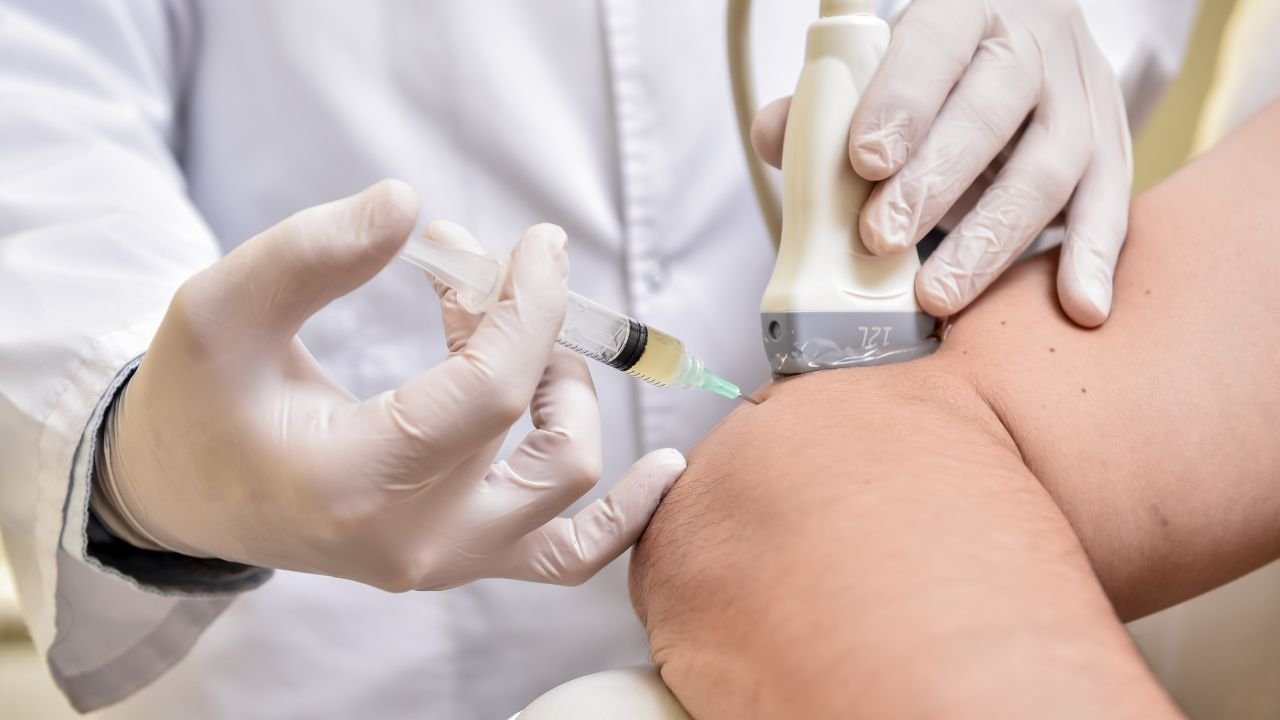
Modern pain management in Scottsdale has evolved beyond traditional approaches relying on anatomical landmarks alone. Image-guided techniques allow physicians to visualize internal structures in real time, dramatically improving precision and patient outcomes.
This advancement addresses critical gaps in spine care methods where blind injection risks previously resulted in variable accuracy and preventable complications. Studies demonstrate that accuracy in pain treatment directly correlates with long-term relief, reduced retreatment rates, and lower complication incidence.
Choose ultrasound guided injections if: You want confirmed needle placement before medication delivery, seek to minimize complication risk, or have complex anatomy from prior surgery.
Choose blind injections when: Image guidance is unavailable in your area and the benefits of treatment outweigh the accuracy limitations of landmark-based techniques.
Key Takeaways:
- Ultrasound-guided injections achieve over 95% accuracy across all anatomical approaches compared to 77-95% for blind injections
- Image guidance reduces retreatment odds by 55% within one year through precise medication delivery
- Blind injection risks include spinal cord injury, epidural hematoma, and severe neurological complications
- Real-time visualization allows physicians to avoid blood vessels and nerves, preventing catastrophic injuries
- Ultrasound-guided procedures demonstrate superior cost-efficiency when accounting for reduced retreatment rates and complications
What Are Ultrasound-Guided And Blind Injections?
Understanding The Fundamental Difference
Ultrasound-guided injections use real-time imaging to visualize internal structures during needle placement. The physician watches a monitor displaying continuous images of soft tissues, joints, and nerves while advancing the needle. This visualization enables accurate identification of target areas and immediate avoidance of neurovascular structures.
Blind injections rely solely on palpating anatomical landmarks without visual confirmation of needle position. The practitioner depends on anatomical knowledge and tactile feedback to estimate correct placement. No confirmation verifies medication delivery during or after the injection.
How Does Ultrasound Guidance Work?
Ultrasound technology emits high-frequency sound waves that create real-time images of internal structures. The ultrasound probe rests on the skin surface, transmitting continuous imaging as the procedure progresses. Physicians can adjust the needle trajectory immediately if anatomical variations or unexpected structures appear.
The display shows tissue layers, fluid collections, and vascular structures as the needle advances. This dynamic feedback distinguishes safer injection techniques from static landmark-based approaches. Medication spread can be observed in real time, confirming accurate delivery to the intended target.
What Characterizes Blind Injections?
Blind techniques require physicians to estimate needle placement based on surface anatomy and palpable bony landmarks. The practitioner relies on depth measurements and tactile feedback to determine when the needle reaches the target. Individual patient variations can compromise accuracy even with skilled practitioners.
The absence of real-time feedback means positional errors may go undetected until treatment outcomes reveal suboptimal results. Research shows blind injection accuracy ranges from 77% to 95%, depending on the specific joint and approach.
What Types Of Pain Management Injections Benefit From Image Guidance?
Spinal Injections
Epidural steroid injections deliver anti-inflammatory medication into the epidural space surrounding the spinal cord. These procedures target radicular pain and spinal stenosis affecting nerve roots. Success rates reach 87% in mild to moderate stenosis but decline to 42% in severe cases.
Facet joint injections target small joints between each vertebra, providing both diagnostic and therapeutic benefits. The narrow joint space makes precise needle placement critical for treatment success.
Soft Tissue Injections
Trigger point injections treat painful muscle areas containing trigger points that do not relax normally. Population studies show 78-84% improvement rates across various muscle groups. Ultrasound guidance enhances these outcomes by confirming needle placement within the trigger point nodule.
Joint injections deliver therapeutic agents directly into affected areas including knees, shoulders, elbows, and hips. This targeted approach ensures maximum therapeutic benefit while minimizing systemic medication exposure.
Regenerative Medicine Injections
Platelet-rich plasma injections show superior clinical scores at 12 months in randomized studies. These regenerative approaches use concentrated blood components to stimulate healing in damaged tissues. Precise placement maximizes growth factor concentration at the injury site.
Bone marrow concentrate therapy represents another regenerative option requiring precise delivery to optimize outcomes. Image guidance ensures these valuable biological materials reach their intended target.
Why Is Accuracy Important In Injection Procedures?
Direct Impact On Treatment Outcomes
Accurate medication delivery determines whether therapeutic agents reach the intended tissue target or disperse into surrounding areas. Precise placement maximizes drug concentration at the pathology site while minimizing systemic exposure and side effects. When injections miss their target, patients receive minimal benefit despite undergoing the procedure and assuming associated risks.
Chronic pain management requires precision to address specific pain generators effectively. A missed injection may lead physicians to incorrectly conclude a treatment doesn’t work when the issue was simply poor needle placement.
Correlation With Treatment Durability
Injection precision directly correlates with relief duration and retreatment needs. Accurate delivery produces longer-lasting pain reduction by concentrating medication at the inflammation source. Studies document that ultrasound guidance associates with 55% reduced odds of retreatment within one year. This reduction reflects both superior initial outcomes and more durable therapeutic effects from accurate drug delivery.
How Does Ultrasound Improve Injection Accuracy?
Real-time visualization allows physicians to confirm needle placement before medication delivery. The ultrasound display shows anatomical structures in multiple planes, enabling trajectory adjustments to avoid blood vessels and nerves. This dynamic guidance eliminates guesswork inherent in palpation-based techniques.
Image guidance accommodates individual anatomical variations that confound landmark-based approaches. The physician observes medication spreading through target tissue, verifying correct placement during injection.
What Are The Accuracy Rates Of Ultrasound vs. Blind Injections?
Documented Accuracy Differences
Ultrasound-guided knee injections achieve greater than 95% accuracy across all anatomical approaches in systematic reviews. Blind injections demonstrate variable accuracy ranging from 77.3% to 95.74% depending on joint and approach. Image-guided procedures consistently outperform blind techniques with accuracy exceeding 95% compared to the 77-95% range for landmark-based methods.
This accuracy gap represents thousands of patients receiving inadequate treatment when blind techniques are employed. The 18-percentage-point difference at the lower end translates to nearly one in five patients experiencing treatment failure.
Impact On Clinical Outcomes
Precise medication placement produces superior pain reduction and extends duration between required treatments. Enhanced accuracy also improves diagnostic value when injections identify pain generators before definitive treatment.
Success rates peak at three months post-injection with 71.9% of patients achieving at least 50% pain reduction. This effectiveness can decline to 38-41% at 12 months, reflecting the temporary nature of some injection benefits.
What Are The Safety Differences Between Ultrasound-Guided And Blind Injections?
Fundamental Safety Advantages
Image guidance substantially reduces complication rates by preventing inadvertent needle placement in dangerous locations. Real-time visualization allows physicians to identify and avoid blood vessels, nerves, and other critical structures. This protective capability addresses the fundamental limitation of blind techniques that cannot confirm safe needle positioning.
Accurate targeting minimizes medication dispersion into unintended tissues where it may cause damage or systemic effects. These improvements make image-guided approaches the preferred standard in advanced spine care settings.
What Are Common And Serious Risks Associated With Blind Injections?
Common mild adverse events include transient low blood pressure, severe headache, and temporary numbness or tingling. More concerning are instances where blood vessel puncture causes bleeding or medication enters the vascular system unintentionally.
Serious complications include spinal cord infarction, epidural hematoma, severe infections, and paralysis in rare cases. The FDA noted 131 major neurological adverse events with cervical transforaminal epidural injections. FDA warnings regarding these procedures highlight risks including death and adhesive arachnoiditis, a debilitating spinal cord inflammation.
Cervical injections are associated with higher risk profiles than lumbar procedures due to proximity to critical neurovascular structures. The vertebral artery runs through cervical spine foramina, where errant needles can cause catastrophic vascular injuries.
How Does Ultrasound Guidance Reduce Complications?
Continuous visualization enables physicians to track the needle tip throughout its path. The ultrasound display reveals vascular structures that appear as pulsating dark circles before needle contact. This advanced warning system prevents inadvertent blood vessel puncture that causes bleeding complications and unintended intravascular injections.
Real-time imaging also confirms needle position relative to sensitive neural structures throughout the injection. Physicians can verify medication flows into the intended space rather than being injected into nerves or the spinal cord.
Expert Recommendations For Image Guidance
Leading pain management organizations recommend mandatory image guidance for most spinal injection procedures. The American Society of Anesthesiologists emphasizes that fluoroscopy-guided injections for chronic pain or ultrasound should replace blind techniques whenever feasible.
Expert consensus recommends limiting injections to three procedures per year regardless of guidance method. This frequency restriction prevents systemic effects and localized tissue changes from repeated exposure.
How Do Patient Preferences Reflect The Shift To Ultrasound-Guided Injections?
What Factors Do Patients Prioritize?
Consumer research reveals that safety ranks as the highest priority at 95% importance when patients evaluate injection options. Effectiveness follows at 92% priority, with accuracy rating 88% importance among treatment considerations. These priorities align directly with documented advantages of image-guided techniques over traditional blind approaches.
Cost considerations rank lower at 75% priority, indicating patients value quality and safety over price. Patient education about accuracy and safety differences increasingly drives demand for image-guided procedures.
Generational Differences In Treatment Preferences
Baby Boomers show twice the likelihood of using opioids for pain treatment compared to Millennials. This generational divide reflects differing attitudes toward pharmaceutical interventions. Younger patients demonstrate stronger preferences for non-pharmaceutical approaches including regenerative medicine and interventional procedures with minimal medication use.
Millennials actively research treatment options and prioritize long-term health outcomes over immediate symptom relief. Their preference for minimally invasive procedures aligns with the movement toward image-guided techniques that offer precision and safety.
Geographic Access And Demand Patterns
Pain prevalence in rural adults aged 55 and older increased from 25.1% to 38.3% between 1998 and 2022, while urban adults saw increases from 21.8% to 31.5%. The rural-urban pain gap widened to 6.8 percentage points by 2022, highlighting disparities in both prevalence and access.
Rural populations face significant barriers accessing advanced interventional procedures including image-guided injections. Limited availability of specialized pain management services forces many rural patients to travel long distances for treatment.
What Are The Cost Implications Of Ultrasound-Guided vs. Blind Injections?
Initial Procedural Cost Comparison
Ultrasound-Guided Strategy
- What it is: Real-time imaging visualization during needle placement and medication delivery
- Best for: Patients prioritizing accuracy, safety, and reduced retreatment risk
- Investment: Average $1,280 per procedure
- Expected outcomes: 95%+ accuracy, 55% lower retreatment odds within one year
Blind Injection Strategy
- What it is: Landmark-based needle placement without visual confirmation
- Best for: Settings where image guidance is unavailable and treatment benefits outweigh accuracy limitations
- Investment: Average $1,316 per procedure
- Expected outcomes: 77-95% accuracy, depending on joint and approach, higher retreatment rates
Fluoroscopy-Guided Strategy
- What it is: X-ray based real-time imaging requiring specialized facilities
- Best for: Complex spinal procedures requiring bony landmark visualization
- Investment: Average $1,426 per procedure
- Expected outcomes: High accuracy with radiation exposure considerations
These figures challenge the assumption that advanced imaging necessarily increases healthcare expenditure. The lower cost of ultrasound-guided procedures reflects reduced need for specialized facilities and radiation safety requirements.
Long-Term Cost Efficiency Analysis
The 55% reduction in retreatment odds within one year translates to substantial savings over the treatment course. Fewer procedures mean reduced cumulative medication exposure, facility costs, and time lost from work.
Complication management costs further favor image-guided techniques that minimize adverse event rates. Avoiding a single catastrophic complication outweighs marginal per-procedure cost differences across thousands of routine injections.
How Do Ultrasound-Guided Injections Perform In Specific Procedures?
Epidural Steroid Injections
Epidural procedures benefit from ultrasound guidance that identifies the epidural space before needle advancement. Image guidance proves particularly valuable in patients with prior spine surgery where scar tissue distorts normal anatomy.
Success rates for radicular pain relief reach 87% in cases with mild to moderate stenosis using image-guided techniques. Relief drops to 42% in cases with severe stenosis regardless of injection accuracy.
Facet Joint Injections
Facet procedures involve injecting local anesthetic directly into the small joint between vertebrae. Ultrasound offers an alternative that avoids radiation exposure while maintaining high accuracy for facet targeting.
The physician positions the ultrasound probe to visualize the facet joint in cross-section before needle insertion. Needle advancement continues until the tip enters this space, confirmed by visualizing medication flow into the joint.
Trigger Point Injections
Trigger points are knots of muscle that form when muscles do not relax normally. Ultrasound guidance enhances favorable outcomes by confirming needle placement within the trigger point nodule.
Image guidance allows physicians to distinguish trigger points from surrounding normal muscle tissue during the procedure. This verification prevents medication waste in adjacent tissues where it produces no therapeutic effect.
What Are the Clinical Outcomes And Patient Satisfaction With Ultrasound Guidance?
Effectiveness For Pain Relief
Effectiveness varies based on the specific condition treated and severity of underlying pathology at presentation. Image guidance improves outcomes primarily by ensuring medication reaches the actual pain generator.
Success rates define meaningful improvement as achieving at least 50% pain reduction from baseline levels. Peak success rates of 71.9% occur at three months post-injection across various spinal conditions.
Impact On Retreatment Rates
The need within one year decreases by 55% when ultrasound guidance replaces blind injection techniques. Lower retreatment rates benefit patients through reduced procedural burden and decreased cumulative medication exposure.
Fewer repeat procedures reduce facility utilization, physician time commitment, and administrative overhead per patient treated. These efficiency gains help offset any marginal increase in per-procedure costs associated with image guidance adoption.
Patient Experience And Satisfaction
Patient satisfaction surveys reveal that 86% would recommend their physician following image-guided injection procedures. Median overall satisfaction score reached 97.2 in a comprehensive study of 290 patients.
The procedural experience itself influences satisfaction as patients appreciate seeing internal anatomy during the injection. Physician communication improves when images provide visual aids for explaining needle position and medication delivery.
What Makes Integrated Spine, Pain & Wellness Different?
When You Should Choose ISPW:
- You want a physician who combines board-certified expertise with genuine partnership in your healing journey
- You’re seeking comprehensive approaches that address root causes rather than masking symptoms
- You value cutting-edge regenerative medicine options alongside proven interventional techniques
- You prefer a practice philosophy focused on healing, not just managing pain
When We’re Not a Fit:
- You’re looking for quick fixes without addressing underlying health factors
- You prefer traditional symptom management over comprehensive healing approaches
- You’re not ready to actively participate in your recovery process
Our approach goes beyond technique selection to encompass your complete healing journey. Dr. Ashu Goyle’s Cleveland Clinic fellowship training and double board certification ensure you receive the highest level of expertise. We integrate image-guided precision with regenerative medicine options and functional medicine principles to support your body’s natural healing capacity.
Ultrasound-Guided Injections Represent the Modern Standard For Safer, More Accurate Pain Relief
Evidence consistently demonstrates that image-guided injection techniques deliver superior accuracy, safety, and clinical outcomes compared to traditional blind approaches. The combination of real-time visualization, reduced complication rates, and lower retreatment needs establishes ultrasound guidance as the optimal standard for most injection procedures.
Understanding the truth about steroid injections and image-guidance options helps you make informed decisions aligned with your priorities for safety and effectiveness. For those preparing for their first pain management consultation in Scottsdale, understanding injection technique options ensures you can ask informed questions about the approaches your physician recommends.
Your body has an extraordinary capacity to heal when treatments are delivered with precision and expertise. Contact our team to discover how image-guided techniques can support your journey to lasting relief.


