
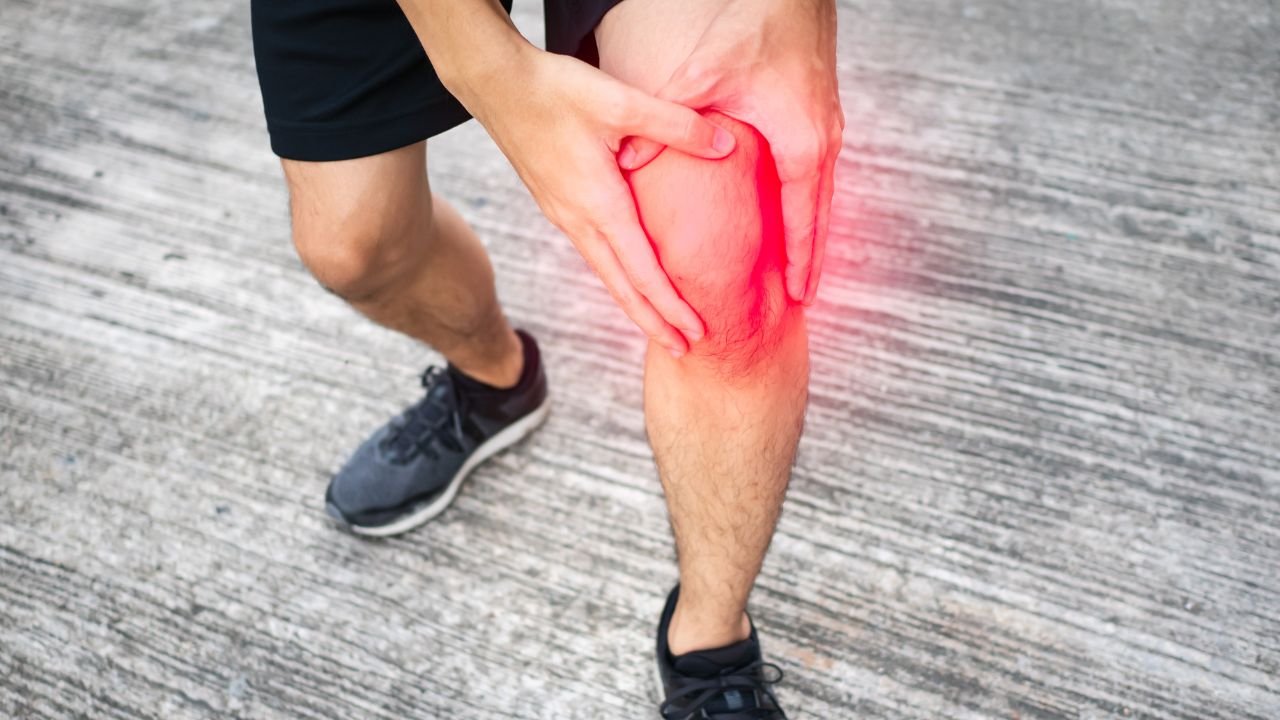
Throbbing knee pain disrupts the activities that define your life, whether that’s your morning golf game, weekend hikes in the McDowell Mountains, or simply climbing stairs without wincing. When discomfort persists during rest or intensifies with movement, your body is sending a clear signal that something needs attention.
Understanding what’s causing your knee pain, whether it’s stairs or resting knee pain patterns, is the first step toward finding lasting relief. This isn’t about masking symptoms with temporary fixes; it’s about identifying the root cause so you can address it properly.
Here’s what you need to know about causes, diagnosis, and treatment options that support natural healing.
Key Takeaways:
- Throbbing knee pain stems from joint degeneration, soft tissue injuries, or biomechanical stress, identifying the source directs appropriate treatment
- MRI, X-rays, and physical examination combine to reveal structural damage and pinpoint pain generators
- Physical therapy, targeted supplements, and viscosupplementation offer conservative management for mild to moderate joint health issues
- Regenerative treatments like PRP, BMAC, and Regenokine® support your body’s healing capacity without surgical intervention
- Surgery becomes necessary when conservative and regenerative options fail to provide adequate relief after 6-12 months
What Causes Throbbing Knee Pain During Movement Or Rest?
Your knee is a complex joint where bones, cartilage, ligaments, tendons, and bursae work together to support movement and absorb impact. When one of these structures becomes damaged or inflamed, pain develops. The key is understanding which tissue layer is affected so you can address the problem at its source.
Pain that worsens with activity, particularly climbing stairs, often indicates mechanical stress on damaged structures. Conversely, pain that persists during rest typically signals inflammatory processes continuing even when you’re not moving. Many people experience both patterns, suggesting multiple contributing factors.
How Do Joint Conditions Contribute To Knee Discomfort?
Osteoarthritis represents one of the most common causes of throbbing knee pain in active adults over 40. As cartilage gradually breaks down, the protective cushioning between bones diminishes. This creates increased friction during movement and may produce a grinding sensation when climbing stairs. The inflammatory response your body generates often causes resting knee pain that wakes you at night.
Rheumatoid arthritis and other inflammatory conditions involve your immune system mistakenly attacking joint tissues. Unlike osteoarthritis’s mechanical wear pattern, inflammatory arthritis typically affects multiple joints and produces morning stiffness lasting more than 30 minutes.
Joint effusion, fluid buildup inside the knee capsule, accompanies many arthritic conditions. This increases pressure within the joint, intensifying throbbing sensations, particularly when bearing weight. The swelling stretches pain-sensitive structures, creating discomfort even during rest.
What Role Do Soft Tissue And Ligament Injuries Play?
Meniscal tears cause sharp pain during twisting motions and contribute to dull aching at rest. These crescent-shaped cartilage structures absorb shock between your thighbone and shinbone. When damaged, torn fragments may catch during movement, creating sudden pain episodes.
Ligament sprains or tears, particularly involving the ACL or MCL, destabilize your knee joint. This forces surrounding muscles to work harder to maintain alignment, creating compensatory stress patterns that produce pain during activities like stair climbing.
Tendinitis affects the patellar tendon and surrounding structures, producing localized throbbing during activity. Chronic tendon degeneration develops from repetitive strain without adequate recovery time. Bursitis adds another layer of discomfort when fluid-filled sacs around your knee become inflamed from direct pressure or overuse.
Can Biomechanics And Overuse Patterns Trigger Pain?
Poor alignment patterns place excessive stress on specific knee compartments during movement. If your foot rolls inward excessively (overpronation) or outward (supination), force distribution through your knee changes dramatically. This accelerates cartilage wear in localized areas.
Muscle imbalances create additional problems. Weak gluteal muscles or tight hip flexors alter how your thigh bone tracks during stair climbing. Quadriceps weakness allows your kneecap to track improperly, increasing stress on the underlying cartilage.
Overuse injuries accumulate from repetitive loading without adequate recovery between activities. Runners, cyclists, and weekend warriors frequently develop patellofemoral pain syndrome from chronic stress exceeding tissue tolerance. When biomechanical issues coexist with early degenerative changes, symptom severity compounds.
How Is The Source Of Knee Pain Accurately Diagnosed?
Identifying exactly what’s causing your knee discomfort requires combining several evaluation methods. Your symptom history provides crucial clues, such as when pain started, what aggravates it, what provides relief. Physical examination findings reveal which structures reproduce your pain with specific movements or pressure. Imaging confirms suspected diagnoses and rules out serious pathology.
Which Imaging Techniques Reveal Underlying Damage?
Magnetic resonance imaging (MRI) excels at revealing soft tissue damage, including meniscal tears, ligament injuries, and early cartilage degeneration. MRI scans provide detailed views of cartilage thickness, bone marrow edema, and synovial inflammation, problems invisible on standard X-rays.
X-rays remain essential for evaluating joint space narrowing and identifying bone spurs characteristic of osteoarthritis. Weight-bearing X-rays reveal how alignment and spacing change under load. While X-rays don’t show soft tissues well, they quickly identify fractures and significant arthritic changes.
Ultrasound imaging enables dynamic assessment of tendon movement and fluid accumulation. This modality helps guide injection procedures with real-time visualization, ensuring precise needle placement.
What Physical Examination Findings Point Toward Specific Problems?
Palpation identifies tender areas corresponding to specific anatomical structures, joint lines, patellar tendon insertion points, or bursa locations. Range-of-motion testing reveals stiffness patterns and mechanical blocks suggesting meniscal tears or loose bodies within the joint.
Special tests target specific structures: McMurray’s maneuver stresses menisci, Lachman’s test assesses ACL integrity, and varus/valgus stress tests evaluate collateral ligament stability. Gait analysis detects abnormal movement patterns contributing to knee stress during walking and stair climbing. The Visual Analog Scale (VAS) provides standardized pain intensity documentation, tracking your progress objectively.
When Do Laboratory Tests Provide Additional Diagnostic Value?
Blood tests help differentiate inflammatory arthritis from mechanical joint degeneration when the clinical picture remains unclear. Rheumatoid factor, anti-CCP antibodies, and inflammatory markers support autoimmune arthritis diagnoses. Elevated uric acid levels identify gout as a potential cause of acute knee swelling.
Synovial fluid analysis examines joint aspirate for infection, crystals, and inflammatory cell counts. This test distinguishes septic arthritis requiring urgent treatment from other inflammatory conditions. Laboratory evaluation becomes essential when systemic symptoms accompany knee pain or when initial imaging appears inconclusive.
What Conservative Approaches Support Natural Healing?
Conservative management prioritizes pain relief and function restoration while supporting your body’s natural healing capacity. These approaches work best for mild to moderate joint health issues when implemented early.
Choose conservative treatment if: your pain started recently, symptoms improve with rest and ice, or you haven’t tried structured rehabilitation yet.
Choose more advanced options when: conservative treatments have failed after 8-12 weeks, pain significantly limits daily activities despite treatment, or imaging reveals structural damage requiring targeted intervention.
How Does Physical Therapy Address Knee Pain At Its Source?
Physical therapy strengthens muscles surrounding your knee, reducing stress on damaged cartilage and ligaments. Targeted exercises correct biomechanical imbalances perpetuating pain during activities like climbing stairs. The importance of physical therapy extends beyond symptom relief to long-term function preservation and injury prevention.
Therapeutic exercises progress from basic range-of-motion work to functional strengthening matching your activity demands. Quadriceps strengthening stabilizes your kneecap during stair climbing. Hip strengthening ensures proper thigh alignment during all weight-bearing activities.
Manual therapy techniques mobilize stiff joint capsules and release tight surrounding soft tissues. Soft tissue mobilization addresses fascial restrictions limiting normal movement patterns.
What Role Do Nutritional Support And Medications Play?
Glucosamine and chondroitin supplements may support cartilage health, though clinical evidence shows variable results. Top supplements for chronic pain include curcumin for inflammation reduction, vitamin D for bone health, and omega-3 fatty acids for their anti-inflammatory properties.
Nonsteroidal anti-inflammatory drugs (NSAIDs) control pain and swelling but carry gastrointestinal and cardiovascular risks with long-term use. Topical NSAIDs provide localized relief with reduced systemic side effects. The risk of developing dependency on traditional pain medications drives many active adults toward alternative management strategies.
When Might Hyaluronic Acid Injections Provide Relief?
Viscosupplementation delivers hyaluronic acid, a natural component of healthy joint fluid, directly into your knee. This may help restore synovial fluid’s lubricating and cushioning properties in early to moderate osteoarthritis. The injection series typically involves 3-5 injections spaced one week apart.
Response to viscosupplementation varies considerably depending on arthritis severity and individual factors. Some people experience relief lasting 6-12 months, while others notice minimal benefit. This treatment works best when cartilage damage remains mild to moderate.
Understanding steroid injections reveals why repeated corticosteroid use carries risks despite providing temporary inflammation reduction. This explains why many physicians now limit steroid injection frequency and explore regenerative alternatives.
What Regenerative Medicine Options Support Tissue Repair?
Regenerative treatments harness your body’s natural healing mechanisms to address damaged tissues rather than simply masking symptoms. These biologic therapies show promise for moderate joint degeneration and soft tissue injuries by supporting natural repair processes.
How Do Platelet-Rich Plasma (PRP) Treatments Support Healing?
PRP concentrates growth factors and healing proteins from your own blood, then delivers them directly to damaged knee structures. These biological signals may support tissue repair and your body’s natural healing capacity. The concentration process increases platelet levels 5-10 times above baseline.
The procedure involves drawing blood, processing it through centrifugation to concentrate platelets, then injecting the concentrated solution into damaged areas using ultrasound guidance for precision. PRP therapy for chronic pain typically requires multiple injections spaced several weeks apart.
Using advanced systems like APEX Biologix ensures superior platelet concentration and growth factor profiles. The quality of PRP preparation significantly influences outcomes, making provider expertise and equipment quality crucial factors.
What Makes Bone Marrow Stem Cell Therapy Different?
Bone marrow aspirate concentrate (BMAC) delivers mesenchymal stem cells with potential to support tissue repair in damaged knee structures. The procedure harvests bone marrow from your pelvis, concentrates the cellular components, then injects them into your knee.
BMAC therapy for knee osteoarthritis represents a more advanced regenerative option than PRP alone. The biological response unfolds over several months as cells integrate and support tissue remodeling processes. Most patients notice gradual improvement rather than immediate relief.
How Does Regenokine® Therapy Work For Knee Pain?
Regenokine® therapy represents an elite regenerative treatment available at only nine locations nationwide. Arizona has just one provider of this advanced approach, making it a rare option for Scottsdale residents seeking cutting-edge care. The treatment uses autologous conditioned serum, concentrating anti-inflammatory proteins from your own blood.
Regenokine for knee pain offers a non-surgical approach particularly valued by active adults who refuse to accept activity limitations. The process involves incubating your blood under specific conditions that may support enhanced anti-inflammatory protein production.
The therapy’s exclusivity stems from specialized training requirements and proprietary protocols. Elite athletes and health-conscious professionals seeking the most advanced regenerative options often pursue Regenokine when standard treatments haven’t provided adequate relief.
What Should You Know About Regenerative Medicine Costs?
Biologic therapies preserve native joint anatomy and avoid surgical trauma with its associated recovery time and complications. However, insurance rarely covers regenerative treatments, requiring out-of-pocket investment. Understanding regenerative medicine costs in Scottsdale helps you plan financially and compare treatment options among common causes and treatment options available.
PRP treatments typically range from $800-$3,000 per injection depending on preparation method. BMAC therapy costs more, generally $5,000-$15,000 for comprehensive treatment. The investment comparison extends beyond initial cost to long-term value. Regenerative treatments that successfully delay or prevent knee replacement surgery save substantially over time while preserving your natural joint health.
When Does Surgical Intervention Become Necessary?
Surgery becomes appropriate when conservative and regenerative treatments fail to provide adequate relief after exhausting reasonable options. End-stage arthritis with severe cartilage loss typically requires joint replacement for symptom resolution. Patient age, activity level, and overall health influence surgical timing and approach selection.
What Indicates You Might Need Surgical Evaluation?
Persistent severe pain limiting daily activities despite 6-12 months of appropriate conservative treatment suggests surgical consultation may be warranted. Significant structural damage visible on imaging, complete ligament tears, large displaced meniscal tears, or extensive cartilage loss, sometimes requires surgical repair for optimal outcomes.
Progressive deformity, instability, or mechanical symptoms like locking or catching that conservative treatment doesn’t resolve may indicate surgical problems. However, knee pain treatment without surgery explores comprehensive alternatives for active individuals.
What Surgical Options Exist For Different Knee Problems?
Arthroscopic procedures address specific problems through small incisions using camera and specialized instruments. Meniscal repair preserves tissue when tear patterns allow healing potential. Ligament reconstruction rebuilds torn ACL using graft tissue, requiring 6-12 months recovery before returning to high-level sports.
Partial knee replacement preserves healthy compartments while replacing only severely damaged areas in younger patients with isolated arthritis. Total knee replacement resurfaces all compartments when arthritis affects the entire joint. This provides pain relief for end-stage arthritis but involves significant recovery time and activity modifications.
What Recovery Expectations Come With Surgery?
Recovery from knee surgery varies dramatically based on procedure type. Arthroscopic procedures might allow return to walking within days. Total knee replacement typically requires 3-6 months for functional recovery and up to one year for complete healing.
Surgical risks include infection, blood clots, nerve damage, and anesthesia complications. Patient compliance with postoperative therapy protocols significantly influences final outcomes and satisfaction levels. The commitment required, both time and effort, during rehabilitation makes surgical timing a crucial decision.
How Do Age And Lifestyle Influence Knee Pain?
Your demographic characteristics and lifestyle factors significantly impact both knee pain development and treatment responses. Understanding these patterns helps clinicians tailor recommendations to your specific circumstances.
Adults over 65 experience the highest rates of knee osteoarthritis and associated degenerative changes. Active adults aged 40-65 face a unique challenge, early arthritis developing while they’re still pursuing active lifestyles. This group often seeks regenerative treatments to preserve their natural joints while maintaining golf, hiking, and recreational sports participation.
Younger athletes under 40 develop knee pain primarily from acute injuries and overuse rather than degeneration. Treatment focuses on tissue repair and injury prevention to support long-term joint health.
Activity patterns and environmental factors also play roles. Cold weather increases joint stiffness for many people, amplifying discomfort during movement. Barometric pressure changes preceding weather systems trigger inflammatory responses in arthritis patients. Arizona’s climate allows year-round outdoor activity, which influences when overuse injuries develop and when people seek treatment.
What Investment And Preferences Shape Treatment Decisions?
Treatment decisions involve balancing effectiveness expectations, financial investment, and recovery time requirements. Understanding costs upfront enables better planning and comparison across treatment categories.
Conservative treatments like physical therapy sessions typically cost $75-150 per visit, with most insurance plans providing coverage. Regenerative medicine represents a significant investment since insurance rarely provides coverage. PRP therapy ranges from $800-$3,000 per treatment. BMAC therapy typically costs $5,000-$15,000 for comprehensive treatment.
Knee arthroscopy costs $15,000-$35,000 while total knee replacement runs $35,000-$75,000 when including all fees. Even with insurance coverage, deductibles create significant out-of-pocket expenses. The financial comparison favors conservative and regenerative alternatives when they successfully avoid or delay surgery.
Pain relief effectiveness ranks as the top priority for most people evaluating treatment options. Recovery time significantly influences decisions, particularly among working professionals and active individuals. Treatments allowing rapid return to normal activities appeal strongly compared to options requiring months of restricted movement.
Safety profiles and complication risks drive preference toward less invasive approaches. Preserving your natural joint anatomy and avoiding surgical complications resonates strongly with health-conscious individuals who view their bodies as long-term investments requiring careful stewardship.
Moving Forward: Matching Treatment To Your Knee Pain Source
Effective knee pain stairs management requires accurately identifying what’s causing your discomfort, then selecting appropriate interventions based on severity, your goals, and individual circumstances. Common causes range from osteoarthritis and meniscal tears to biomechanical stress patterns and soft tissue inflammation.
Conservative approaches initiated early often prevent progression to more severe joint damage. Physical therapy corrects movement patterns, targeted supplements support joint health, and activity modifications reduce excessive stress. These foundational strategies benefit virtually everyone with knee pain.
Regenerative medicine bridges the gap between conservative care and surgery for appropriate candidates. PRP therapy, BMAC treatments, and elite options like Regenokine® support your body’s natural healing capacity rather than just masking symptoms. These approaches align with addressing root causes while preserving your natural joint anatomy.
The most successful outcomes typically come from combining multiple treatment options that complement each other. Physical therapy addresses biomechanical contributors while regenerative injections target inflammatory pathways and structural damage. Nutritional support and lifestyle modifications create an environment conducive to tissue healing and long-term joint health.
Take The Next Step Toward Lasting Knee Pain Relief
Integrated Spine, Pain & Wellness offers comprehensive evaluation and advanced treatment options for active individuals seeking alternatives to traditional pain management. Dr. Ashu Goyle brings Cleveland Clinic fellowship training and double board certification to a practice philosophy centered on addressing root causes rather than masking symptoms.
As Arizona’s exclusive Regenokine® provider and one of few practices offering MLS M7 laser therapy, ISPW delivers regenerative treatments unavailable elsewhere in the state. The Functional Spinal Unit Approach recognizes that lasting relief requires treating entire functional systems, not isolated symptoms.
Schedule a comprehensive evaluation to explore personalized treatment options that support your body’s natural healing capacity and help you reclaim pain-free movement.
This article is for general education and is not medical advice. Treatments discussed may not be right for everyone, individual results vary, and they are not a cure for any disease. Please talk with Dr. Goyle about your situation.


