
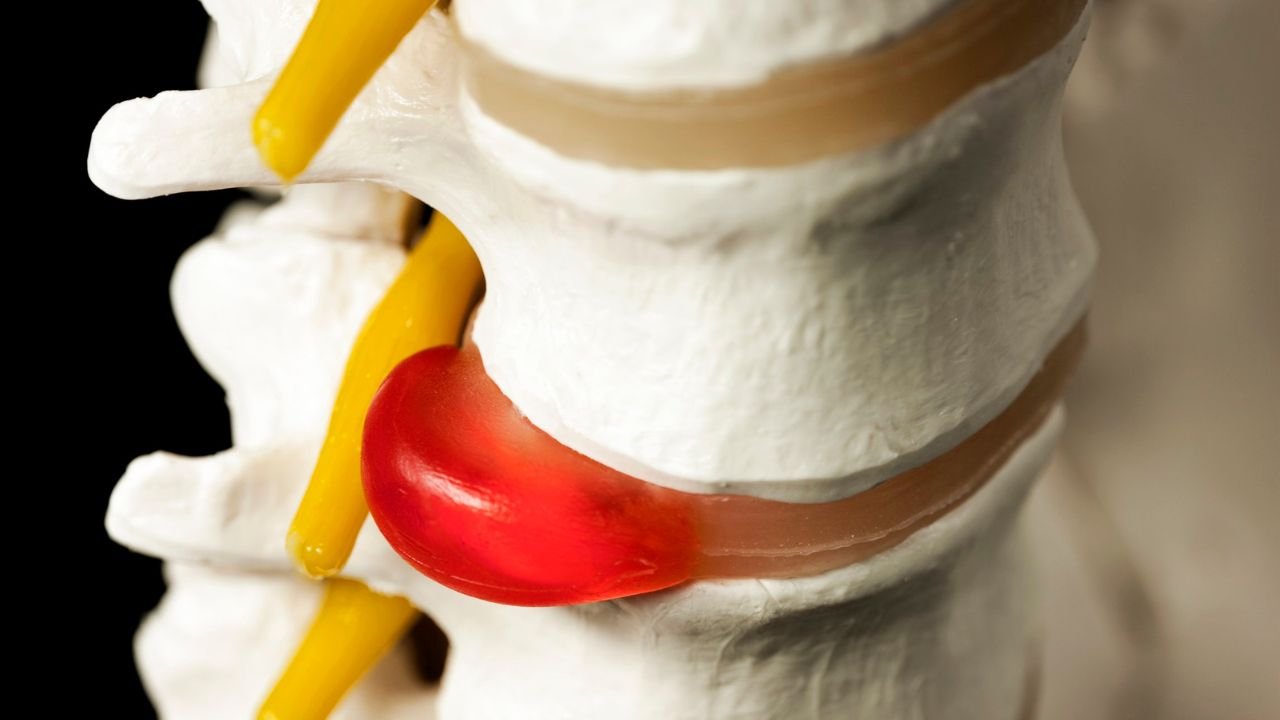
A bulging disc occurs when spinal disc material shifts beyond its normal boundary, potentially compressing nearby nerves. Choosing the right bulging disc exercises makes the difference between supporting recovery and worsening symptoms. Spine specialist advice emphasizes gradual progression, proper form, and monitoring pain response during physical activity.
Safe back workouts for disc conditions focus on stabilization rather than excessive spinal movement. Evidence shows conservative treatment lasting six to twelve weeks effectively addresses most disc-related symptoms through targeted exercise therapy. Selecting appropriate movements while learning to avoid disc pain ensures you maintain activity levels without compromising spinal health.
Key Takeaways:
- Gentle stretching and core strengthening exercises reduce bulging disc pain without nerve compression risk
- High-impact activities and heavy lifting can worsen disc displacement and prolong recovery
- Physical therapy supervision ensures proper exercise technique and progression for spinal conditions
- Shared decision-making frameworks balance conservative treatment with patient-specific recovery goals
- Quality of life assessment determines when exercise therapy should transition to interventional care
What Is A Bulging Disc And How Does It Affect Your Spine?
A bulging disc develops when the gel-like nucleus inside an intervertebral disc pushes outward against its outer layer. This displacement can compress nerve roots exiting the spinal column, producing radiating pain and neurological symptoms. The condition creates measurable structural abnormalities visible on MRI imaging.
Disc bulging most commonly affects the lumbar spine due to biomechanical stress from lifting and bending movements. Symptoms range from localized back discomfort to severe leg pain following specific nerve pathways. Recognizing how disc displacement affects spinal structures helps you know when activity modifications become necessary.
How Does A Bulging Disc Differ From A Herniated Disc?
Bulging discs involve the gradual outward displacement of disc material while maintaining outer layer integrity. Herniated discs occur when the outer layer ruptures completely, allowing inner material to leak into surrounding spaces. Herniated discs typically produce more severe symptoms and may require different treatment approaches.
Treatment strategies overlap significantly because both conditions respond to similar conservative therapies, including exercise and injections. Surgical intervention rates differ, with herniated discs requiring operative treatment more frequently when conservative care fails.
What Symptoms Signal A Bulging Disc?
Lower back pain represents the most frequent initial symptom, often worsening with prolonged sitting or forward bending. Radiating leg pain develops when displaced disc material compresses nerve roots. Numbness, tingling, and muscle weakness may accompany pain depending on which nerve structures experience compression.
Symptom intensity fluctuates based on activity level, position, and inflammation surrounding affected nerve roots. Some people experience minimal discomfort despite disc bulging on imaging, while others report debilitating pain. This variability reflects individual differences in nerve sensitivity and inflammation response. Common questions about back pain often involve understanding these symptom patterns.
How Does A Bulging Disc Impact Nerve Function And Movement?
Nerve compression from disc displacement disrupts normal signal transmission between the brain and lower extremities. This interference produces sensory changes like numbness or heightened sensitivity along specific nerve pathways. Motor function declines when compression prevents nerves from activating muscles properly, resulting in weakness.
Mobility limitations emerge as you modify movement patterns to minimize pain and nerve irritation. Reduced spinal flexibility develops from protective muscle guarding that restricts painful motions. These adaptations create secondary problems, including muscle imbalances and compensatory strain on unaffected spinal segments.
Why Is Exercise Critical For Bulging Disc Recovery?
Exercise maintains spinal support structures and prevents deconditioning that worsens long-term disability. Targeted movement restores normal mechanics, reduces inflammation, and improves blood flow to damaged tissues. Physical activity modulates pain perception through endorphin release and nervous system regulation.
Conservative management emphasizing active therapies produces successful outcomes for most people within twelve weeks. Avoiding movement creates muscle weakness and joint stiffness that prolongs recovery. Strategic exercise selection allows continued activity while protecting vulnerable spinal structures during healing phases.
How Does Exercise Support Pain Relief And Function?
Controlled movement stimulates disc nutrition through fluid exchange that occurs during spinal motion and loading. This process delivers oxygen and nutrients while removing metabolic waste. Strengthening exercises develop muscular support that reduces mechanical stress on compromised discs, decreasing pain during daily activities.
Flexibility work addresses compensatory tightness that develops when muscle groups overwork to protect injured spinal segments. Improved range of motion restores efficient movement patterns that distribute forces evenly across multiple spinal levels. Understanding exercise and chronic pain helps you recognize how strategic movement supports long-term recovery.
What Risks Come With Exercising During Disc Injury?
Inappropriate exercise selection can increase disc displacement, worsen nerve compression, and prolong symptoms. Excessive loading through heavy resistance creates intradiscal pressure that forces additional material outward. High-impact activities generate repetitive compressive forces that prevent healing and may cause progressive deterioration.
Poor technique during otherwise safe exercises negates benefits and introduces injury risk. Pushing through increasing pain signals active tissue damage rather than beneficial muscle fatigue. Recognizing these distinctions requires education about proper progression and close symptom monitoring.
When Should You Modify Or Stop Exercise?
Progressive neurological symptoms, including worsening numbness, increasing weakness, or bowel/bladder dysfunction, require immediate medical evaluation. Severe pain that prevents maintaining proper form indicates activity exceeds current tissue tolerance. These situations demand temporary rest and professional assessment.
Acute inflammation phases benefit from gentle movement rather than complete rest, but intensity must remain below pain thresholds. Modified exercises maintaining spinal neutral positions replace movements requiring extreme flexion or extension. Gradual reintroduction of challenging activities occurs only after pain-free performance of foundational exercises.
Which Exercises Are Safe For Bulging Disc Recovery?
Gentle stretching targeting hip flexors, hamstrings, and piriformis muscles reduces tension on lumbar structures without stressing discs. Core strengthening through planks and bird dogs builds spinal stability using minimal spinal motion. Low-impact aerobic activities, including walking and swimming, maintain cardiovascular fitness while avoiding excessive vertebral compression.
These safe back workouts emphasize controlled movement quality over intensity during initial recovery. Proper breathing techniques prevent breath-holding that increases intra-abdominal pressure and disc stress. Progressive difficulty adjustments ensure continued improvement without overwhelming healing tissues.
- Choose gentle stretching if: You experience morning stiffness or muscle tension limiting movement
- Choose core strengthening when: Your goal is building long-term spinal support and preventing recurrence
- Choose low-impact aerobics if: You want to maintain cardiovascular fitness without disc compression
What Types Of Gentle Stretching Support Disc Health?
Knee-to-chest stretches performed lying supine gently decompress the lumbar spine while stretching lower back muscles. Hip flexor stretches in a lunge position address tightness contributing to excessive lumbar lordosis. Piriformis stretches reduce sciatic nerve irritation by releasing tension in deep hip rotators.
Hold each stretch fifteen to thirty seconds without bouncing or forcing range beyond comfortable limits. Breathing deeply during stretches promotes relaxation and allows gradual tissue lengthening. These movements prepare your spine for more demanding activities later in recovery.
How Does Core Strengthening Protect Your Spine?
Abdominal and back muscle development creates a muscular corset that limits excessive spinal motion during daily activities. This stability reduces mechanical stress on discs by distributing forces across stronger muscular tissues. Strengthening exercises emphasizing endurance over maximal strength better prepare muscles for sustained postural support.
Planks, side planks, and dead bug variations activate deep core muscles without requiring spinal flexion or extension. These exercises maintain neutral spine alignment while progressively challenging endurance through longer hold times. The importance of physical therapy becomes clear when proper core strengthening prevents compensatory movement patterns.
What Role Does Low-Impact Aerobic Activity Play?
Walking promotes spinal disc nutrition through gentle loading cycles that facilitate fluid exchange. Swimming eliminates gravitational compression while allowing full-body movement that maintains cardiovascular conditioning. Stationary cycling in upright positions provides aerobic benefits without impact forces.
These activities improve the blood flow systemically, supporting tissue healing throughout your body. Endorphin release during sustained aerobic exercise provides natural pain relief comparable to mild analgesic medications. Start with short sessions and gradually increase time to ensure cardiovascular adaptation without overwhelming compromised tissues.
What Exercises And Movements Should You Avoid?
Heavy lifting and high-impact activities generate forces exceeding disc tissue tolerance, risking further displacement and nerve compression. Exercises requiring extreme spinal flexion or extension place vulnerable discs under maximum mechanical stress. Poor posture or incorrect technique transforms otherwise safe exercises into potentially harmful activities.
Learning to avoid disc pain requires understanding biomechanical principles governing spinal loading. Certain exercises remain contraindicated throughout recovery regardless of pain levels. Recognizing absolute restrictions versus relative limitations based on individual presentation guides safe exercise selection. The following ways to prevent back pain include knowing which movements to eliminate permanently.
- Avoid heavy lifting if: You’re in the acute recovery phase or experience any radiating leg symptoms
- Modify high-impact activities when: Walking or cycling provides adequate cardiovascular training
- Eliminate extreme spinal movements if: Forward bending or backward arching increases your pain
Why Are Heavy Lifting And High-Impact Activities Risky?
Deadlifts, squats with heavy loads, and overhead presses create intra-discal pressures up to fifteen times greater than resting values. These extreme forces can drive additional disc material outward through existing weaknesses. Impact activities like running or jumping generate repetitive compressive loads that prevent healing.
The cumulative effect of repeated high-force exposures matters more than any single movement. Substituting bodyweight variations or resistance band exercises maintains strength training benefits without excessive spinal loading. Your spine needs time to heal before handling these demands again.
How Can Poor Posture Or Incorrect Technique Worsen Disc Injury?
Rounded spinal positions during lifting or bending concentrate compressive forces on anterior disc structures already weakened by bulging. Asymmetrical loading from twisted postures creates uneven pressure distribution that accelerates disc deterioration. Even low-intensity movements performed with improper alignment can worsen symptoms and delay healing.
Maintaining neutral spine curves distributes forces evenly across disc surfaces and surrounding structures. Professional instruction ensures proper movement patterns become habitual before increasing difficulty. Video analysis and real-time feedback during physical therapy identify subtle technique flaws invisible to you.
When Are Flexion Or Extension Movements Harmful?
Extreme forward bending exercises like toe touches or sit-ups with rounded backs increase posterior disc bulging risk. Full spinal extension movements may compress narrowed nerve pathways in people with concurrent spinal stenosis symptoms and nonsurgical treatments to consider. Directional preference varies among individuals.
Some people experience relief from gentle extension while others benefit from slight flexion. McKenzie method assessment identifies which direction reduces symptoms for your unique pathology. This individualized approach prevents blanket restrictions while ensuring movements align with specific mechanical response patterns.
How Should You Incorporate Exercise Into Your Treatment Plan?
Physical therapy provides supervised exercise instruction ensuring proper technique and appropriate progression. A twelve-month course averages eleven thousand one hundred fifty-one dollars but prevents surgery costing significantly more. Conservative treatment spanning six to twelve weeks focuses on active therapies restoring function.
Professional guidance optimizes exercise selection based on diagnostic findings, symptom patterns, and functional goals. Structured programs balance adequate challenge with sufficient recovery. Monitoring progression markers guides treatment advancement while maintaining safety.
What Role Does Physical Therapy Play In Exercise Supervision?
Physical therapists assess movement quality, identify compensatory patterns, and design individualized exercise progressions. Hands-on techniques including manual therapy complement exercise prescription by restoring joint mobility and reducing muscle guarding. Education about proper body mechanics extends therapeutic benefits beyond formal exercise sessions.
Accountability through scheduled appointments improves adherence compared to independent programs lacking external structure. Real-time feedback accelerates skill acquisition and prevents reinforcement of incorrect patterns. Most people complete conservative care within six to twelve weeks when participating consistently.
How Should You Monitor Exercise Progression And Intensity?
Pain levels during and after exercise provide immediate feedback about tissue tolerance. Increasing symptoms twenty-four to forty-eight hours post-exercise indicate excessive loading requiring intensity reduction. Successful progression occurs when exercises previously causing discomfort become pain-free.
Functional milestone achievement including prolonged sitting tolerance or walking distance guides treatment advancement. Objective measures like timed plank holds or pain-free repetition counts quantify improvement more reliably than subjective assessments. Regular reassessment every two to three weeks ensures programs evolve appropriately as healing progresses.
When Should You Consult A Spine Specialist Before Exercising?
People experiencing progressive neurological decline including worsening weakness or sensory loss require specialist evaluation before beginning exercise. Severe pain unresponsive to conservative measures may indicate conditions requiring intervention beyond standard physical therapy. Spine specialist advice becomes essential when symptoms persist beyond twelve weeks despite appropriate conservative management.
Diagnostic clarity through advanced imaging and specialized examination ensures exercise prescription addresses actual pathology. Specialists determine whether exercise alone suffices or whether combined approaches including injections optimize outcomes. Early specialist consultation prevents prolonged ineffective treatment.
What Are Alternative Non-Exercise Treatments For Bulging Discs?
Epidural injections and pain management interventions reduce inflammation and provide symptom relief when exercise alone proves insufficient. Minimally invasive surgery addresses structural problems when conservative care including targeted exercise fails after appropriate trial periods. Lifestyle modifications encompassing ergonomics, nutrition, and stress management support healing and prevent recurrence.
These approaches complement rather than replace therapeutic exercise in comprehensive treatment plans. Interventional treatments costing one thousand fifty dollars for epidural steroid injections or six hundred thirty dollars for facet blocks bridge gaps when conservative care falls short. Combining modalities addresses both symptom management and underlying structural problems.
How Do Epidural Injections And Pain Management Support Recovery?
Epidural steroid injections deliver anti-inflammatory medication directly to irritated nerve roots, reducing pain that limits exercise participation. This symptom control window allows you to engage more effectively in physical therapy. Injections serve as diagnostic tools confirming suspected pain generators.
Facet blocks averaging six hundred thirty dollars address joint-mediated pain that often coexists with disc pathology. Combining injection therapy with active rehabilitation produces superior outcomes compared to either approach independently. Interventional treatments become appropriate when conservative care spanning six to twelve weeks fails to produce adequate improvement.
When Is Minimally Invasive Surgery Considered?
Minimally Invasive Spine Surgery (MISS) involves advanced surgical techniques that reduce tissue damage compared to traditional open surgery. This approach becomes appropriate when persistent symptoms correlate with structural abnormalities despite exhausting conservative options. Ninety-two percent of patients undergoing MISS reported positive outcomes in large multi-center studies.
MISS patients average 2.8-day hospital stays, significantly shorter than traditional surgical approaches. Surgery consideration requires careful assessment balancing quality of life impact against procedural risks. Your specialist helps determine optimal timing based on symptom severity and treatment response.
What Lifestyle Modifications Protect Spinal Health?
Maintaining healthy body weight reduces mechanical stress on spinal structures by decreasing compressive forces during weight-bearing activities. Ergonomic workstation setup prevents prolonged positions that increase disc pressure. Smoking cessation improves disc nutrition by enhancing blood flow to avascular disc tissues.
Adequate sleep allows tissue repair processes to occur optimally, while chronic sleep deprivation impairs healing. Stress management through mindfulness practices reduces muscle tension contributing to protective guarding. Exploring comprehensive back pain treatment options in Scottsdale from conservative care to regenerative medicine reveals how lifestyle factors integrate with medical interventions.
How Does Shared Decision-Making Guide Your Exercise And Treatment Choices?
Shared decision-making involves collaborative discussions between patients and providers balancing clinical evidence with individual values. This framework ensures treatment plans align with personal goals while respecting medical appropriateness. Quality of life assessment before surgery recommendation determines whether functional limitations justify procedural risks.
Patient autonomy in treatment selection improves adherence and satisfaction compared to directive approaches. Understanding individual risk tolerance, activity priorities, and lifestyle constraints allows customization matching treatments to specific circumstances. This collaborative model produces better outcomes by ensuring interventions address what matters most to you.
What Factors Influence Your Personalized Exercise Recommendations?
Age, fitness level, and pre-existing conditions affect exercise tolerance and appropriate progression rates. Occupational demands requiring specific movement patterns guide functional training emphasis. Personal activity goals including recreational sports participation influence which exercises receive priority.
Anatomic variations in spinal structure and disc pathology location necessitate individualized movement selection. Pain response patterns during initial assessment reveal directional preferences guiding which movements to emphasize versus avoid. Psychosocial factors including fear-avoidance beliefs require addressing through education and graded exposure.
How Do Your Preferences Impact Treatment Pathways?
Some people prioritize avoiding surgery regardless of symptom severity, choosing to maximize conservative options. Others experiencing significant quality of life impairment prefer earlier surgical consultation when conservative care shows limited progress. Balancing these preferences with clinical appropriateness requires transparent communication about realistic outcome expectations.
Treatment cost considerations influence decisions about physical therapy duration, injection frequency, and surgical timing. Time constraints from work and family obligations affect ability to participate in intensive rehabilitation programs. Acknowledging these practical limitations allows realistic treatment planning.
What Role Does Quality Of Life Assessment Play In Treatment Decisions?
Formal assessment tools quantify functional limitations, measuring disability objectively across multiple life domains. These metrics establish baseline severity and track improvement over time. Surgery becomes appropriate when conservative care fails to restore acceptable function despite appropriate trial periods.
Daily activity limitations, including sleep disruption, work impairment, and recreational restriction, indicate when aggressive intervention becomes justified. Balancing surgical risks against ongoing disability requires understanding how current limitations affect long-term health. Quality of life impact assessment ensures treatment intensity matches symptom burden rather than imaging findings alone.
Integrating Safe Exercise Into Your Bulging Disc Recovery Plan
Strategic exercise selection emphasizing spinal health, controlled progression, and proper technique forms the foundation of effective bulging disc management. Combining therapeutic movement with complementary interventions when necessary addresses both structural pathology and functional limitations. Most people achieve significant improvement through conservative care when treatment plans incorporate evidence-based exercise principles.
Long-term success requires ongoing attention to movement quality, postural habits, and lifestyle factors supporting spinal health beyond initial symptom resolution. At Integrated Spine, Pain & Wellness, we understand that active individuals refuse to accept limitations from spinal conditions affecting performance and quality of life.
Dr. Goyle’s Cleveland Clinic training and double board certification in anesthesiology and pain medicine ensure you receive expert guidance for your bulging disc recovery. Our approach combines evidence-based conservative care with advanced regenerative medicine options when needed—always focusing on healing, not just managing symptoms.
Ready To Stop Managing Your Disc Pain And Start Healing It?
Contact our team to schedule your comprehensive Pain Analysis Consult and develop a personalized treatment plan combining the right exercises with proven therapies tailored to your recovery goals and active lifestyle.


