
Key Takeaways
- Your own cells, never donor products. ISPW uses only bone marrow stem cells (BMAC) harvested from your own body—no third-party donor cells, no umbilical cord products, no lab-cultured cells.
- Minimally invasive, same-day procedure. Most patients complete harvesting, processing, and injection in a single outpatient visit under local anesthesia.
- Gradual response over months. This isn’t a quick fix—the body’s natural processes develop over weeks to months. Some patients notice changes within 4-8 weeks, with continued response over 3-6 months.
- Results vary by individual. Not everyone responds the same way. Outcomes depend on your condition, its severity, overall health, and individual biological factors.
- Cleveland Clinic-trained expertise. Dr. Ashu Goyle brings fellowship training from one of the nation’s premier medical institutions, with double board certification in anesthesiology and interventional pain management.
Understanding Bone Marrow Stem Cell Therapy
Bone marrow stem cell therapy—specifically BMAC (bone marrow aspirate concentrate)—is a regenerative approach that uses your body’s own cells to support natural healing processes. Unlike treatments that temporarily mask symptoms, this approach delivers concentrated stem cells and growth factors directly to the affected area.
What Makes Our Approach Different:
At Integrated Spine, Pain & Wellness, we use exclusively autologous bone marrow stem cells. This means:
- Your own cells: Harvested from your bone marrow, processed in our office, and delivered the same day
- No third-party products: We don’t use umbilical cord tissue, amniotic fluid, adipose (fat) from donors, or any donor-derived materials
- No lab culturing: Your cells are concentrated but never grown or expanded in a laboratory
- No rejection risk: Because the cells come from your own body, there’s no risk of immune rejection
Many clinics advertise “stem cell therapy” using products from donors—umbilical cord blood, amniotic tissue, or other third-party sources. These products raise questions about cell viability, quality control, and what you’re actually receiving. At ISPW, you know exactly what’s being delivered: your own bone marrow stem cells, processed fresh, same day.
How Bone Marrow Stem Cells May Work
Mesenchymal stem cells (MSCs) from bone marrow are multipotent cells that may work through several potential mechanisms:
Paracrine Signaling: MSCs release bioactive molecules—growth factors, cytokines, and other signaling proteins—that may influence the surrounding tissue environment.
Immunomodulation: Components may help modulate inflammatory responses in the treatment area.
Cellular Interaction: MSCs may interact with existing cells to support the local tissue environment.
Differentiation Potential: In certain environments, MSCs have the potential to differentiate into cell types relevant to musculoskeletal tissues.
It’s important to understand that individual responses vary significantly, and these potential mechanisms don’t guarantee specific outcomes for any patient.
What Happens During the Procedure?
The procedure involves three main steps, typically completed in a single outpatient visit at our Scottsdale office.
Step 1: Bone Marrow Aspiration (Harvesting)
Using local anesthesia for your comfort, Dr. Goyle extracts a small sample of bone marrow from your posterior iliac crest (the back of your hip bone). This area is chosen because it contains a rich concentration of mesenchymal stem cells. Most patients tolerate this step well, describing it as pressure with mild discomfort.
Step 2: Processing and Concentration
Your bone marrow sample is processed immediately in our office using specialized equipment. This concentrates the mesenchymal stem cells, platelets, and growth factors. The processing happens the same day—your cells are never sent to outside laboratories or stored for later use.
Step 3: Image-Guided Injection
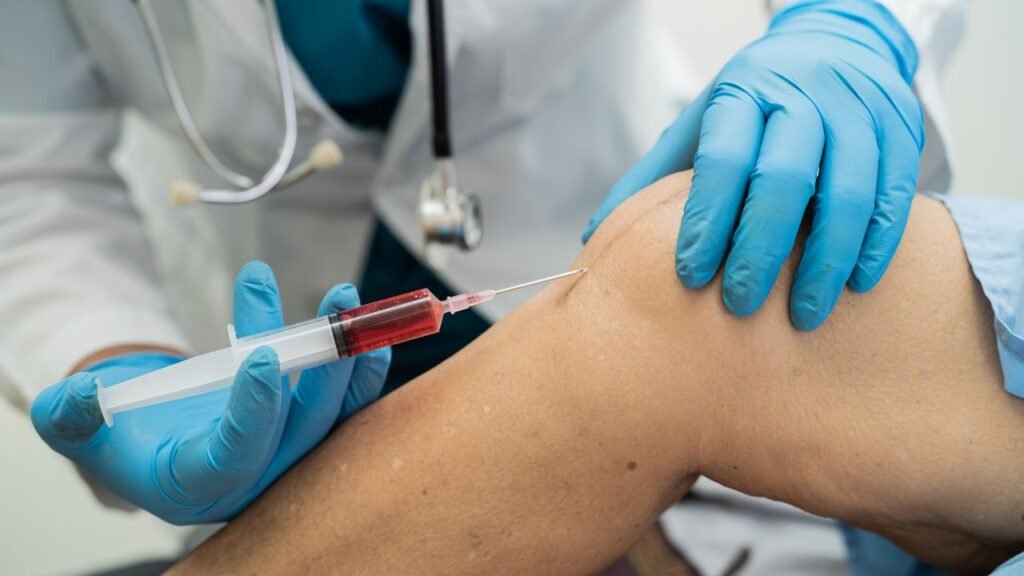
Using fluoroscopy (real-time X-ray) or ultrasound guidance, Dr. Goyle delivers the concentrated BMAC directly to the treatment area. This image guidance ensures accurate placement within the joint or tissue being treated.
Why Image Guidance Matters:
Dr. Goyle’s training at the Cleveland Clinic emphasized precision in interventional procedures. Image guidance allows visualization of the needle in real-time, confirming accurate delivery to the intended target. This precision is essential for optimal placement of your concentrated bone marrow cells.
The entire procedure typically takes 1-2 hours from start to finish. Most patients return home the same day.
Preparing for Your Procedure
Proper preparation helps ensure your safety and supports the best possible conditions for your procedure.
Initial Consultation and Evaluation
Before any treatment, Dr. Goyle conducts a thorough evaluation:
- Review of your complete medical history
- Discussion of your symptoms, when they started, and how they affect your daily life
- Physical examination of the affected area
- Review of diagnostic imaging (X-rays, MRI) to assess your condition
- Assessment of previous treatments and their results
- Discussion of your goals and expectations
- Honest guidance about whether this approach may be appropriate for your situation
Pre-Procedure Instructions
Your care team will provide specific instructions, which may include:
- Medication adjustments (particularly blood thinners and anti-inflammatory medications)
- Dietary guidelines
- Activity modifications
- What to bring and expect on procedure day
Follow all instructions carefully—proper preparation directly supports your procedure and recovery.
What to Expect After Your Procedure
Recovery from bone marrow stem cell therapy is gradual. Understanding the timeline helps set realistic expectations.
Immediate Post-Procedure (First 24-48 Hours)
- Some soreness at both the bone marrow aspiration site (hip) and injection site is normal
- You may experience temporary swelling or stiffness in the treated area
- Low-grade discomfort, mild fatigue, or headache may occur
- Rest and limit activity as directed
Early Recovery Phase (Weeks 1-4)
- Avoid anti-inflammatory medications (NSAIDs like ibuprofen, naproxen) as directed—these may interfere with the body’s natural processes
- Follow activity restrictions provided by Dr. Goyle
- Some patients begin noticing gradual changes during this period
- Apply ice as directed to manage any swelling
Continued Response Phase (Months 1-6)
- The body’s response develops gradually over this period
- Follow your physical therapy program to support recovery
- Attend follow-up appointments to monitor your progress
- This is typically when patients who respond to treatment notice the most meaningful changes
Longer-Term (Months 6-12+)
- Continued gradual response for some patients
- Ongoing follow-up to assess your outcome
- Discussion of any additional treatment considerations
Important Timeline Perspective:
This is not a quick fix. Unlike a cortisone injection that may provide temporary relief within days, bone marrow stem cell therapy works with your body’s natural processes, which develop over weeks to months. Some patients experience meaningful improvement; others don’t notice significant changes. Dr. Goyle will monitor your progress and provide honest feedback about your response.
Managing Common Side Effects
Autologous bone marrow stem cell therapy—using your own cells—carries a favorable safety profile. Because the cells come from your own body, there’s no risk of immune rejection.
Common, Expected Side Effects:
- Mild to moderate soreness at the bone marrow aspiration site (hip)—typically resolves within 1-2 weeks
- Temporary pain or swelling at the injection site
- Possible bruising at either site
- Mild fatigue or low-grade discomfort for 24-48 hours
When to Contact Our Office:
- Symptoms that worsen rather than gradually improve
- Signs of infection: increasing redness, warmth, swelling, or discharge at injection sites
- Fever above 101°F
- Symptoms that persist beyond the expected timeframe
Who May Be a Good Candidate?
Not everyone with joint or back pain is an appropriate candidate for bone marrow stem cell therapy. Candidacy depends on your specific condition, its severity, and your overall health.
Characteristics of Potential Candidates:
- Musculoskeletal conditions such as knee, hip, or shoulder osteoarthritis
- Chronic back pain from degenerative changes
- Tendon or ligament issues
- Have tried conservative treatments without adequate relief
- Good overall health
- Realistic expectations about gradual improvement and variable outcomes
Who May Not Be a Good Candidate:
- Advanced, end-stage arthritis with severe structural damage
- Active infections
- Certain blood disorders or conditions affecting bone marrow
- Those expecting guaranteed results or immediate relief
- Conditions outside the musculoskeletal system
The Importance of Honest Evaluation:
During your consultation, Dr. Goyle will assess whether bone marrow stem cell therapy is appropriate for your specific situation. If it’s not the right approach for you, we’ll explain why and recommend alternatives—whether that’s continued conservative care, other interventional options, or surgical consultation.
Our Comprehensive Approach
Bone marrow stem cell therapy is one option within our complete approach to musculoskeletal pain. Depending on your condition, Dr. Goyle may also discuss:
Platelet-Rich Plasma (PRP) Therapy
Another autologous treatment using your own blood, concentrated to increase platelet and growth factor levels. PRP may be used alone or in combination with BMAC.
Regenokine® (Autologous Conditioned Serum)
Dr. Goyle is one of only nine physicians in the United States—and the only doctor in Arizona—offering the Regenokine® Program. This innovative approach processes your own blood to create a serum concentrated with anti-inflammatory proteins.
Regenokine® is the treatment professional athletes like the late Kobe Bryant used to return to competition. It works through a different mechanism than bone marrow stem cell therapy and may be appropriate for certain conditions.
MLS M7 Class IV Laser Therapy
Our state-of-the-art therapeutic laser delivers light energy to support the body’s natural processes. This non-invasive treatment can complement regenerative approaches.
Interventional Procedures
For certain conditions, other interventional approaches may be appropriate:
- Epidural steroid injections (for acute inflammation)
- Facet joint injections
- Trigger point injections
Why Choose Integrated Spine, Pain & Wellness
Cleveland Clinic Training
Dr. Ashu Goyle completed his fellowship at the Cleveland Clinic—one of the nation’s premier medical institutions. This rigorous training with world leaders in pain medicine provided expertise in both interventional procedures and regenerative approaches.
Double Board Certification
Dr. Goyle is board-certified in both anesthesiology and interventional pain management, demonstrating advanced competency in precise, image-guided procedures.
Autologous Only
We exclusively use your own bone marrow cells—no adipose tissue, no umbilical cord products, no third-party materials, no lab-cultured cells. You know exactly what you’re receiving.
Image-Guided Precision
All injections are performed using fluoroscopy or ultrasound guidance to ensure accurate placement.
Exclusive Access
As one of only nine Regenokine® providers nationwide—and the only provider in Arizona—Dr. Goyle offers treatment options unavailable elsewhere in the state.
Honest Evaluation
We don’t treat everyone who asks. We provide thorough evaluation and honest guidance about whether bone marrow stem cell therapy is appropriate for your condition—or whether another approach would serve you better.
Recognition
Dr. Goyle has been recognized as a Phoenix Magazine “Top Doc” from 2011-2020, reflecting his commitment to excellent patient care.
Follow-Up and Monitoring Your Progress
Regular follow-up ensures we can track your response and adjust your care as needed.
Typical Follow-Up Schedule:
- 2-4 weeks post-procedure: Initial check-in
- 6-8 weeks: Early response assessment
- 3 months: Progress evaluation
- 6 months: Continued monitoring
- 12 months: Long-term outcome assessment
During these visits, we’ll assess pain levels, functional improvements, and range of motion. If your response plateaus or you’re not experiencing expected improvement, Dr. Goyle will discuss options—whether that’s modified activity, physical therapy adjustments, additional supportive treatments, or alternative approaches.
Open communication about your symptoms, progress, and concerns helps us provide the best possible care.
Is Bone Marrow Stem Cell Therapy Right for You?
The right decision depends on your individual situation. This approach may be worth exploring if:
- You have a musculoskeletal condition (joint pain, back pain, tendon issues)
- Conservative treatments haven’t provided adequate relief
- You want to explore options before considering surgery
- You prefer an approach using your own biological materials
- You have realistic expectations about gradual improvement and variable outcomes
The Only Way to Know:
The best way to determine whether bone marrow stem cell therapy is appropriate for your condition is a consultation with Dr. Goyle. During this visit, we’ll:
- Review your imaging to assess your condition
- Evaluate your symptoms and how they affect your function
- Discuss your treatment history and goals
- Provide honest guidance about your options
- Set realistic expectations if you’re a potential candidate
If bone marrow stem cell therapy isn’t right for your situation, we’ll explain why and recommend alternatives.
Schedule Your Consultation
Don’t let chronic pain limit your quality of life without exploring your options. At Integrated Spine, Pain & Wellness, we provide thorough evaluation and honest guidance to help you make informed decisions about your care.
Whether bone marrow stem cell therapy is right for you, or whether another approach would better serve your needs, the first step is a comprehensive consultation with Dr. Goyle.
Contact Integrated Spine, Pain & Wellness today to schedule your evaluation.
Frequently Asked Questions
Q1. What type of stem cells do you use?
We use only bone marrow aspirate concentrate (BMAC)—stem cells harvested from your own bone marrow, processed fresh in our office, and delivered the same day. We don’t use adipose (fat) tissue, umbilical cord products, amniotic fluid, lab-cultured cells, or any third-party donor materials.
Q2. Why don’t you use umbilical cord or amniotic stem cells?
We focus exclusively on autologous (your own) cells for several reasons: you know exactly what you’re receiving, there’s no rejection risk, and we can ensure cell viability through same-day processing. Third-party products raise questions about cell viability after processing, storage, and shipping—and what’s actually in the product you receive.
Q3. How long until I might notice improvement?
The body’s response develops gradually over weeks to months. Some patients begin noticing changes around 4-8 weeks, with continued response over 3-6 months. This isn’t a quick fix—it’s supporting gradual natural processes. Individual timelines vary significantly.
Q4. Does everyone improve with stem cell therapy?
No. Not all patients respond to treatment. Individual outcomes depend on many factors including your specific condition, its severity, how much healthy tissue remains, overall health, and individual biological response. During your consultation, Dr. Goyle will provide honest guidance about realistic expectations for your situation.
Q5. What conditions do you treat with bone marrow stem cells?
We focus on musculoskeletal conditions: knee, hip, and shoulder osteoarthritis; chronic back pain; tendon and ligament issues; and soft tissue injuries. We do not treat neurological conditions, autoimmune diseases, or systemic conditions with stem cell therapy.
Q6. Is the procedure painful?
Most patients tolerate the procedure well with local anesthesia. You may feel pressure during bone marrow aspiration and some discomfort, but significant pain is uncommon. Soreness at the aspiration site typically resolves within 1-2 weeks.
Q7. What is Regenokine® and how is it different?
Regenokine® is an autologous conditioned serum therapy that concentrates anti-inflammatory proteins from your own blood. It works through a different mechanism than bone marrow stem cells. Dr. Goyle is one of only nine physicians in the U.S. offering this treatment—and the only provider in Arizona. It’s the approach the late Kobe Bryant used. Dr. Goyle can discuss which option might be best for your condition.
Q8. What are Dr. Goyle’s qualifications?
Dr. Ashu Goyle is double board-certified in anesthesiology and interventional pain management. He completed his fellowship training at the Cleveland Clinic—one of the nation’s premier medical institutions. He has been recognized as a Phoenix Magazine “Top Doc” from 2011-2020.
Q9. How much does bone marrow stem cell therapy cost?
Treatment requires out-of-pocket payment, as it’s not typically covered by insurance. During your consultation, Dr. Goyle can discuss specific costs based on your treatment plan.
Q10. What if stem cell therapy doesn’t work for me?
If you don’t experience adequate improvement, other options remain available—including additional regenerative approaches like PRP or Regenokine®, interventional procedures, or surgical consultation. We’ll continue working with you to find the best path forward.

