
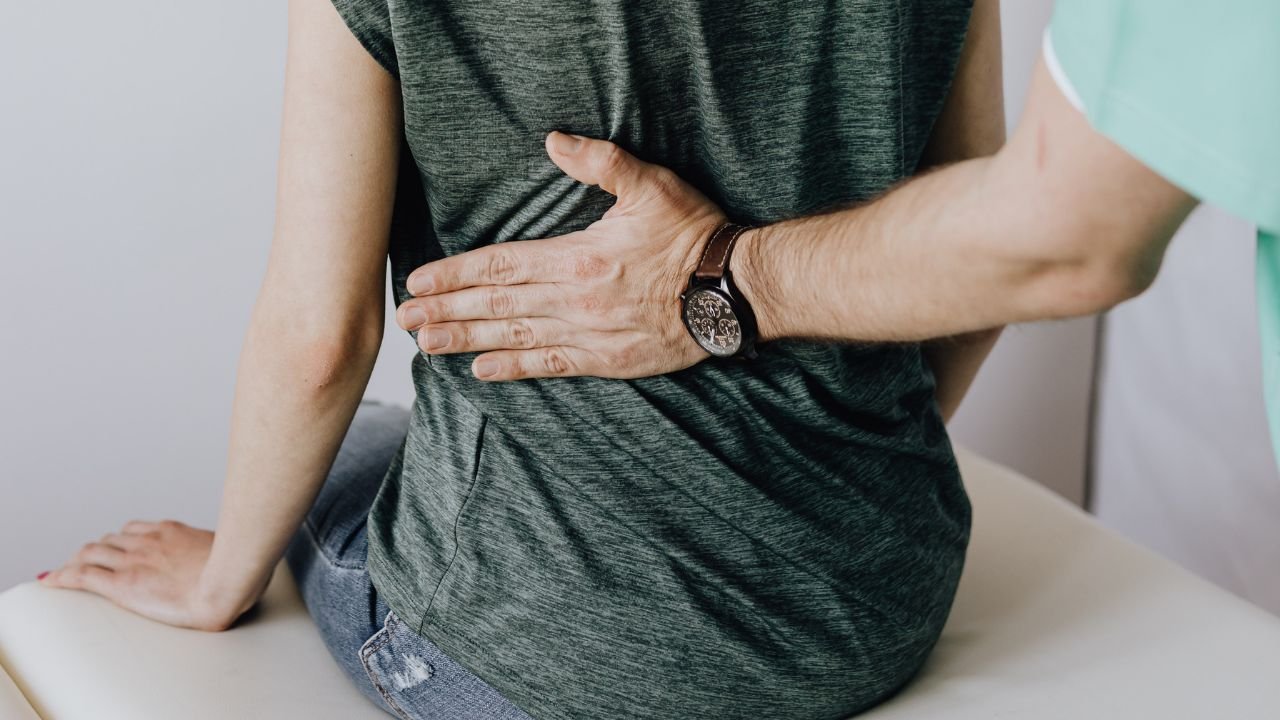
If you’re an active individual dealing with middle back pain, you’re not alone, and you don’t have to accept it as a permanent part of life. The thoracic spine, positioned between your neck and lower back, can develop pain from structural changes, mechanical stress, or inflammatory conditions that limit your performance and daily activities.
Understanding what’s causing your pain helps you and your provider develop a targeted strategy to address it. Pain severity, how long it’s lasted, and how it affects your function determine whether conservative care, interventional procedures, or further evaluation becomes necessary.
Key Takeaways:
- Degenerative disc disease and facet joint arthritis are common structural causes of chronic middle back pain in active adults
- 78% of U.S. adults prefer non-narcotic pain management approaches over opioid medications
- Regenerative therapies like PRP and stem cells are designed to support tissue repair without surgical intervention
- Age-related prevalence increases from 28.4% in adults 18-29 to 45.6% in those 65 and older
- Treatment selection accounts for 34.79% of relative importance in patient decision-making
What Causes Middle Back Pain In Active Individuals?
Middle back pain arises from multiple sources, including spinal discs, facet joints, muscles, and nerve tissue. The causes range from degenerative changes to acute injuries and chronic inflammatory conditions.
For active individuals, mechanical stress from repetitive movements, poor posture, and high-impact activities can accelerate tissue breakdown. You might notice pain after a long day at your desk, following a golf game, or during your weightlifting routine.
Degenerative processes become more common as we age, affecting both athletic performance and everyday activities. When you understand the root causes, you can make informed decisions about treatment.
How Do Degenerative Disc Disease And Facet Joint Arthritis Develop?
Degenerative disc disease occurs when the cushioning discs between your vertebrae wear down over time. As discs lose hydration and height, they provide less shock absorption, which can lead to chronic discomfort and functional limitations.
Facet arthropathy involves arthritis in the small joints along your spine. As cartilage breaks down, bone-on-bone friction creates pain and stiffness. This condition often worsens with extension movements like reaching overhead or arching backward.
The degenerative disc disease market reached $34.31 billion in 2025 and is projected to reach $67.71 billion by 2034, reflecting how common these conditions are becoming as our population ages and remains active longer.
What Role Does Spinal Stenosis Play In Middle Back Pain?
Spinal stenosis involves narrowing of the spinal canal, which creates pressure on the spinal cord and nerves. This narrowing can result from bone spurs, thickened ligaments, or bulging discs that encroach on the available space.
When neural structures become compressed, you might experience pain, numbness, tingling, or weakness. Nonsurgical treatments for spinal stenosis symptoms offer effective relief for many patients, helping prevent progression and maintain an active lifestyle.
How Do Lifestyle And Activity Levels Affect Pain Onset?
Active individuals experience middle back pain through patterns you might not expect. Repetitive motion in your favorite sport, sudden increases in training intensity, and biomechanical stress from poor form can all accelerate joint degeneration and disc wear.
Golf swings require significant rotation through the thoracic spine. Pickleball involves quick directional changes and overhead reaching. Weightlifting places compressive forces on spinal structures. Each activity, when performed without proper conditioning or recovery, can contribute to pain development.
Proper movement mechanics, core strengthening, and gradual progression in your training help reduce structural stress and injury risk. Your body adapts to the demands you place on it, as long as you give it time to do so.
When Should You Be Concerned About Middle Back Pain?
Not all pain requires immediate medical attention, but certain patterns warrant professional evaluation. If your pain persists beyond two weeks despite rest and activity modification, it’s time to seek expert assessment.
Progressive weakness, numbness, or changes in bowel and bladder function require immediate medical attention. These symptoms can indicate nerve compression that needs prompt intervention to prevent permanent damage.
What Are The Warning Signs Of Serious Conditions?
Fever accompanying back pain may indicate infection that requires urgent treatment. Unexplained weight loss, night pain that disrupts your sleep, or a history of cancer raises concern for systemic disease.
Progressive neurological deficits including weakness that’s getting worse, numbness that’s spreading, or coordination loss suggest nerve compression. Sudden onset severe pain following trauma warrants imaging to exclude fracture or ligament injury.
How Does Pain Affect Your Daily Activities And Mobility?
Daily activity limitations account for 11.71% of relative importance when patients consider their treatment options. Pain restricts your ability to bend, lift, reach, and rotate, movements you need for both recreation and work.
Sleep disruption from positional pain reduces your body’s recovery capacity and increases inflammation. Quality sleep is when your body repairs tissue damage, so chronic pain that interrupts rest creates a vicious cycle.
When Should You Seek Medical Evaluation?
Medical evaluation becomes necessary when self-care strategies fail to improve your symptoms within two weeks. If rest, ice, heat, and over-the-counter anti-inflammatory medications haven’t helped, it’s time for professional assessment.
Active individuals should consider evaluation even earlier when pain limits training or competitive performance. Early intervention can prevent compensatory movement patterns that create secondary injuries.
How Do Patient Preferences Influence Treatment Choices?
The type of treatment matters most to patients considering their options. Treatment modality accounts for 34.79% of relative importance in decision-making, more than any other factor including cost or treatment duration.
You want an approach that aligns with your values regarding invasiveness, recovery time, and underlying philosophy. Individual preferences for comprehensive back pain treatment options vary based on lifestyle demands and previous treatment experiences.
What Are the Most Preferred Approaches For Non-Narcotic Pain Management?
78% of U.S. adults prefer non-narcotic pain management over opioid medications for chronic conditions. This overwhelming preference reflects concerns about dependency, side effects, and the desire for solutions that address root causes rather than masking symptoms.
At Integrated Spine, Pain & Wellness, we align with this preference by offering opioid-free treatment options designed to support your body’s natural healing capacity. Dr. Goyle’s training at the Cleveland Clinic emphasized comprehensive, non-narcotic approaches that treat the whole person.
What Dissatisfaction Exists With Current Pain Treatments?
84% of chronic lower back pain sufferers wish better treatment options existed for their condition. This dissatisfaction reflects limitations in conventional approaches that often manage symptoms without addressing underlying tissue damage.
70% report difficulty finding treatments that work well for their pain. Perhaps most concerning, 37% have never received an explanation from healthcare providers about the actual cause of their pain.
This is where specialized regenerative medicine clinics differ from traditional pain management. When you understand what’s causing your pain and how specific treatments are designed to support healing, you can make informed decisions aligned with your values.
What Non-Surgical Treatment Options Are Available?
Non-surgical interventions range from conservative physical rehabilitation to advanced regenerative procedures. The right treatment depends on your pain severity, functional goals, tissue pathology, and personal preferences.
A progressive approach begins with the least invasive options before advancing to interventional procedures when necessary. This strategy minimizes risk while identifying who responds to conservative care.
Choose conservative care first if: Your pain is recent (less than 6 weeks), you haven’t tried structured rehabilitation, or you respond well to activity modification.
Consider interventional procedures when: Conservative care hasn’t provided adequate relief after 6-12 weeks, pain significantly limits your valued activities, or a diagnostic injection would help identify the specific pain generator.
How Effective Are Physical Therapy And Body-Mind Exercises?
Physical therapy strengthens core musculature, improves flexibility, and corrects movement patterns contributing to your pain. Guided exercises target specific deficits while manual techniques address muscle tension and joint restrictions.
The importance of physical therapy in comprehensive pain management cannot be overstated. It forms the foundation of conservative care, with session costs typically ranging from $130 to $150.
Body-mind exercises, including yoga and Pilates, enhance body awareness and reduce stress-related muscle tension. The key is finding a therapist who understands the demands of your specific activities.
When Are Epidural Or Facet Joint Injections Used?
Epidural steroid injections deliver anti-inflammatory medication directly into the epidural space surrounding the spinal cord. These spinal injections provide both diagnostic information and therapeutic relief for nerve-related pain.
Facet joint injections target the small joints between vertebrae to reduce inflammation and confirm pain generators. When performed with advanced imaging guidance, these procedures can precisely identify which structures are causing your symptoms.
Costs range from $550 to $1,250, depending on imaging requirements and facility setting. Many patients find targeted injections helpful when conservative care hasn’t provided adequate relief.
What Is The Role Of Regenerative Medicine Like PRP And Stem Cell Therapy?
PRP therapy concentrates platelets from your own blood and injects them into damaged tissue. The concentrated growth factors are designed to support tissue healing and reduce inflammation through natural biological signaling.
Stem cell therapy for back pain extracts bone marrow, concentrates stem cells, and injects them into affected areas. What is stem cell therapy and how it works fascinates many patients seeking alternatives to surgery.
Regenerative medicine approaches continue advancing through improved processing and delivery methods. The global stem cell therapy market projects to $45.2 billion by 2036, reflecting increasing acceptance of these tissue repair approaches.
At ISPW, Dr. Goyle uses advanced techniques including APEX Biologix PRP systems and is Arizona’s exclusive Regenokine® provider. These cutting-edge treatments are designed to support your body’s natural healing capacity.
When Is Surgery Considered For Middle Back Pain?
Surgery becomes a consideration when conservative and interventional treatments haven’t addressed structural instability or progressive neurological deficits. Most patients exhaust non-surgical options over 6-12 months before proceeding to operative intervention.
Consider surgery when: You have progressive weakness or neurological changes, severe structural instability, or debilitating pain unresponsive to comprehensive conservative and regenerative treatments.
Continue non-surgical approaches when: You’re still improving with treatment, you haven’t explored all regenerative options, or your functional limitations are manageable.
What Surgical Procedures Address Degenerative And Structural Issues?
Spinal fusion permanently joins two or more vertebrae to eliminate motion at painful segments. Fusion devices accounted for 39.8% of the spine pain market share in 2025.
Decompression procedures remove bone or tissue compressing neural structures without fusion. Minimally invasive techniques reduce tissue trauma compared to traditional open approaches, potentially shortening recovery time.
What Risks And Recovery Factors Should You Consider?
Spinal fusion surgery carries higher risks compared to non-surgical options including infection, hardware complications, and adjacent segment degeneration. Surgery involves longer recovery times ranging from 3-6 months before returning to demanding activities.
Recovery success depends on your overall health status, surgical technique, and adherence to rehabilitation protocols. Patients who follow post-surgical guidelines carefully tend to have better outcomes.
How Do Costs Compare Between Surgical And Non-Surgical Treatments?
Physical therapy costs $130-$150 per session while facet joint injections range from $550 to $1,250. PRP single injections cost $500-$2,500 depending on processing methods. Stem cell therapy ranges from $2,000 to $20,000 based on treatment protocols.
Spinal fusion surgery costs $80,000-$150,000, creating substantial financial difference compared to regenerative and conservative approaches. This doesn’t include time away from work or potential complications.
How Do Demographics Impact Middle Back Pain Prevalence?
Middle back pain prevalence increases with age across all demographic groups. Back pain prevalence among adults aged 18-29 years reaches 28.4% and increases to 35.2% for ages 30-44. The rate climbs to 44.3% for ages 45-64 and peaks at 45.6% for those 65 and older.
Women experience back pain at 40.6% prevalence compared to 37.2% for men. Non-Hispanic White adults report 42.7% prevalence, while Non-Hispanic Asian adults demonstrate the lowest at 24.5%.
Income below 100% of federal poverty level correlates with 44.8% prevalence versus 37.6% for higher income groups, highlighting the importance of making effective treatment accessible.
What Are The Emerging Trends In Managing Middle Back Pain?
Regenerative medicine continues advancing through improved cell processing and delivery methods. Biologics offer tissue repair potential beyond temporary symptom control provided by conventional injections.
The shift away from opioids drives innovation in multimodal pain management combining physical, interventional, and biological approaches. Advanced imaging identifies specific pain generators, enabling targeted interventional approaches.
Minimally invasive techniques reduce tissue trauma, postoperative pain, and recovery duration. Image-guided precision allows targeted delivery of medications and biologics to specific structures. Outpatient procedures eliminate hospital stays while maintaining clinical effectiveness.
Treatment Selection: Choosing The Right Approach For Your Middle Back Pain
Comprehensive management follows progressive intervention levels based on symptom severity and treatment response. First-line interventions include physical therapy, chiropractic care, ergonomic adjustments, and lifestyle modifications.
Choose physical therapy and conservative care if: Your pain is recent (less than 12 weeks), you haven’t tried structured rehabilitation, or you have good days and bad days rather than constant severe pain.
Choose diagnostic injections when: Conservative care hasn’t provided adequate relief after 8-12 weeks, you need to identify the specific pain generator, or targeted relief would help you participate more effectively in physical therapy.
Choose regenerative medicine approaches when: You want to address underlying tissue damage, you’ve had temporary relief from standard injections but want longer-lasting results, or you’re looking to avoid surgery while actively addressing degeneration.
Choose surgical consultation when: You have progressive neurological deficits, structural instability, or pain that hasn’t responded to comprehensive treatments over 6-12 months.
Stop Managing Your Pain; Start Healing It
Active individuals experiencing middle back pain don’t have to accept limitations as a permanent part of life. Evidence-based treatments spanning conservative care through advanced regenerative procedures offer real solutions designed to support your body’s natural healing capacity.
At Integrated Spine, Pain & Wellness, Dr. Ashu Goyle brings Cleveland Clinic-level expertise to personalized regenerative medicine care. As Arizona’s exclusive Regenokine® provider and a pioneer in non-narcotic pain management, Dr. Goyle specializes in helping active adults restore function and return to the lives they love.
You don’t have to choose between accepting pain and undergoing surgery. There’s a comprehensive spectrum of treatment options designed to support healing, not just manage symptoms.
Schedule your consultation today to discover how targeted regenerative interventions can address your specific pain generators and help you reclaim the active lifestyle you deserve. Your pain has causes, and those causes have solutions.


