
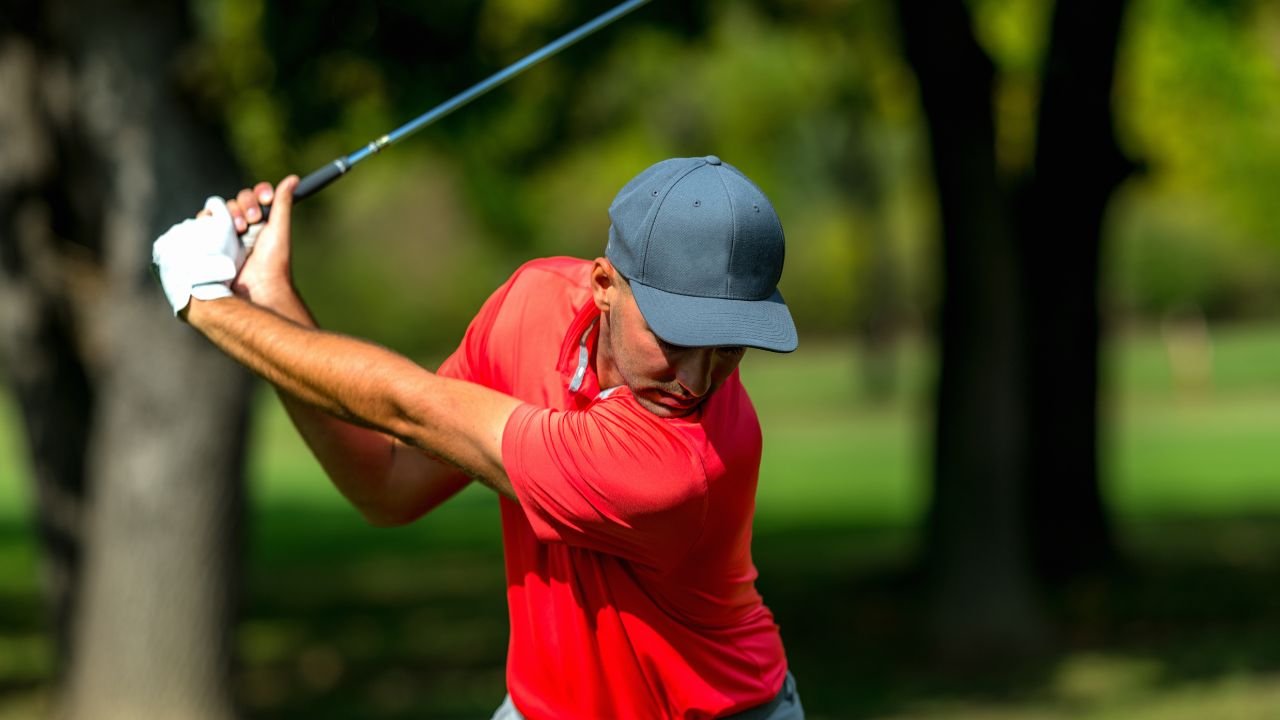
Scottsdale golfers face a unique challenge: year-round play on firm desert terrain creates relentless stress on joints, leading to chronic injuries that traditional treatments fail to address. Lower back pain affects 80% of players, while golfer’s elbow, rotator cuff injuries, and knee degeneration sideline thousands each season. The good news is that advanced regenerative medicine options now allow players to heal the underlying damage rather than simply masking symptoms with temporary fixes.
This guide explores the most common golf injuries affecting Scottsdale players, the cutting-edge treatments available to address them, and the proven strategies that get you back on the course faster.
Key Takeaways
- Lower back pain affects 80% of Scottsdale golfers due to repetitive rotational stress, poor hip mobility, and year-round play without seasonal rest periods that allow healing.
- Regenerative treatments like PRP and stem cell therapy offer 4-8 week return timelines compared to 6-12 months for surgical interventions, with combined protocols achieving 30-40% better outcomes.
- Equipment fitting and swing biomechanics correction are essential components of injury prevention and treatment, as improper club fit forces compensatory movement patterns that increase injury risk.
- Structured rehabilitation progression through six distinct phases ensures safe return to competitive play while minimizing re-injury risk that can extend recovery times.
- Scottsdale-specific factors, including 300+ sunny days annually, firm desert terrain, and a competitive 55-75 age demographic, require customized treatment approaches rather than generic protocols.
What Are The Most Common Golf Injuries In Scottsdale?
Lower back rotational strain affects 80% of Scottsdale golfers, making it the dominant injury pattern in the region. Golfer’s elbow (25% prevalence), rotator cuff injuries (20%), knee problems (15%), and wrist tendinitis round out the top five golf injuries that keep players off the course.
Most Common Golf Injuries Affecting Scottsdale Players
| Injury Name | Symptoms | Common Causes | Typical Treatment Approaches |
| Lower Back Pain (Rotational Lumbar Strain) | Pain during rotation, stiffness, reduced range of motion | Improper swing mechanics with excessive lumbar rotation, over-swinging due to lacking hip mobility, repetitive microtrauma without adequate rest | Physical therapy focusing on hip and thoracic flexibility, core rotational strengthening, PRP therapy for tendinopathy, activity modification |
| Golfer’s Elbow (Medial Epicondylitis) | Inner elbow pain, weakness in grip, pain radiating down forearm | Repetitive stress from improper swing technique, equipment mismatch, lack of conditioning and flexibility | Prolotherapy for ligament/tendon repair ($500-$1,500), ultrasound-guided precision injections, equipment fitting, swing biomechanics correction |
| Rotator Cuff Injuries | Shoulder pain during external rotation, weakness, limited overhead motion | Poor posture (rounded forward shoulders), over-swinging, lack of shoulder conditioning | PRP therapy for tendinopathy ($800-$1,500), physical therapy with scapular stabilization, dry needling for trigger points |
| Knee Injuries (Meniscus/OA) | Pain during stance, swelling, reduced stability, stiffness | Repetitive stress from stance mechanics, firm/uneven desert terrain impact, age-related degeneration | Viscosupplementation with hyaluronic acid ($500-$2K), stem cell therapy (BMAC) for severe cases ($3K-$8K) |
| Wrist Tendinitis | Pain during grip, swelling, reduced wrist angle control | Repetitive gripping stress, improper grip technique, equipment mismatch | Ultrasound-guided injections for tendon/joint precision, activity modification, equipment fitting |
Injury Prevalence in Scottsdale Golfers:
- 80% experience lower back rotational/lumbar issues (flexion/extension problems)
- 25% develop golfer’s elbow (medial epicondylitis)
- 20% suffer rotator cuff shoulder injuries
- 15% experience knee meniscus/OA issues
Scottsdale-Specific Factors Contributing To Golf Injuries
Terrain and Environmental Factors:
- 300+ sunny days annually enable year-round play, leading to higher injury volume from constant repetition without seasonal rest periods
- Desert firm and uneven terrain increases impact forces on joints, particularly knees and ankles, compared to softer grass courses
- Rocky, hard-packed ground conditions create greater stress on lower-body joints during stance and swing
Demographics and Playing Patterns:
- Dominant age demographic of 55-75 years experiences age-related degeneration that compounds golf-related stress
- Competitive player mentality is common in Scottsdale golfers who refuse to rest despite pain signals
- Multiple rounds per week create overuse patterns without adequate recovery time between sessions
Weather Considerations:
- Heat exposure leads to dehydration, which reduces muscle elasticity and increases strain risk
- Dry air conditions affect joint lubrication and tissue flexibility
- Intense sun exposure can cause fatigue, leading to compromised swing mechanics
How Do Golf Injuries Affect A Player’s Performance?
Golf injuries create compensatory movement patterns that reduce power, accuracy, and consistency. Back pain limits rotation speed, wrist issues compromise grip strength, and knee instability disrupts weight transfer—all while increasing the risk of secondary injuries from altered swing mechanics.
Physical Impacts Of Common Injuries On Swing Mechanics
Back Pain Impact on Posture and Rotation:
- Excessive lumbar rotation stress compromises the ability to maintain proper spine angle throughout the swing
- Poor posture (rounded forward position) limits thoracic rotation, forcing compensatory lumbar stress
- Lack of hip mobility forces over-swinging and places additional strain on the lower back
- Weak core musculature fails to stabilize the rotational forces during the swing
Wrist Injuries Affecting Grip Strength and Angle:
- Wrist tendinitis reduces grip strength, leading to compensatory tension in forearms and shoulders
- Limited wrist angle control affects club face position at impact, reducing accuracy
- Pain during impact forces golfers to decelerate through the ball, losing distance
Knee Issues Affecting Stability and Stance:
- Meniscus or OA damage reduces stability during weight transfer from backswing to downswing
- Pain during stance phase forces golfers to alter their lower body mechanics, creating compensatory stress patterns
- Reduced knee flexion capability limits the ability to maintain proper posture angle
Equipment Mismatch Compounding Biomechanical Issues:
- Improper club fitting forces compensatory swing mechanics that increase injury risk
- Wrong grip size or shaft flex creates additional stress on wrists, elbows, and shoulders
Long-Term Performance Effects Of Untreated Golf Injuries
| Injury Type | Long-Term Consequences | Impact on Golf Performance |
| Lower Back Strain | Chronic pain, decreased spinal flexibility, progressive disc degeneration, muscle imbalances | Reduced rotation speed, loss of power generation, inability to maintain posture through swing, shortened playing sessions |
| Golfer’s Elbow | Chronic tendinosis, permanent tendon weakening, nerve compression | Reduced swing speed, loss of grip strength affecting club control, painful impact sensation forcing deceleration |
| Rotator Cuff Injury | Chronic inflammation, tendon tears, frozen shoulder, muscle atrophy | Limited backswing length, reduced clubhead speed, inability to maintain swing plane, loss of overhead motion |
| Knee OA/Meniscus | Progressive joint degeneration, chronic inflammation, reduced range of motion, instability | Compromised weight transfer, loss of lower body power, inability to maintain stance through impact, shortened walking tolerance |
| Wrist Tendinitis | Chronic pain, reduced flexibility, arthritis development | Poor club face control, reduced wrist hinge affecting distance, painful impact forcing protective swing modifications |
What Are The Best Advanced Treatment Options For Golf Injuries In Scottsdale?
Advanced treatment for golf injuries in Scottsdale centers on regenerative medicine protocols that support the body’s natural healing capacity. Chronic pain management has evolved beyond symptom masking to address the underlying tissue damage causing pain.
Non-Surgical Treatment Options for Golf Injuries
Physical Therapy Techniques:
- Titleist Performance Institute (TPI) biomechanics-focused swing analysis to identify and correct movement patterns causing injury
- Hip and thoracic flexibility programs specifically designed to reduce compensatory lumbar stress
- Core rotational strengthening exercises to stabilize the spine during the golf swing
- Equipment fitting assessment to ensure clubs match body mechanics and reduce strain
- Activity modification protocols to allow healing while maintaining fitness
Regenerative Medicine Options:
Platelet-Rich Plasma (PRP) Therapy for tendinopathy and osteoarthritis: $800-$1,500 per treatment, uses concentrated healing factors from the patient’s own blood to support damaged tendons and joints. Combined PRP and physical therapy protocols enhance treatment outcomes by 30-40% compared to either treatment alone.
Bone Marrow Aspirate Concentrate (BMAC) stem cell therapy for severe joint damage: $3,000-$8,000 per treatment, harvests patient’s own stem cells to support tissue regeneration. This approach is particularly effective for knee injuries where stem cell therapy offers an alternative to traditional interventions.
Prolotherapy for ligament and tendon stabilization: $500-$1,500 per treatment, designed to support natural healing response in weakened connective tissue.
Viscosupplementation with Hyaluronic Acid for knee osteoarthritis: $500-$2,000 per treatment series, provides lubrication and cushioning in degenerated joints.
Injection-Guided Precision Techniques:
- Ultrasound-guided injections for precise tendon and joint targeting, minimizing tissue trauma
- Fluoroscopy-guided spinal procedures for facet joints, epidural injections, and sacroiliac joint treatments
- Annual maintenance injection protocols for sustained long-term relief
Common Surgical Interventions For Golf Injuries
| Type of Surgery | Indications for Surgery | Benefits and Risks | Typical Recovery Times |
| Arthroscopic Knee Surgery (Meniscus Repair) | Significant meniscus tear with locking, catching, or mechanical symptoms not responding to conservative treatment | Benefits: Minimally invasive, preserves healthy tissue. Risks: Infection, incomplete healing, arthritis progression | 4-6 weeks to light activity; 8-12 weeks to return to golf |
| Rotator Cuff Repair | Full-thickness rotator cuff tear with significant weakness and failed conservative treatment over 3-6 months | Benefits: Restores shoulder function and strength. Risks: Re-tear, stiffness, nerve injury | 3-4 months for basic activities; 6-9 months for full return to golf |
| Tommy John Surgery (UCL Reconstruction) | Complete medial collateral ligament tear in elbow with instability | Benefits: Restores stability and function. Risks: Nerve damage, incomplete recovery | 6-9 months for throwing athletes; 4-6 months for golfers |
| Spinal Fusion | Severe disc degeneration, instability, or spinal stenosis causing neurological symptoms | Benefits: Eliminates pain source, stabilizes spine. Risks: Adjacent level degeneration, reduced flexibility, nonunion | 6-12 months for full recovery; may have permanent swing limitations |
| Total Knee Replacement | End-stage osteoarthritis with bone-on-bone contact and failed conservative treatments | Benefits: Eliminates arthritis pain, restores function. Risks: Infection, implant loosening, limited flexion | 3-6 months for walking golf; 6-12 months for full return |
Recovery Timeline For Golf Injury Treatments
| Treatment Type | Recovery Stage | Typical Duration |
| PRP/Prolotherapy Injections | Initial rest and inflammation phase | 1-2 weeks |
| Gradual strengthening and range of motion | 2-4 weeks | |
| Return to short-range practice | 4-6 weeks | |
| Full return to course play | 6-8 weeks | |
| Stem Cell (BMAC) Therapy | Initial healing and cell integration | 2-4 weeks |
| Progressive strengthening phase | 4-8 weeks | |
| Gradual return to practice | 8-12 weeks | |
| Full return to competitive play | 12-16 weeks | |
| Physical Therapy (Conservative) | Initial pain reduction and mobility | 2-4 weeks |
| Strengthening and biomechanics correction | 4-8 weeks | |
| Gradual return to play with modifications | 6-10 weeks | |
| Full unrestricted play | 10-12 weeks |
What Advanced Regenerative Treatments Are Available In Scottsdale For Golfers Who Want To Stay On The Green?
Scottsdale golfers have access to comprehensive regenerative medicine options that allow continued play while healing. Regenokine therapy represents the most advanced option, offering targeted anti-inflammatory support for joint health. PRP therapy combined with physical therapy protocols enhances outcomes by 30-40%, while stem cell (BMAC) therapy provides tissue regeneration for severe joint damage.
For golfers protecting their game with advanced joint support, these treatments offer return-to-play timelines ranging from 4-8 weeks for most regenerative protocols.
Why Is Scottsdale Known For Its Expertise In Treating Golf Injuries?
Scottsdale has emerged as a center for golf injury treatment due to its concentration of regenerative medicine specialists and the unique demands of its year-round golf community. The region’s medical expertise has evolved specifically to address the high-volume injury patterns created by desert terrain and constant play.
Reasons Scottsdale Is Recognized For Specialized Golf Injury Treatment
World-Class Medical Expertise:
- Concentration of double board-certified pain medicine specialists with fellowship training from elite institutions
- Sports medicine physicians with specific training in golf biomechanics and performance optimization
- Access to regenerative medicine specialists offering cutting-edge PRP, stem cell, and biologics therapies
Cutting-Edge Treatment Availability:
- State-of-the-art ultrasound and fluoroscopy-guided injection techniques for precision treatment
- Advanced regenerative medicine protocols, including PRP, BMAC, and prolotherapy
- Integration of functional medicine approaches addressing root causes rather than just symptoms
Golf-Specific Rehabilitation Programs:
- Titleist Performance Institute (TPI) certified physical therapists specializing in golf biomechanics
- Customized return-to-play protocols designed specifically for golfers’ unique movement patterns
- Equipment fitting services integrated with medical treatment for comprehensive injury prevention
Many Scottsdale golfers staying active after 50 benefit from specialists who understand the intersection of age-related degeneration and golf-specific stress patterns. The availability of alternatives to steroid injections has transformed treatment options for players who previously faced limited choices.
What Preventative Measures Can Help Avoid Golf Injuries?
Prevention starts with proper preparation. Scottsdale’s year-round golf climate means players need consistent warm-up routines and conditioning programs to protect against the repetitive stress that causes 80% of golf-related back injuries.
Warm-Up And Stretching Exercises To Prevent Golf Injuries
Dynamic Shoulder Stretches:
- Target Area: Rotator cuff, shoulder external rotators
- Benefits for Golfers: Improved range of motion for backswing, injury prevention for the 20% of golfers who develop rotator cuff issues, enhanced shoulder stability during swing
Hip Mobility Exercises:
- Target Area: Hip flexors, hip rotators, glutes
- Benefits for Golfers: Reduces compensatory lumbar stress that causes 80% of golf back injuries, allows proper rotation without over-swinging, improves lower body power generation
Thoracic Rotation Stretches:
- Target Area: Mid-back (T1-T12), rib cage mobility
- Benefits for Golfers: Reduces excessive lumbar rotation by improving thoracic spine mobility, prevents the rounded forward posture that limits rotation, enhances full-body swing efficiency
Core Activation Warm-Up:
- Target Area: Abdominal muscles, obliques, lower back stabilizers
- Benefits for Golfers: Stabilizes rotational forces during swing, prevents repetitive microtrauma from lack of core conditioning, supports proper posture throughout the round
Wrist and Forearm Stretches:
- Target Area: Wrist flexors, extensors, forearm muscles
- Benefits for Golfers: Prevents wrist tendinitis, improves grip endurance, reduces risk of golfer’s elbow (25% prevalence)
Importance Of Technique And Equipment In Injury Prevention
Proper Swing Technique to Minimize Strain:
- Avoid excessive lumbar rotation by initiating rotation from the hips and thoracic spine
- Maintain proper posture (avoid rounded forward position) to reduce shoulder and back stress
- Prevent over-swinging by developing adequate hip mobility and flexibility
- Allow adequate rest between practice sessions to prevent repetitive microtrauma
Importance of Correct Grip and Posture:
- Proper grip pressure reduces forearm and wrist strain that leads to tendinitis
- Neutral posture throughout swing minimizes compensatory stress patterns
- Proper address position reduces lower back flexion/extension stress
Role of Club Fitting and Equipment Selection:
- Equipment mismatch is a primary cause of golf injuries and must be addressed
- Proper club length, lie angle, and shaft flex reduce biomechanical compensation
- Correct grip size prevents excessive forearm tension and wrist strain
- Appropriate golf shoes provide stability on firm, uneven desert terrain specific to Scottsdale courses
Conditioning and Flexibility Programs:
- Lack of conditioning in flexibility and core strength is a major injury contributor
- Year-round conditioning is essential in Scottsdale’s 300+ sunny-day climate, where golfers play without seasonal breaks
- A combination of strength training and flexibility work creates an injury-resistant body
How Can You Safely Return To The Golf Course After An Injury?
Safe return requires structured progression. Rushing back to competitive play risks re-injury and prolonged recovery times that keep players off the course longer.
Rehabilitation Stages For Safe Return To Golf
| Phase | Activities in Each Phase | Duration of Each Phase |
| Rest and Initial Healing Phase | Complete rest from golf, ice and compression protocols, gentle range of motion exercises, anti-inflammatory management | 1-2 weeks for minor injuries; 2-4 weeks for moderate injuries |
| Early Strengthening Phase | Progressive strengthening exercises, gradual increase in range of motion, continued recovery protocols (ice/compression), biomechanical assessment and correction | 2-4 weeks |
| Advanced Strengthening and Swing Modification Phase | Golf-specific strengthening exercises, swing modifications to reduce stress on injured area, equipment fitting adjustments, pre-round warmup protocol development | 2-4 weeks |
| Short-Range and Limited Practice Phase | Gradual return starting with short-range practice, limited number of swings per session, focus on proper technique with reduced intensity, monitoring pain levels during practice | 2-3 weeks |
| Progressive Course Play Phase | Start with 9 holes or executive courses, gradual increase to full 18-hole rounds, implementation of pre-round warmup routine, post-round recovery protocols | 2-3 weeks |
| Full Return to Competitive Play Phase | Unrestricted golf activity with continued maintenance, annual injection maintenance for regenerative treatments, ongoing conditioning and flexibility work | Ongoing (4-8 weeks total from injury to full return) |
Expert Recommendations For Safe Return To Golf After Injury
Gradual Progression Strategy:
- Follow the 4-8 week gradual progression timeline from short-range practice to full course play
- Begin with limited swing sessions focusing on technique rather than power
- Progress from short-range practice to executive courses before returning to full championship courses
- Avoid the temptation to play multiple rounds per week immediately after return
Pain Monitoring Protocols:
- Monitor pain levels during and after practice sessions
- Any increase in pain signals the need to step back in progression
- Distinguish between normal muscle soreness and injury pain recurrence
- Use pain as a guide for appropriate activity level rather than pushing through discomfort
Pre-Round Warmup Routine Implementation:
- Establish a comprehensive pre-round warmup protocol before every round
- Include dynamic stretching for shoulders, hips, and thoracic spine
- Perform golf-specific movement patterns before first tee
- Allocate 15-20 minutes for proper warmup to prevent re-injury
Swing Modifications to Reduce Stress:
- Implement swing modifications that reduce extension and rotation stress on injured area
- Work with certified instructors to optimize biomechanics while protecting healing tissues
- Focus on hip and thoracic rotation to minimize lumbar stress
- Maintain proper posture throughout swing to prevent compensatory patterns
Post-Round Recovery Protocols:
- Implement ice and compression protocols after rounds
- Perform gentle stretching and mobility work post-round
- Allow adequate recovery time between rounds based on injury severity
Professional Consultation Requirements:
- Consult with physical therapists or physicians before progressing to full return
- Obtain clearance for competitive play from the treating specialist
- Continue annual maintenance treatments for regenerative injection procedures
- Schedule follow-up assessments to ensure proper healing progression
Why Choosing The Right Treatment Plan Is Key For Golfers In Scottsdale
Personalized treatment determines whether you return to the course in weeks or months. Lower back injuries (80% of golfers) require different protocols than elbow injuries (25%) or shoulder issues (20%), and treatment selection between PRP ($800-$1,500) and stem cell therapy ($3,000-$8,000) depends on severity and tissue type. Combined regenerative and physical therapy protocols achieve 30-40% better outcomes than single-modality approaches, with return timelines of 4-8 weeks versus 6-12 months for surgery.
The right specialist has specific training in golf biomechanics, offers precision-guided injection techniques, and integrates swing modifications with treatment protocols. Look for evidence of successful golf-specific outcomes, emphasis on return-to-play timelines, and availability of annual maintenance programs for sustained results.
Getting you back on the course means addressing the biomechanical patterns that caused the injury and optimizing swing mechanics to prevent recurrence. Contact Integrated Spine, Pain & Wellness today to develop a personalized treatment plan designed to get you back to the green.


