
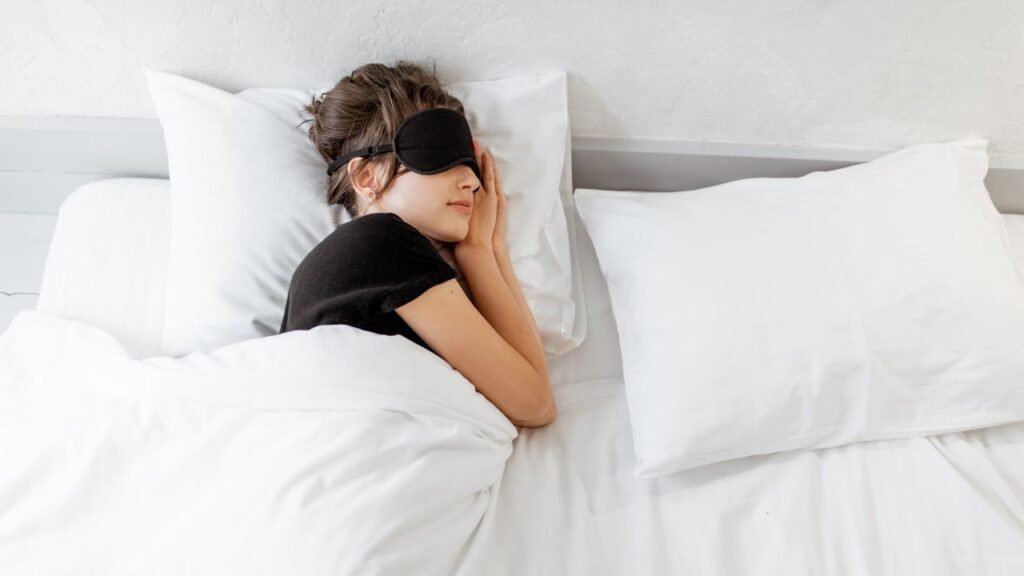
If lower back pain disrupts your sleep, you’re caught in a vicious cycle: pain prevents restful sleep, and poor sleep amplifies pain sensitivity. Most patients try new pillows and mattresses for months without addressing the core question: Is your sleep position helping your spine heal, or making it worse? For active Scottsdale residents frustrated by chronic lower back pain from golf, pickleball, or degenerative conditions, sleep optimization is a critical component of comprehensive pain management.
This evidence-based guide provides the exact sleeping positions used by board-certified pain specialists to reduce overnight spinal stress, support tissue repair, and improve morning mobility.
Key Takeaways
- Side sleeping with a pillow between the knees is the most effective position for lower back pain
- Medium-firm mattresses (5-7 out of 10) provide optimal support for most patients
- Stomach sleeping forces lumbar hyperextension and should be avoided
- Sleep optimization complements but does not replace the treatment of structural pathology
- Persistent pain beyond 4 weeks warrants clinical evaluation and pain doctor advice
What Causes Lower Back Pain And How Do Sleeping Positions Affect It?
Lower back pain originates from structural breakdown, nerve compression, or inflammatory processes in the lumbar spine. Sleeping positions either support neutral spinal alignment and facilitate tissue repair or create biomechanical stress that worsens underlying pathology.
Common Causes of Lower Back Pain
- Muscle strain from overexertion during golf, pickleball, hiking, or weightlifting
- Herniated disc, nucleus pulposus compresses adjacent nerve roots; common in ages 35-65
- Sciatica: radiating pain caused by lumbar disc herniation, piriformis syndrome, or spinal stenosis
- Degenerative disc disease; age-related loss of disc height; prevalent in the 60-80 retiree demographic
- Spinal stenosis; narrowing of the spinal canal; worsens with extension-based sleep positions
- Facet joint arthritis; cartilage breakdown exacerbated by rotational or hyperextended sleep postures
- Post-surgical discomfort; unresolved pain after spine surgery; a key trigger for ISPW patients
Chronic back pain, defined as pain lasting more than 12 weeks, is treated at ISPW as a primary indication for regenerative intervention. The U.S. pain management industry is projected to grow from $27.08B (2024) to $37.39B (2033).
How Sleeping Positions Affect Lower Back Pain
Proper positions maintain neutral lumbar lordosis and distribute disc pressure evenly. Stomach sleeping increases lumbar extension, narrowing the foramen and worsening sciatica. Side sleeping with a pillow between the knees reduces hip drop and relaxes lumbar paraspinals. Unsupported side sleeping allows the spine to sag laterally, increasing asymmetric disc load. Back sleeping distributes body weight evenly, improving blood flow to lumbar tissues overnight.
How Sleeping Positions Help Prevent Or Relieve Lower Back Pain
Back sleeping with a pillow under the knees preserves the spine’s natural lordosis. Side sleeping with knee support decreases hip-to-spine rotational torque. Proper alignment allows regenerative healing processes to occur without postural interference. Neutral positioning reduces overnight joint inflammation, especially for patients with facet arthritis or DDD. Patients receiving PRP therapy, BMAC, or Regenokine® benefit from sleep positions that minimize stress on treated joints.
What Are The Best Sleeping Positions For Lower Back Pain Relief?
Side sleeping with a pillow between the knees is the single most effective position for lower back pain. It maintains neutral hip-pelvis-lumbar alignment, reduces rotational torque, and is appropriate for disc herniation, sciatica, facet arthritis, and muscle strain. Back sleeping with knee support is the second-best option. Stomach sleeping should be avoided.
Benefits Of Sleeping On Your Side For Lower Back Pain
- Keeps the spine in near-neutral lateral alignment when hips and knees are stacked
- Pillow between knees prevents the top leg from pulling the pelvis forward
- Left-sided sleeping can reduce acid reflux
- Fetal position opens the posterior intervertebral foramen, relieving nerve compression
- Least disruptive position after acute sports injuries (golf, pickleball, weightlifting)
ISPW patients in the Active Ageless Athlete segment (ages 25-70) most commonly present with mechanical lower back pain and sleep disruption.
Benefits Of Sleeping On Your Back For Lower Back Pain
- Distributes body weight evenly, minimizing pressure concentration
- Pillow under knees reduces lumbar hyperextension and relieves tension
- Small lumbar pillow fills the natural arch gap for flat-back patients
- Reduces sacroiliac (SI) joint stress, important for retirees with SI dysfunction
- Maintains cervical alignment (similar principles apply to neck pain treatment)
- Ideal for post-procedure recovery requiring minimal positional torque
Downsides Of Sleeping On Your Stomach With Back Pain
- Forces lumbar hyperextension, compressing facet joints and posterior disc structures
- Requires cervical spine to rotate 90°, creating cervical and thoracic strain
- Increases intervertebral disc pressure throughout the night
- Flattens the natural lumbar curve, creating chronic paraspinal muscle tension
- Particularly harmful for patients over 60 with degenerative disc disease or stenosis
How Pillow Placement Affects Lower Back Pain
| Pillow Placement | Sleep Position | LBP Outcome |
| Between the knees | Side sleeper | Excellent, #1 recommended |
| Under knees | Back sleeper | Excellent, best for back sleepers |
| Under lower back | Back sleeper | Good, for flat-back posture |
| Under pelvis | Stomach sleeper | Fair, partial correction only |
| No support | Stomach sleeper | Poor, strongly discouraged |
How To Optimize Your Sleep Environment For Better Lower Back Health
Your mattress and firmness level directly influence whether your spine decompresses or accumulates stress overnight. Most patients with chronic lower back pain benefit from a medium-firm mattress (5-7 out of 10) that provides contouring without excessive sinkage.
Comparison Of Mattress Types For Lower Back Pain
| Mattress Type | Best For | Key Benefit |
| Memory foam | Side sleepers with hip/shoulder sensitivity | Contours to body; reduces pressure points |
| Innerspring (coil) | Stomach/back sleepers | Firm, even support; cool airflow |
| Hybrid (foam + coil) | Multiple sleep positions | Best all-around, contouring + support |
| Latex | Back sleepers | Consistent lumbar support; resists sagging |
Mattress Firmness And Its Impact On Lower Back Pain Relief
| Firmness Level | Side Sleeper | Back Sleeper | Stomach Sleeper |
| Soft (1-3) | Poor, spine sags | Poor | Poor |
| Medium (4-6) | Good | Good | Fair |
| Medium-firm (6-7) | Good | Excellent | Fair with pelvis pillow |
| Firm (8-10) | Poor | Poor | Best |
Pros And Cons Of Adjustable Beds For Lower Back Pain Relief
The zero-gravity position reduces lumbar disc pressure and improves circulation, particularly beneficial for post-procedure Scottsdale recovery. Adjustable beds allow patients to find their precise comfort angle and are beneficial for spinal stenosis patients who find relief in slight lumbar flexion.
However, the higher cost ($1,000-$4,000+) may be a consideration. Not all mattress types work with adjustable bases, and mechanical noise can disrupt sleep. Most importantly, adjustable beds will not address the root cause if structural issues remain untreated. Position them as a complementary tool within ISPW’s whole-body healing philosophy; not a standalone treatment.
What Are The Key Dos And Don’ts For Sleeping With Lower Back Pain?
These guidelines translate clinical sleep science into actionable habits that reduce overnight spinal stress, support tissue healing, and minimize morning stiffness.
Dos for Sleeping With Lower Back Pain
- Place a firm pillow between your knees when side sleeping (the #1 recommended habit)
- Use a pillow under the knees when back sleeping
- Choose a medium-firm mattress unless a specific position warrants otherwise
- Maintain consistent sleep and wake times; circadian disruption elevates cortisol
- Log sleep position and morning pain level for two weeks before clinical consultation
- Apply heat therapy for 15-20 minutes before sleep to relax paraspinal muscles
- Roll to your side using your arms before rising
Don’ts For Sleeping With Lower Back Pain
- Don’t sleep on your stomach, the single worst position for lower back pain
- Don’t use an overly soft mattress that allows hips to sink below shoulders
- Don’t twist the torso when turning in bed, keep hips and shoulders moving together
- Don’t stack multiple pillows under the head
- Don’t ignore worsening morning pain beyond 2-4 weeks without evaluation
- Don’t rely solely on sleep position when structural causes require clinical treatment
Heat vs. Ice Therapy For Lower Back Pain Before Sleep
Heat therapy works best for muscle-dominant pain. It increases blood flow to lumbar muscles, relaxes muscle spasm, and reduces resting tension. Recommended for chronic muscular pain, morning stiffness, and degenerative disc disease. Apply a moist heat pad for 15-20 minutes before bed; remove before sleeping.
Ice therapy is best for inflammatory or acute pain. It reduces inflammatory edema around irritated discs and nerve roots while numbing acute pain signals. Recommended for acute strain (within 48-72 hours), post-procedure flare, and inflammatory arthritis. Apply a wrapped ice pack for 10-15 minutes.
For ISPW patients who received same-day PRP or BMAC treatments, ice is typically contraindicated in the treated area.
How Can You Combine Sleep Position Adjustments With Other Treatments For Lower Back Pain?
Sleep position optimization delivers maximum benefit when integrated into a comprehensive protocol. Physical therapy, regenerative medicine, and relaxation techniques create synergistic effects where each intervention amplifies the others.
How Physical Therapy Enhances Sleep Position Adjustments
Core strengthening creates an internal muscular brace that maintains spinal alignment as body position shifts during sleep. Hip flexor and piriformis stretching reduces resting pull on the lumbar spine. Glute strengthening decreases pelvic tilt and compensatory lumbar lordosis. Physical therapists in ISPW’s elite referral network provide position-specific exercise protocols tailored to each patient’s structural diagnosis.
Benefits Of Relaxation Techniques For Improving Sleep Quality And Reducing Pain
Diaphragmatic breathing activates the parasympathetic nervous system, reducing cortisol, elevated cortisol amplifies pain sensitivity and inhibits tissue repair. Progressive muscle relaxation releases lumbar paraspinal tension before sleep. Guided meditation reduces central sensitization. Yoga nidra lowers systemic inflammatory markers. Limiting blue light exposure 60 minutes before bed supports melatonin production.
Exercises To Manage Back Pain During Sleep
Pelvic tilts before bed flatten the lumbar spine against the floor, releasing paraspinal tension. Knee-to-chest stretches decompress lumbar facet joints and reduce nerve root tension. Cat-cow mobilization restores lumbar flexion-extension range of motion. Side-lying clamshells activate glutes and external rotators. Bird-dog exercises activate multifidus and transverse abdominis; perform 2-4 hours before bed.
These exercises complement but do not replace regenerative treatments for structural conditions. Healing the root cause enables patients to perform exercises with less pain and greater consistency.
When Should You Consult A Pain Doctor About Lower Back Pain Related to Sleep?
Sleep-related lower back pain persisting beyond 4 weeks despite position adjustments warrants clinical evaluation. Morning stiffness that improves with activity suggests a positional cause, while nocturnal pain that wakes you often indicates structural pathology requiring diagnostic imaging.
Steps For Diagnosing Sleep-Related Lower Back Pain
A comprehensive patient history includes sleep position, symptom timing, activity triggers (golf, pickleball, weightlifting), and prior treatment history. Physical examination assesses the range of motion, neurological signs, and provocative maneuvers. Advanced imaging uses MRI for soft tissue evaluation (disc herniation, stenosis, nerve compression) and X-ray for structural alignment.
Diagnostic ultrasound at ISPW provides real-time visualization to guide diagnosis and precise injection placement. Dr. Goyle utilizes advanced ultrasound and fluoroscopy-guided techniques for both diagnosis and regenerative treatment delivery.
Treatment Options A Pain Doctor Might Recommend For Chronic Back Pain
Platelet-Rich Plasma (PRP) therapy uses concentrated healing platelets from the patient’s own blood, injected into damaged tendons, ligaments, or joints. Bone Marrow Aspiration Concentrate (BMAC) is an autologous stem cell therapy for significant joint or disc damage. Regenokine® therapy, available exclusively at ISPW in Arizona, utilizes the body’s own anti-inflammatory proteins for lasting relief.
MLS M7 Laser therapy delivers targeted photobiomodulation to accelerate cellular repair; ISPW is one of the very few Arizona providers offering this technology. Ultrasound/fluoroscopy-guided injections include facet joint injections, medial branch blocks, and epidurals. Hormone health optimization addresses hormonal contributors to pain perception and inflammation.
The global regenerative medicine market is growing from $24.88B (2025) to $148.42B (2033) at 16% CAGR. ISPW patients report more than 80% reduction in pain medication use following treatment, outcomes that sleep position optimization alone cannot achieve for structural conditions.
Which Sleeping Position Is Best For You And Your Lower Back Pain?
Side sleeping with a pillow between the knees is the best sleeping position for most people with lower back pain. It maintains neutral lumbar alignment, reduces hip-to-spine rotational stress, and is appropriate for disc herniation, sciatica, facet arthritis, and muscle strain. Back sleeping with a pillow under the knees is a strong alternative, often preferred during post-procedure recovery. Stomach sleeping is the worst position and should be avoided.
Sleep optimization is foundational but does not replace treatment of structural pathology. For active individuals frustrated by chronic lower back pain limiting golf, pickleball, or daily function, optimal sleep positioning supports, but cannot substitute for, regenerative therapies addressing root causes. ISPW’s Functional Spinal Unit Approach treats the complete joint complex to achieve lasting healing.
Patients typically see noticeable improvement from sleep position adjustments within 1-2 weeks for muscle-dominant pain and 3-4 weeks for chronic structural pain, with full benefit requiring concurrent treatment of underlying conditions.
If lower back pain continues to disrupt your sleep despite optimal positioning, schedule a Pain Analysis Consult to discover how regenerative medicine can help you heal.
Frequently Asked Questions
What Are the Worst Sleeping Positions for Lower Back Pain?
Stomach sleeping is the single worst position; it creates lumbar hyperextension, cervical rotation, and increased disc pressure. Unbraced side sleeping without a pillow between the knees allows the top leg to drop and internally rotate the pelvis. Side sleeping on a too-soft mattress causes the hip to sink, creating lateral spinal sag. Back sleeping with multiple pillows elevating the head, creates excessive cervical flexion and compensatory flattening of lumbar curves.
How Can a Bad Mattress Worsen Lower Back Pain?
A sagging or too-soft mattress allows hips to sink below shoulders during side sleeping, creating a lateral lumbar curve. A too-firm mattress creates pressure points, forcing compensatory torso rotation. Loss of edge support causes a chronically abducted hip position, stressing the sacroiliac joint. An old mattress (8-10+ years) may have invisible body impressions that lock sleepers into suboptimal positions. Inconsistent support creates micro-movement throughout the night, increasing muscle guarding and morning stiffness.
How Long Does It Take to See Improvement from Sleep Position Changes?
Most patients with acute muscle strain notice reduced morning stiffness within 1-2 weeks. Moderate chronic pain patients report improved comfort within 2-3 weeks. Patients with chronic lower back pain (12+ weeks) may see a measurable reduction within 3-4 weeks with consistent position changes. If improvement doesn’t occur after 4+ weeks, this signals a structural cause requiring clinical evaluation. For ISPW patients undergoing regenerative treatments, significant improvement typically occurs within 4-6 weeks, with continued healing over 3-6 months.

