
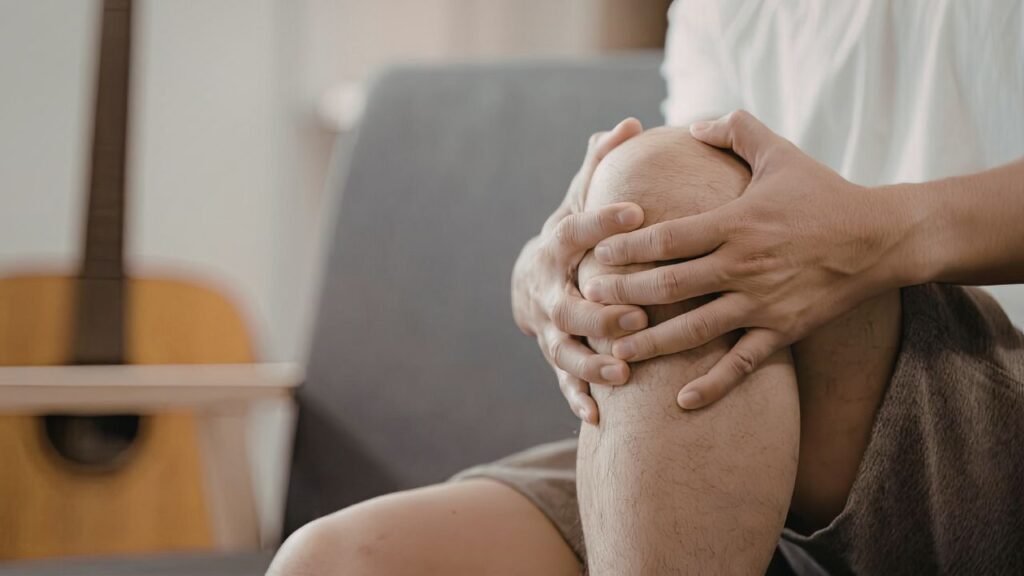
Knee pain is one of the most common reasons active people in Scottsdale stop doing what they love. Whether it’s a morning pickleball game, 18 holes at Troon North, or a weekly CrossFit class, when your knee gives out, everything else follows. The good news: surgery is rarely the only option, and for most patients, it shouldn’t be the first one.
The best non-surgical treatment options for knee pain include physical therapy, PRP injections, hyaluronic acid, BMAC stem cell therapy, genicular nerve ablation, and prolotherapy. The right choice depends on OA severity (KL grade), age, activity level, and treatment goals. This guide breaks down every option available in Scottsdale: how they work, what they cost, who they’re best for, and how to choose.
Key Takeaways
- Non-surgical care works for most active patients; KL Grades 1–3 respond well to conservative and regenerative therapies
- PRP and BMAC address underlying tissue damage, not just symptoms, with results lasting months to years
- Treatment selection requires imaging and a full clinical evaluation; there is no universal protocol
- PRP, BMAC, and prolotherapy are typically cash-pay; PT and cortisone often carry partial insurance coverage
- Long-term prevention: hip and quad strengthening, anti-inflammatory nutrition, and bracing is what makes results last
What Are The Most Common Causes Of Knee Pain For Active Patients In Scottsdale?
Active patients typically develop knee pain from overuse injuries or degenerative wear. The most common culprits: patellar tendinitis, IT band syndrome, meniscus tears, ACL sprains, and osteoarthritis (OA). OA severity is classified using the Kellgren-Lawrence (KL) scale, Grades 0–4. Non-surgical treatments work well for Grades 1–3. Grade 4 with failed conservative care typically requires a surgical consult.
Activity patterns drive injury risk. Repetitive motion, cycling, golf swings, and running gradually degrade cartilage and tendon integrity. Ramping up training volume too quickly is a primary trigger for acute flares. Skipping warm-ups reduces joint lubrication and raises injury risk significantly.
Why Are Non-Surgical Treatments The Preferred Option For Knee Pain In Active Patients?
Non-surgical care avoids the biggest risks of surgery: infection, blood clots, nerve damage, and extended downtime. Most non-surgical protocols allow a return to light activity within days to weeks. By comparison, ACL reconstruction requires 9–12 months before return to competitive sport.
The cost difference is significant. PRP runs $800–$1,500 per injection. ACL reconstruction averages $20,000–$50,000. Physical therapy and injections are largely outpatient, with no hospital fees or inpatient rehab costs. For Scottsdale active patients who want to stay mobile and avoid structural alteration, non-surgical treatment is almost always the right first path.
Recovery Time Comparison: Non-Surgical vs. Surgery
| Approach | Return to Light Activity | Return to Full Activity |
| Physical therapy | Within 1 week | 12–16 weeks |
| Cortisone injection | 24–48 hours | Days |
| PRP therapy | 48–72 hours (protection phase) | Weeks 5–6+; peak benefit 3–6 months |
| ACL reconstruction | Several weeks | 9–12 months |
| Meniscus repair | Several weeks | 3–6 months |
What Are The Most Popular Non-Surgical Treatments For Knee Pain In Scottsdale?
Options range from rehab-based to injectable to regenerative, each suited to a different severity level and goal. Physical therapy is the foundation: structured 12–16 week programs (2–3x/week) build quad, hamstring, and hip strength to stabilize the joint. Cost: ~$100–$200/session (uninsured) in the Scottsdale/Phoenix area. Chiropractic care complements PT by addressing biomechanical contributors and soft tissue restrictions.
For injection-based relief, four main options exist:
| Injection | Best For | Duration | Cost (Scottsdale, Uninsured) |
| Cortisone | Acute flares, OA | 6–12 weeks | $100–$300 |
| Hyaluronic Acid | Mild-moderate OA (KL 1–3) | Up to 6 months | $500–$2,000/series |
| PRP | OA (KL 1–3), tendon/ligament injuries | 6–12 months | $800–$1,500/injection |
| Stem Cell (BMAC) | Moderate-severe OA (KL 2–3) | Months+ | $3,000–$8,000+ |
PRP vs. Stem Cell Therapy: Which Is Right For You?
PRP uses concentrated platelets from your own blood to deliver growth factors that stimulate tissue repair. A 2021 meta-analysis found PRP significantly outperformed hyaluronic acid and placebo for both pain and function. BMAC stem cell therapy goes further; stem cells harvested from the patient’s own bone marrow can regenerate cartilage and soft tissue, making it the strongest option for moderate-to-severe joint damage.
| PRP | Stem Cell (BMAC) | |
| How It Works | Growth factors stimulate healing | Stem cells regenerate cartilage and soft tissue |
| Best For | KL 1–3, tendon/ligament injuries | KL 2–3, moderate cartilage damage |
| Duration | 6–12 months (up to 4 years) | Months+; designed for disease modification |
| Cost | $800–$1,500/injection | $3,000–$8,000+/treatment |
| Pros | Minimally invasive, lower cost | Highest regenerative potential |
| Cons | May need repeat injections | Higher cost, more invasive harvest |
How Do I Choose The Right Non-Surgical Treatment For My Knee Pain?
The right treatment depends on four factors: OA severity (KL grade), condition type, age and activity level, and budget.
- KL Grades 1–3: Full non-surgical spectrum applies, including regenerative medicine options. Grade 4 with failed conservative care → surgical consult.
- Condition type: Acute tendon/ligament injury → PRP. Mild-moderate OA → HA or PRP. Severe OA with cartilage loss → BMAC. Chronic nerve-mediated pain → genicular nerve ablation.
- Age and activity: Patients in their 30s–60s are ideal candidates for PRP and BMAC, with the goal of delaying or avoiding joint replacement. Older or less active patients may do well with cortisone or HA.
- Cost and coverage: PT and cortisone often have partial insurance coverage. PRP, BMAC, and prolotherapy are cash-pay.
When Combining Treatments Is Beneficial
Combining treatments often produces the best results. PT paired with injections addresses both mechanics and acute pain. BMAC layered with PRP enhances the regenerative environment. Chiropractic care alongside injection therapy targets structural contributors that injections alone won’t fix.
Steps for Working with a Doctor on a Tailored Treatment Plan
Start with imaging (X-ray for KL grading, MRI for soft tissue), a full clinical evaluation, and an honest conversation about your activity goals and budget. Set realistic expectations: PRP peaks at 3–6 months; stem cell improvement unfolds over months; PT programs run 12–16 weeks. About 20–30% of patients will need a repeat regenerative injection; factor that into your planning from the start.
Choose PRP if: you have KL Grade 1–3 OA or a tendon/ligament injury and want a minimally invasive, lower-cost regenerative option. Choose BMAC when: you have moderate-to-severe OA (KL 2–3) with cartilage loss and want the highest level of regenerative potential available.
What Is The Cost Of Non-Surgical Knee Pain Treatments In Scottsdale?
Non-surgical knee treatments vary widely in cost. Here’s what to expect out-of-pocket in the Scottsdale area (uninsured):
| Treatment | Cost Range |
| Physical therapy | $100–$200/session |
| Cortisone injection | $100–$300/injection |
| Hyaluronic acid (HA) series | $500–$2,000 (3–5 injections) |
| PRP injections | $800–$1,500/injection |
| Prolotherapy | $500–$1,500/series |
| Genicular nerve ablation (RFA) | $1,166–$5,411/procedure |
| Stem cell therapy (BMAC) | $3,000–$8,000+ |
| Acupuncture | $37–$150/session |
| Glucosamine/chondroitin | $12–$60/month |
| Knee brace | $50–$300 |
Insurance typically covers cortisone and HA injections (partially) and physical therapy (with referral, subject to session limits). PRP, BMAC, prolotherapy, and genicular nerve ablation are generally not covered, expect full out-of-pocket costs.
Average Cost Of Physical Therapy For Knee Pain In Scottsdale
| Detail | Cost |
| Per session (uninsured) | $100–$200 |
| Typical sessions needed | 24–48 sessions (2–3x/week, 12–16 weeks) |
| Total estimated cost (uninsured) | $2,400–$9,600 |
| With insurance (copay) | $20–$60/session |
What Are The Benefits And Drawbacks Of Non-Surgical Knee Treatments?
The core benefit is lasting improvement without permanently altering the knee’s structure. Physical therapy rebuilds strength and mobility. Regenerative medicine options like PRP and BMAC can modify the underlying disease process, not just mask symptoms. Recovery is faster than surgery: most patients return to light activity within days to weeks, with full rehabilitation around weeks 5–6 post-injection.
Downsides exist. Injection site soreness, swelling, and bruising are common but typically resolve within 48–72 hours. Repeated cortisone use over time can contribute to cartilage thinning. HA products derived from avian sources may trigger reactions in patients with poultry or egg allergies (Euflexxa is a safe alternative). Glucosamine and chondroitin show mixed evidence, the American College of Rheumatology recommends against their use for knee OA.
Non-surgical care also has a ceiling: KL Grade 4 OA, Grade 3 ACL tears, and large unstable meniscal tears in younger active patients often require surgical intervention when conservative options have been exhausted.
How Can I Prevent Knee Pain From Reoccurring After Treatment?
Exercise is the most reliable long-term prevention strategy. Quad strengthening (leg press, terminal knee extension) reduces compressive load on the patellofemoral joint. Glute bridges, clamshells, and side-lying hip abduction correct hip weakness, a direct contributor to both knee OA and patellofemoral pain. Single-leg balance and BOSU work restore the neuromuscular control that breaks down after injury. For maintenance, 2–3x/week is the target after completing the active rehab phase.
Diet matters too. Omega-3-rich foods (fatty fish, walnuts, flaxseed) reduce the pro-inflammatory cytokines, TNF-α and IL-1β, linked to cartilage degradation. Turmeric/curcumin has solid evidence as an anti-inflammatory supplement. Bone broth, vitamin C, and collagen support connective tissue integrity. Adequate hydration maintains synovial fluid viscosity and cartilage hydration, which is critical for shock absorption.
Recommended Knee Supports And Braces
For bracing, unloader braces are the best option for compartmental OA ($50–$300), while compression sleeves work well for mild OA and post-injection maintenance. Look for adjustable fit, breathable material, and proper offloading geometry. Continuous wear is generally not recommended; reserve bracing for activity and high-demand tasks.
When Should I Consider Surgery For My Knee Pain?
Surgery becomes appropriate when non-surgical care has been fully exhausted, and the knee can no longer function adequately. Key indicators: persistent severe pain after a complete conservative course (PT + injections + regenerative therapy), progressive joint degeneration confirmed on imaging (KL Grade 4, bone-on-bone), inability to perform daily activities, or progressive neurological deficits like worsening leg weakness or foot drop (those require urgent evaluation, not elective consultation).
Specific structural failures also point toward surgery regardless of conservative treatment: Grade 3 ACL tears in younger active patients, and large unstable meniscal tears that don’t respond to PT and injections. Age and damage severity guide the decision; patients in their 30s–60s with moderate damage (KL 2–3) are strong candidates for Regenokine and other regenerative options to delay replacement. Older patients with severe end-stage OA often have more to gain from joint replacement than from further non-surgical attempts.
Surgery vs. Non-Surgical: Key Comparisons
| Factor | Non-Surgical | Surgery |
| Best for | KL Grade 1–3; tendon/ligament injuries | KL Grade 4; Grade 3 ACL tears; large meniscal tears |
| Recovery | Days to weeks (light activity) | 3–12 months depending on procedure |
| Cost | $800–$8,000+ depending on treatment | $20,000–$50,000+ (ACL reconstruction) |
| Risk | Minimal; injection site soreness | Infection, blood clots, nerve damage, scar tissue |
What Are the Success Stories From Active Patients Who Used Non-Surgical Knee Treatments In Scottsdale?
Active Golfer, 50s, KL Grade 2–3 OA → PRP After being told surgery was the next step, this patient pursued PRP therapy. Within 8–10 weeks, they were back on the course playing full rounds, without the cortisone cycle they’d relied on for years.
High-Achieving Professional, 40s, Patellar Tendinitis → PT + PRP Desk work and CrossFit created a perfect storm of overuse and poor mechanics. A structured PT program corrected the movement pattern; PRP addressed the tendon damage. Surgery was avoided entirely.
Affluent Retiree, 65+, Chronic Knee OA → BMAC Bone marrow stem cell therapy produced significant pain reduction and restored the mobility needed to stay independent, no walker, no surgical downtime, no compromise on retirement plans.
Weekend Warrior, 35, Meniscal Tear → PT + Prolotherapy A degenerative meniscal tear threatened their running routine. Conservative PT combined with prolotherapy stabilized the joint and restored function. They returned to running within a few months, no surgery required.
How To Start Your Journey To Knee Pain Relief In Scottsdale
The path forward is straightforward. Start with a specialist consultation, bring any existing imaging (X-ray or MRI) so KL grading and a full structural assessment can be completed at the first visit. From there, treatment follows a logical sequence: conservative care (PT, bracing) → targeted injections (cortisone, HA) → regenerative therapies (PRP, BMAC) → minimally invasive procedures (RFA, prolotherapy), with the goal of avoiding surgery for 2–5+ years.
Set realistic expectations. Most patients see meaningful improvement within 4–8 weeks of conservative care. PRP peaks at 3–6 months. About 20–30% of patients need a repeat regenerative injection. Clarify costs and coverage early; PT and cortisone often carry partial coverage; PRP, BMAC, and prolotherapy are typically cash-pay. Build a follow-up schedule from the start and track progress consistently.
Ready to stop managing your knee pain and start healing it? Schedule your Pain Analysis Consult at ISPW Scottsdale, and get a personalized treatment plan built around your diagnosis, activity goals, and timeline.

