
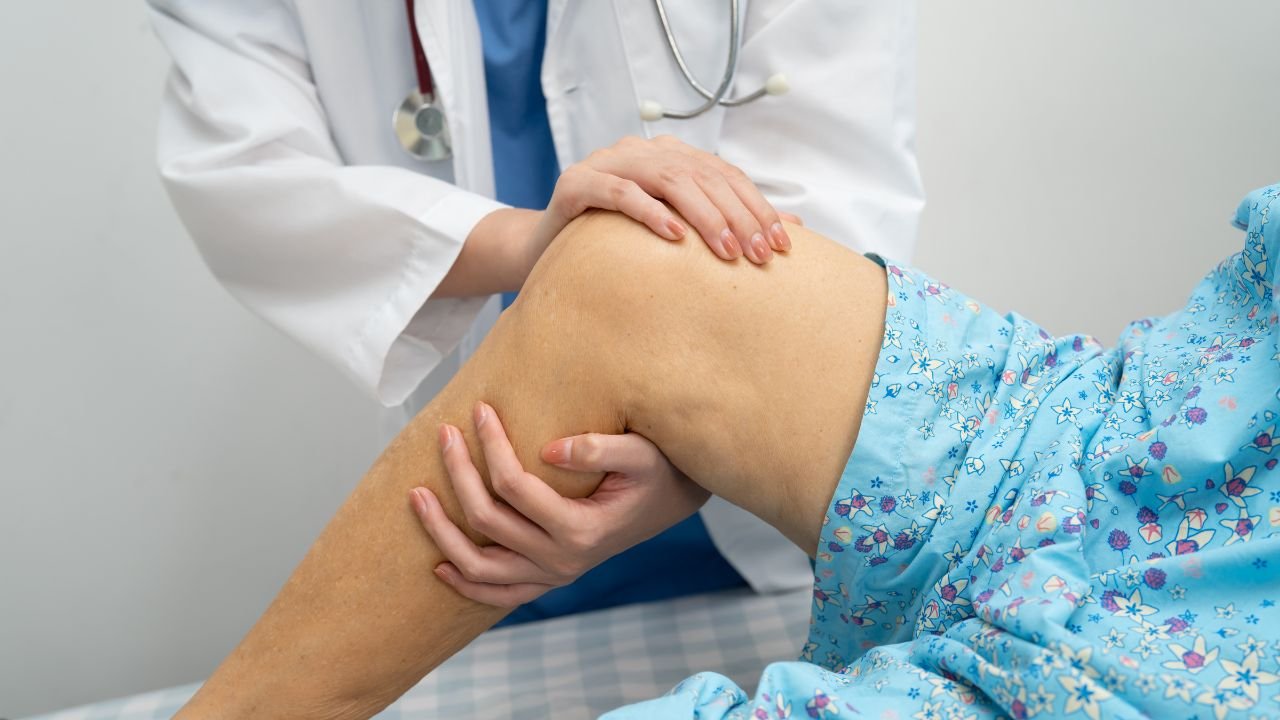
Active patients facing chronic knee pain often confront a difficult choice: accept progressive limitations or undergo major joint replacement with months of recovery and permanent implants. Regenerative medicine has emerged as a middle ground, minimally invasive biological therapies designed to support healing, reduce pain, and potentially delay surgery.
This guide examines knee replacement alternatives, explains how non‑surgical knee treatment may help active patients preserve their joints, and provides evidence-based information for confident treatment decisions.
Key Takeaways
- Regenerative medicine reduces pain and improves function in 60-80% of patients with mild-to-moderate osteoarthritis
- Treatment may delay knee replacement by 2-5+ years in appropriate candidates
- PRP and BMAC carry under 1% complication rate versus 5-15% for surgery
- Bone-on-bone osteoarthritis requires surgical intervention for reliable outcomes
- Combining regenerative therapy with physical therapy provides 20-30% better results
What Are The Main Alternatives To Knee Replacement For Active Patients?
Active patients resist knee replacement to preserve their natural joint and lifestyle. Major surgery means extended downtime, permanent implants, and eventual revision procedures, not ideal for golfers, runners, or anyone valuing uninterrupted activity. Revision surgery becomes necessary in 10-15% of cases within 10-15 years. Regenerative medicine can postpone total knee replacement by 2-5+ years in appropriate candidates.
Why Active Patients Seek Alternatives:
- Preserve the natural knee joint and avoid permanent implants
- Minimize surgical downtime and maintain active lifestyle
- Avoid implant-related concerns like stiffness or infection
- Delay major surgery until symptoms clearly require it
- Continue sports and recreation without prolonged recovery
Knee osteoarthritis affects 10% of men and 13% of women over age 60. Obesity dramatically accelerates damage; BMI above 30 increases OA risk fourfold, while every 5-unit BMI increase raises knee pain risk by 35%. Prior meniscus surgery increases OA risk fivefold.
Knee Problems Sometimes Managed Without Replacement:
- Early-to-moderate osteoarthritis with remaining cartilage
- Cartilage wear causing pain but not bone-on-bone contact
- Some meniscus injuries, particularly in vascularized outer zone
- Tendon inflammation affecting knee function
- Ligament-related instability contributing to medial knee stress
The medial compartment bears 60-70% of total load during walking, making it vulnerable to wear but responsive to treatment when caught early. Patients with moderate pain, reasonable mobility, and partial cartilage preservation on imaging are ideal candidates for joint-preserving approaches.
What Is Regenerative Medicine For Knee Pain And Joint Damage?
Regenerative medicine uses the body’s own healing factors to support tissue repair, reduce inflammation, and improve joint function. Rather than masking pain temporarily, these joint therapy treatments are designed to support actual tissue healing and potentially delay more invasive procedures. The global regenerative medicine market is projected to expand from $24.88 billion in 2025 to $148.42 billion by 2033.
| Treatment Type | Primary Goal | Expected Role | Typical Use Case |
| Regenerative Medicine (PRP, BMAC) | Support tissue healing | Long-term improvement, delay surgery | Early-to-moderate OA, active patients |
| Cortisone Injections | Reduce inflammation | Short-term relief (weeks to months) | Inflammatory flare-ups |
| Hyaluronic Acid | Improve lubrication | Moderate relief (3-6 months) | Mild-to-moderate OA |
| Physical Therapy | Strengthen and stabilize | Functional improvement | All severity levels |
Regenerative therapies carry an overall complication rate below 1%, compared to 5-15% for total knee replacement.
Who May Be A Good Candidate For Regenerative Medicine Instead Of Knee Replacement?
Patients with early or moderate knee osteoarthritis often achieve meaningful benefit. The ideal age range is 40-65 years, when healing capacity remains robust. Regenerative therapy works best for Kellgren-Lawrence Grade 1-3 osteoarthritis, mild to moderate disease with residual cartilage. Grade 4 with bone-on-bone contact requires surgery.
Ideal candidates maintain BMI below 35, as higher weight reduces response rates. Patients who have failed 6-8 weeks of conservative care but retain reasonable function and partial cartilage are in the sweet spot for regenerative intervention.
Active Patients with Specific Conditions Who May Qualify:
- Meniscus injuries in the vascularized outer third have good healing potential
- Partial-thickness cartilage defects without complete bone exposure
- Pes anserine bursitis (affects 24-34% of diabetic patients with knee pain)
- Mild MCL sprains or chronic laxity contributing to abnormal loading
Patients Who May Not Be Good Candidates:
- Advanced joint destruction (KL Grade 4) with bone-on-bone contact
- Severe deformity exceeding 15 degrees requiring surgical realignment
- Complete ligament rupture needing structural reconstruction
- Active infection or unrealistic expectations about regeneration
Which Regenerative Medicine Options May Help Active Patients Avoid Surgery?
Platelet-Rich Plasma (PRP) uses concentrated healing factors from your own blood. A blood draw (30-60 mL) is centrifuged to concentrate platelets 5-10 times above baseline, then injected into the knee under ultrasound guidance. Most protocols involve 1-3 injections spaced 4-6 weeks apart, costing $800-1,500 per injection or $1,200-4,000 for a complete series.
Bone Marrow Aspirate Concentrate (BMAC) harvests mesenchymal stem cells from bone marrow, typically from the posterior hip. The concentrated sample contains 20,000-200,000 stem cells per milliliter. BMAC therapy may be considered for moderate-to-advanced osteoarthritis when PRP has not provided adequate benefit. The harvest adds 30-60 minutes to treatment time and costs $3,000-8,000.
At ISPW, Dr. Goyle focuses on autologous therapies (your own cells) to maximize safety and biological compatibility, consistent with his Cleveland Clinic training and commitment to evidence-based regenerative medicine options.
How Do Regenerative Treatments Compare With Other Knee Replacement Alternatives?
Combining physical therapy with regenerative medicine delivers 20-30% improvement in outcomes compared to either approach alone. PT addresses muscle weakness and biomechanical stress that accelerate cartilage breakdown, while regenerative treatments work at the tissue level.
Multiple meta-analyses demonstrate PRP is superior to hyaluronic acid at 12 months for pain relief and functional outcomes in knee osteoarthritis. Patients seeking a biologic approach with evidence of durability often prefer PRP over HA.
How Bracing, Weight Loss, and Activity Modification Support Joint Preservation:
- Unloader bracing shifts weight away from damaged compartments
- Weight loss delivers dramatic benefit, every pound lost reduces knee force by four pounds
- Activity modification allows low-impact exercise while avoiding high-impact stress
Arthroscopy may be considered for mechanical symptoms from displaced meniscus tears causing true locking. MRI has 90-95% sensitivity for detecting meniscal tears. However, arthroscopic debridement for osteoarthritis alone is no longer recommended.
What Results Can Patients Realistically Expect From Regenerative Medicine?
Multiple meta-analyses show PRP produces clinically significant improvements in mild-to-moderate knee osteoarthritis (KL grade 1-3), with 60-80% of patients reporting meaningful improvement. Pain reduction in responders ranges from 40-70%. BMAC shows 50-70% of patients achieving meaningful improvement with benefits potentially lasting 12-24+ months.
PRP is most effective for KL grade 1-2, with diminishing returns in grade 3 and limited benefit in grade 4. Treatment works best when combined with physical therapy and realistic expectations about tissue-level support.
PRP benefits are typically sustained for 6-12 months, with some studies showing effects persisting to 18-24 months. Approximately 60-70% of patients maintain meaningful benefit at 12-24 months, while 20-30% require repeat treatment within that timeframe.
Regenerative medicine may delay knee replacement even if it does not prevent it forever. Patients who respond well often delay total knee replacement by 2-5+ years, particularly valuable for younger candidates (age 50-60) who would otherwise face a higher lifetime revision risk. Even patients who eventually require surgery often view non-surgical knee treatment as successful if it provided meaningful function during critical life periods.
What Is The Best Way To Move From Conservative Care to Advanced Options?
Failed conservative therapy is defined as inadequate improvement after 6-8 weeks of physical therapy and anti-inflammatory medications, prompting specialist referral.
Signs Basic Nonsurgical Care May Not Be Enough:
- Persistent pain despite 6-8 weeks of PT, NSAIDs, and activity modification
- Limited function affecting daily activities or desired recreation
- Recurrent swelling not responding to rest and ice
- Progressive worsening despite appropriate care
Signs It May Be Time to Consider Regenerative Medicine:
- Moderate symptoms with inadequate relief from conservative care
- Joint preservation goals, desire to maintain natural anatomy
- KL grade 1-3 osteoarthritis with residual cartilage on imaging
- Age 40-65 with reasonable healing capacity
Signs Knee Replacement May Be the Better Next Step:
- Severe pain affecting sleep and basic mobility
- Advanced joint damage (KL grade 4) with bone-on-bone contact
- Significant deformity exceeding 15 degrees
- Failed comprehensive nonsurgical care over 6-12 months
How Does The Treatment Process Work From Evaluation To Recovery?
The initial evaluation establishes diagnosis, severity, and candidacy through comprehensive assessment. Standing weight-bearing X-rays ($50-200) are essential for Kellgren-Lawrence grading. MRI ($400-3,500) provides detailed soft tissue evaluation when needed.
What Happens During Initial Evaluation:
- Detailed history covering symptoms, prior treatments, and functional goals
- Physical examination including alignment, stability, and range of motion
- Imaging review, X-rays for joint space, MRI for soft tissue detail
- Candidacy discussion, whether regenerative treatment aligns with diagnosis
What Happens During Regenerative Injection Procedure:
- NSAIDs discontinued 1 week prior
- Blood draw (30-60 mL for PRP) or bone marrow aspiration (for BMAC)
- Centrifugation processing (1,500-3,000 RPM for 5-15 minutes)
- Ultrasound-guided injection (adds ~$500 but strongly recommended)
What Recovery Is Usually Like After Regenerative Treatment:
- Temporary soreness for 24-72 hours
- Relative rest for 48-72 hours
- NSAID avoidance for 2 weeks post-injection
- Rehabilitation starting at 1-2 weeks
Temporal response pattern: weeks 0-4 show initial inflammatory response; weeks 4-8 bring initial improvement; months 3-6 represent peak benefit; months 6-12 maintain sustained benefit. A series of 3 injections at 4-6 week intervals is most common, as cumulative dosing provides greater benefit than single injection.
What Are The Pros And Cons Of Regenerative Medicine Instead Of Knee Replacement?
Main Benefits:
- Less invasive, in-office procedure with minimal disruption
- Joint preservation, maintains natural anatomy
- Minimal downtime, 1-2 weeks versus 3-6 months for TKR
- May delay surgery 2-5+ years
Main Limitations:
- Variable outcomes, not all patients respond equally
- Not appropriate for advanced osteoarthritis (KL grade 4)
- 20-30% require repeat treatment within 12-24 months
- Rarely covered by insurance
Risks and Tradeoffs:
- Infection risk under 1% versus 1-2% for TKR
- DVT/PE risk under 0.1% versus 3-5% for TKR
- Temporary soreness lasting 24-72 hours
- Cost: $1,200-10,000 depending on treatment type
Predictors of better outcomes include younger age (under 60), lower KL grade (1-2), lower BMI (under 30), unicompartmental disease, active lifestyle, and compliance with rehabilitation.
Can Regenerative Medicine Help The Specific Knee Conditions That Often Lead To Surgery?
Whether Regenerative Medicine May Help Knee Osteoarthritis
Regenerative medicine addresses knee osteoarthritis by reducing inflammation, supporting remaining cartilage, and potentially slowing progression. PRP and BMAC deliver concentrated growth factors that can modulate the inflammatory environment and support chondrocytes. Patients with mild-to-moderate osteoarthritis (KL grade 1-3) who maintain partial cartilage represent the ideal target population.
Whether Regenerative Medicine May Help Meniscus Injuries
The medial meniscus covers approximately two-thirds of the tibial articular surface. Prevalence of meniscal tears increases dramatically with age, and asymptomatic degenerative tears are found incidentally on MRI in many older adults. Regenerative treatment targets the inflammatory response around the tear. Patients with degenerative tears, mild symptoms, no mechanical locking, and concurrent osteoarthritis may benefit from PRP or BMAC.
Whether Regenerative Medicine May Help Cartilage Defects
Articular cartilage is 2-4 mm thick and composed of up to 80% water, with limited healing capacity due to lack of blood supply. MRI studies in some BMAC trials have shown evidence of cartilage changes, though true structural regeneration remains under investigation. Clinical benefit comes primarily from reducing inflammation and supporting remaining cartilage cells.
Whether Regenerative Medicine May Help Patellar Tendon Or Overuse Injuries
PRP delivers concentrated growth factors to degenerated tendon tissue, potentially supporting collagen remodeling. Active individuals with patellar tendinopathy or chronic tendon pain may benefit from ultrasound-guided PRP injection. Pes anserine bursitis affects 24-34% of diabetic patients with knee pain and responds to regenerative treatment combined with physical therapy.
Whether Regenerative Medicine May Help Ligament Injuries Or Chronic Instability
Regenerative medicine may help with partial ligament injuries or chronic laxity, but cannot replace surgical reconstruction for complete ruptures. Mild-to-moderate MCL sprains causing persistent pain may respond to PRP supporting tissue healing. However, severe instability from complete rupture typically requires surgical reconstruction.
How Should Active Patients Decide Between Regenerative Medicine And Knee Replacement?
Age and activity level should inform decisions, but chronological age alone does not determine the best path. A highly active 62-year-old with moderate osteoarthritis may benefit more from regenerative therapy, while a sedentary 58-year-old with severe disease may be a better surgical candidate. What matters is healing capacity, activity demands, functional goals, and disease severity.
Imaging findings provide essential diagnostic information, but symptoms and function should drive treatment decisions. Kellgren-Lawrence grading guides candidacy (grade 1-3 favors regenerative approaches, grade 4 favors surgery), but the clinical picture determines timing.
Questions Patients Should Ask Before Choosing a Treatment Plan:
- What is my specific diagnosis and severity based on imaging?
- What outcomes can I realistically expect from each option?
- What does recovery look like, and how much downtime will I face?
- What are the total costs, including repeat treatments and rehabilitation?
- At what point would surgery become the clearly better option?
Knee replacement remains the better option when joint destruction is severe and conservative care exhausted. Total knee replacement is the gold standard for end-stage, tricompartmental osteoarthritis. Modern TKR implants demonstrate 90-95% survivorship at 10 years and 80-85% at 20 years.
What Should Patients Know About Cost, Coverage, And Planning Ahead?
PRP is rarely covered by insurance, BMAC is rarely covered, and adipose SVF is not covered. Most patients pay out-of-pocket, requiring financial planning before proceeding.
Total cost comparison: PRP series costs $2,000-6,000, BMAC approximately $10,000, adipose SVF $6,000-12,000. Partial knee replacement totals $28,000-53,000, while total knee replacement runs $55,000-100,000+.
Ten-year analysis: A patient undergoing PRP therapy with annual maintenance over 5 years before requiring TKR would spend approximately $10,500 on regenerative therapy plus $60,000-100,000 for TKR, totaling $70,500-$110,500. A patient proceeding directly to TKR at age 60 would spend $55,000-100,000 upfront with a 10-15% chance of revision, adding another $40,000-80,000.
The economic case for regenerative therapy is strongest when it successfully delays surgery 5+ years, particularly in patients aged 50-60.
What Are the Most Common Questions About Avoiding Knee Replacement?
Can Regenerative Medicine Regrow Knee Cartilage?
MRI studies in some BMAC trials have shown evidence of cartilage changes including increased T2 mapping signal, though this remains under investigation. The primary benefit appears to be reducing inflammation and supporting remaining cartilage cells rather than generating new tissue. Patients should expect symptom improvement and possible disease-modifying effects rather than cartilage restoration to pre-injury condition.
Is PRP Better Than Stem Cell-Based Treatment For Knee Pain?
PRP has the most robust evidence base, supported by multiple randomized controlled trials. BMAC evidence is emerging, particularly for advanced OA (KL grade 3-4), where PRP has limited efficacy. For most patients with KL grade 1-2, PRP represents the first-line option due to established efficacy, lower cost, and minimal invasiveness. Stem cell therapy may be more appropriate for advanced cartilage loss after failed PRP.
Can Bone-on-Bone Knees Still Be Treated Without Replacement?
Bone-on-bone knees (KL grade 4) show limited benefit from PRP. When cartilage is completely absent, biological treatments have minimal tissue to support. Total knee replacement remains the gold standard for end-stage disease with complete cartilage loss.
Will Delaying Knee Replacement Make Later Surgery Harder?
Delaying knee replacement through regenerative medicine does not typically make later surgery more difficult when appropriate indications are maintained. The primary consideration is avoiding progression to severe deformity exceeding 15 degrees or major ligamentous instability. As long as patients maintain reasonable alignment, delaying surgery carries minimal risk of compromising future surgical outcomes.
Can Active Patients Keep Exercising While Trying To Avoid Surgery?
Active patients can maintain exercise through appropriate activity modification. Low-impact activities like cycling, swimming, and walking are well-tolerated. Moderate-impact activities, including golf and casual tennis, can often continue with attention to symptoms. High-impact activities like running may need modification based on symptom response and cartilage preservation status.
What Is The Best Next Step For An Active Patient Who Wants To Avoid Knee Replacement?
An individualized evaluation matters more than one-size-fits-all recommendations because knee pain stems from diverse conditions. A meniscus tear requires different management than osteoarthritis, which differs from plica syndrome, a synovial fold irritation present in 50% of the population but causing symptoms in only 10%. The best plan integrates accurate diagnosis with treatment matched to severity and realistic goals.
How Patients Can Build a Plan to Reduce Pain, Protect the Joint, and Stay Active:
- Get the right diagnosis first; imaging, physical examination, and symptom assessment establish severity
- Match treatment to severity; KL grade 1-3 responds to regenerative medicine; grade 4 requires surgical consultation
- Use supportive conservative care consistently: physical therapy, weight management, activity modification, bracing
- Set realistic goals based on evidence; expect meaningful improvement rather than complete cure
- Reassess regularly and recognize when surgery becomes the better option
Is Regenerative Medicine The Right Choice For Your Knee Pain?
Knee replacement remains highly successful for end-stage arthritis, but it is not the only option for earlier-stage disease. Regenerative medicine offers a science-based approach to supporting tissue healing, reducing inflammation, and improving function with minimal invasiveness. The key is accurate diagnosis, appropriate patient selection, realistic expectations, and integration with physical therapy. For the right candidates, active individuals with mild-to-moderate osteoarthritis who want to delay surgery and preserve their natural anatomy, regenerative medicine represents a compelling option supported by growing clinical evidence.
Ready to explore whether regenerative medicine is right for your knee pain? Schedule a consultation to discuss your diagnosis, treatment options, and personalized joint preservation plan.


