
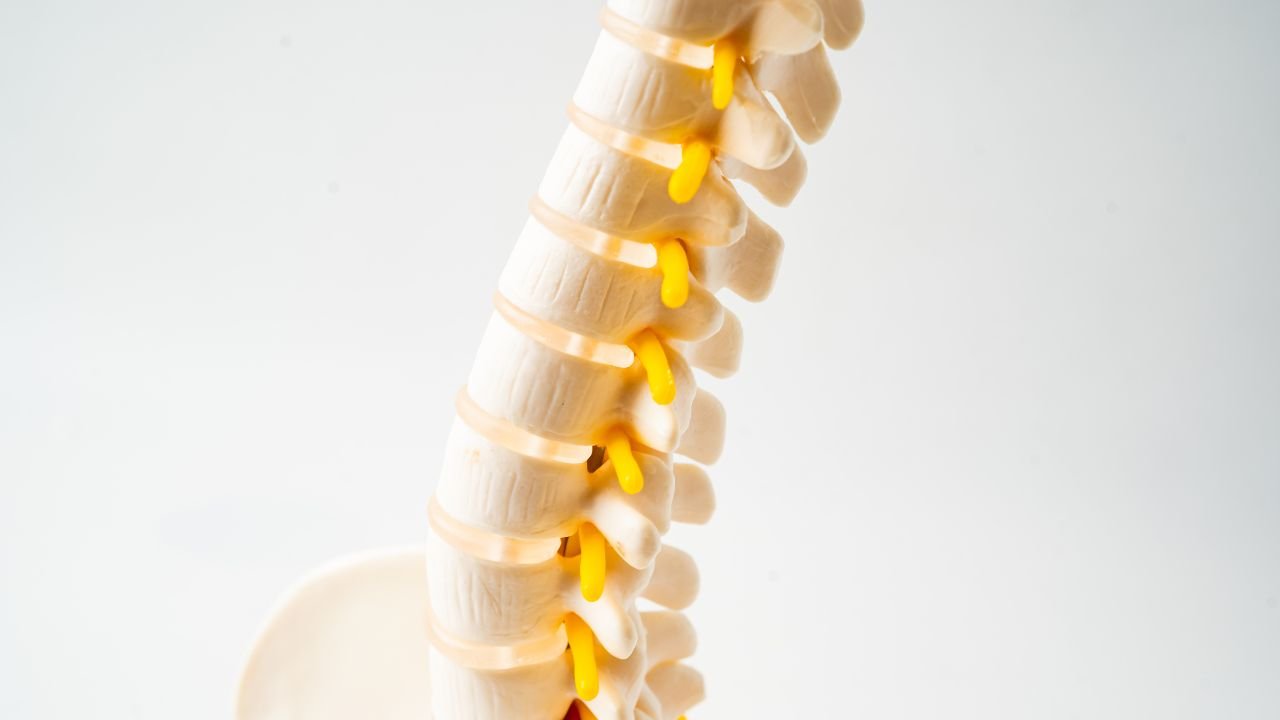
You’ve been told to live with spinal stenosis. Maybe your doctor suggested physical therapy, handed you a prescription for pain medication, or mentioned surgery as your “only real option.” If you’re an active individual who refuses to accept chronic pain as permanent, you deserve better answers.
Spinal stenosis affects millions by narrowing the spinal canal and compressing nerves. This causes chronic pain, numbness, and reduced mobility that limit daily activities, from your morning golf game to simply walking your dog. Traditional treatment options range from physical therapy and medications to invasive surgery. Advances in regenerative research now offer alternatives that address tissue damage at its source.
Platelet-rich plasma represents a minimally invasive approach, gaining attention for degenerative spine conditions. Studies show PRP injections may support reduced inflammation and improved function without surgery. This article examines current evidence on PRP spinal stenosis treatment, compares regenerative options, and provides candidacy guidance for active individuals seeking lasting pain relief.
Key Takeaways:
- PRP uses concentrated platelets from your own blood to support pain relief and improved function in spinal stenosis patients
- Research demonstrates superior functional recovery compared to standard care for lumbar spinal stenosis
- Ideal candidates are ages 18-80 with mild to moderate degenerative conditions who have not responded to conservative treatment
- PRP requires 3-6 sessions and costs $500-$2,500 per injection with minimal recovery time
- Most regenerative treatments require out-of-pocket investment, though long-term value often exceeds surgical alternatives
What Is PRP Therapy And How Does It Work For Spine Conditions?
PRP therapy utilizes concentrated platelets extracted from your own blood to accelerate tissue repair. A small blood sample undergoes centrifugation to separate and concentrate platelets containing growth factors, including platelet-derived growth factor (PDGF), transforming growth factor-beta (TGF-β), and vascular endothelial growth factor (VEGF). These trigger cellular regeneration and help reduce inflammation. The concentrated solution is injected directly into damaged tissues using advanced ultrasound or fluoroscopy guidance.
The treatment offers practical advantages for patients seeking non surgical treatment options. PRP requires only 1-3 days of recovery time, making it accessible for working professionals. The incremental cost-effectiveness ratio reaches $12,628 per quality-adjusted life year. However, PRP efficacy varies based on preparation methods and typically requires 3-6 sessions for optimal results.
PRP works by delivering concentrated growth factors directly to inflamed and degenerated tissues in your spine. These stimulate collagen production, strengthen connective tissue around the spinal canal, and promote blood vessel formation. This biological response helps stabilize degenerative segments and restore cushioning between vertebrae while reducing inflammation that contributes to nerve compression.
Choose PRP if: You have mild to moderate spinal stenosis, want to avoid surgery, maintain an active lifestyle (golf, pickleball, weightlifting), and are willing to invest in treatments not typically covered by insurance.
Choose traditional interventions when: You have severe spinal stenosis with significant neurological compromise, need immediate symptom relief, or cannot commit to a multi-session treatment protocol.
How Does PRP Compare To Other Regenerative Therapies?
Regenerative medicine encompasses multiple treatment categories, each targeting tissue repair through different mechanisms. PRP holds 18% market share with a projected 14.98% annual growth rate. Stem cell therapy dominates with 57% market share. The global regenerative medicine market reached $18.13 billion in 2025 and is projected to reach $93.5 billion by 2035.
Treatment selection depends on condition severity, budget, and recovery timeline preferences. Understanding your regenerative medicine options helps you make informed decisions aligned with your health goals.
What Is Stem Cell Therapy And How Does It Differ From PRP?
Stem cell therapy for spine conditions employs cells capable of differentiating into specific tissue types. Autologous cells derive from the patient’s bone marrow or adipose tissue, your own cells, not donor material. This approach costs $5,000 to over $50,000.
The key difference lies in cellular potential. PRP delivers growth factors that stimulate existing cells to repair themselves. Stem cells can actually become new tissue. For spinal stenosis, stem cells may offer advantages when significant tissue regeneration is needed beyond what growth factors alone can accomplish.
What Is Regenokine Therapy And When Should You Consider It?
Regenokine focuses on combating inflammation through specialized anti-inflammatory proteins. The process involves incubating patient blood on treated glass beads to stimulate Interleukin-1 Receptor Antagonist production. Only 9 US doctors offer this treatment due to specialized equipment requirements. Arizona is fortunate to have exclusive access through select providers.
Choose Regenokine if: You have chronic inflammatory spinal conditions and want the most advanced anti-inflammatory protocol available.
Choose PRP when: Your primary need is tissue repair and regeneration rather than purely inflammation management, or budget constraints make the higher cost prohibitive.
Does PRP Actually Work For Spinal Stenosis? What Does The Research Say?
Clinical studies demonstrate PRP treatment for lumbar spinal stenosis produces superior functional recovery compared to standard approaches. A 2024 investigation found patients receiving PRP exhibited improved pain scores and reduced disability. Intradiscal injection therapy proved safe for degenerative disc disease and spinal stenosis patients. These findings position PRP as a viable intervention before considering surgical options.
Current evidence suggests PRP may support your goal of getting back to weekend pickleball tournaments or maintaining your golf handicap. Patients typically report 40-60% improvement in pain scores within 3-6 months following treatment completion. Functional improvement, your ability to perform daily activities, often exceeds pain reduction percentages.
PRP addresses multiple factors contributing to spinal stenosis symptoms. It reduces inflammation in the spinal canal, creating more space for compressed nerves. It strengthens the ligamentum flavum and other connective tissues. It supports disc hydration and integrity, improving cushioning between vertebrae. Patients often notice initial improvements in radiating leg pain before back pain improves.
PRP carries minimal risk compared to surgical interventions. Potential side effects include temporary soreness at injection sites, a slight increase in pain for 24-48 hours post-injection, and a rare risk of infection (less than 1%). Recovery involves modified activity for 1-3 days. Most patients return to work the next day for sedentary jobs.
How Can You Determine If You’re A Candidate For Regenerative Treatments?
You’ve tried physical therapy and anti-inflammatory medications. You’re tired of cortisone shots that work for a few weeks, then leave you back where you started. This frustration drives many active individuals to explore regenerative medicine. Can PRP help you avoid surgery? For many patients, the answer is yes, but candidacy depends on specific factors.
Assessing candidacy for regenerative medicine requires evaluating multiple health and lifestyle factors. Ask yourself: Have conservative treatments failed to provide lasting relief? Does your pain limit activities you love? Are you seeking to heal the underlying problem rather than mask symptoms? Are you willing to commit to a multi-session treatment protocol?
Active infections, active cancer, or severe end-stage bone-on-bone arthritis disqualify most candidates. Age ranges guide treatment selection, with PRP suitable for patients aged 18-80. Condition severity matters more than age alone. Mild to moderate spinal stenosis with preserved disc height responds better than severe stenosis with complete disc collapse. Early intervention produces superior outcomes.
Absolute contraindications include active systemic infection, active cancer, severe immunosuppression, and bleeding disorders. Relative contraindications include recent steroid injections (wait 2-4 weeks), anticoagulation therapy, and extremely poor nutritional status. If you take blood thinners or NSAIDs, discuss timing with your physician.
Why Does Location Matter When Seeking PRP Treatment?
Arizona hosts over 25 specialized regenerative medicine clinics with 85 trained practitioners. Hummingbird Biomedical opened its US headquarters at Mayo Clinic Scottsdale campus in January 2026. This expansion positions Scottsdale as a regenerative medicine hub with advanced manufacturing capabilities.
Location means access to physicians with specialized training, state-of-the-art imaging equipment for precise injections, and comprehensive rehabilitation resources. Urban areas demonstrate 82% adoption rates for regenerative therapies compared to 28% in rural regions. Provider expertise remains the most critical factor influencing treatment outcomes.
Arizona’s favorable regulatory environment, concentration of medical research facilities, and affluent patient population create ideal conditions for regenerative medicine advancement. Scottsdale specifically benefits from a demographic that values preventive care and cutting-edge treatments. Active retirees, business professionals, and athletes create demand for alternatives to surgery.
Provider credentials make a substantial difference in outcomes. Board certification in anesthesiology and interventional pain management indicates advanced training. Fellowship training from elite institutions like the Cleveland Clinic demonstrates commitment to excellence. Physicians performing 100+ regenerative injections annually develop technical proficiency that impacts success rates.
What Should You Expect During PRP Treatment For Spinal Stenosis?
PRP requires 3-6 sessions spaced several weeks apart for optimal spinal stenosis results. Each session takes approximately 30-60 minutes. Patients typically notice improvement within 2-4 weeks, with full benefits emerging over 3-6 months. This is not an overnight solution, it’s a strategic approach to supporting your body’s natural healing capacity.
Your physician will draw 15-60ml of blood from your arm. The blood undergoes centrifugation for 15-20 minutes to concentrate platelets. During preparation, your physician identifies the injection site using imaging. The injection itself takes only a few minutes. Most patients describe the sensation as similar to receiving a dental injection, noticeable but tolerable.
BMAC therapy for spine conditions requires bone marrow aspiration from the hip bone, adding 15-30 minutes to the procedure. Stem cell protocols typically require 1-3 sessions rather than the 3-6 needed for PRP. Regenokine protocols require 1-3 sessions with specialized incubation periods.
Initial improvements often appear within 2-4 weeks as inflammation subsides. Functional gains typically improve before complete pain resolution. Maximum benefits emerge at 3-6 months as tissue remodeling completes. Realistic expectations matter. You may achieve 50-70% pain reduction rather than 100% elimination. For many patients, this level of improvement means the difference between enjoying life versus limiting it.
What Are The Financial Considerations For Regenerative Treatments?
PRP injection costs range from $500-$700 for budget options to $1,200-$2,500 for premium treatments. Mid-range services typically cost $700-$1,200 per session. Multiply by 3-6 sessions for total treatment investment. Regenokine pricing starts at $1,500-$3,000 and reaches $3,000-$5,000+ for premium protocols. Stem cell therapy spans $2,495-$4,200 budget tier to a $20,000-$50,000 premium tier.
These numbers initially seem substantial. However, successful PRP treatment costing $3,000-$6,000 total may prevent spinal fusion surgery, exceeding $80,000. Calculate long-term value, not just upfront cost.
Investment comparison framework:
- What it costs: PRP ($1,500-$7,500), BMAC ($8,000-$25,000), Regenokine ($4,500-$15,000)
- Best for: PRP (mild-moderate degeneration, active individuals), BMAC (moderate-severe degeneration, failed PRP), Regenokine (chronic inflammation, elite athletes)
- Expected outcomes: PRP (50-70% improvement, 12-24 month duration), BMAC (60-80% improvement, 18-36 month duration), Regenokine (40-60% improvement, 12-18 month duration)
Less than 5% of regenerative medicine treatments receive insurance coverage. Patients bear 95%+ of costs through out-of-pocket payments. However, health savings accounts (HSAs) and flexible spending accounts (FSAs) can be used for regenerative treatments. Some practices offer payment plans to make treatments accessible.
Cost-effectiveness analysis demonstrates favorable long-term value. The incremental cost-effectiveness ratio for PRP reaches $12,628 per quality-adjusted life year. If PRP treatment costs $5,000 and prevents surgery costing $80,000, you’ve saved $75,000 while avoiding surgical risks and recovery time.
Making Informed Decisions About PRP For Spinal Stenosis
PRP therapy offers accessible pain relief and functional improvement for patients with spinal stenosis who refuse to accept limitation as inevitable. Clinical evidence supports its safety profile and potential efficacy compared to standard care. Treatment protocols require 3-6 sessions with minimal recovery time. Cost-effectiveness analysis demonstrates favorable long-term value despite upfront investment.
You should evaluate your condition severity, treatment goals, and financial capacity when selecting regenerative options. PRP therapy provides pain relief through biological healing mechanisms rather than symptom masking. At Integrated Spine, Pain & Wellness, we employ evidence-based regenerative protocols designed to help active individuals avoid surgery while restoring the lifestyles they love.
What Makes ISPW Different In Delivering Regenerative Care?
Led by Dr. Ashu Goyle, a double board-certified anesthesiologist with fellowship training from the Cleveland Clinic, Integrated Spine, Pain & Wellness brings elite expertise to regenerative medicine. Dr. Goyle’s specialized training in interventional pain management and functional medicine creates a unique approach that treats the whole person, not just the pain.
Our Functional Spinal Unit Approach addresses your spine as an integrated system rather than isolated vertebrae. We combine advanced regenerative therapies with cutting-edge technology like the MLS M7 laser, one of the few available in Arizona. This comprehensive approach maximizes your body’s natural healing capacity while supporting long-term spine health.
We’re not here to manage your pain indefinitely. We’re here to help you heal it. That fundamental difference shapes everything we do, from our personalized treatment protocols to our commitment to patient education.
Spinal stenosis no longer requires you to choose between chronic pain and invasive surgery. Regenerative medicine creates a bridge between conservative care and surgical intervention. PRP stands as a scientifically supported option backed by growing clinical research and patient outcomes.
If you’re ready to explore whether PRP is right for your spinal stenosis, schedule a consultation with our team at Integrated Spine, Pain & Wellness. We’ll evaluate your condition, discuss your goals, and create a personalized treatment plan designed to help you heal, not just manage symptoms. Your journey back to pain-free golf, confident hiking, and joyful movement starts with a conversation.


