
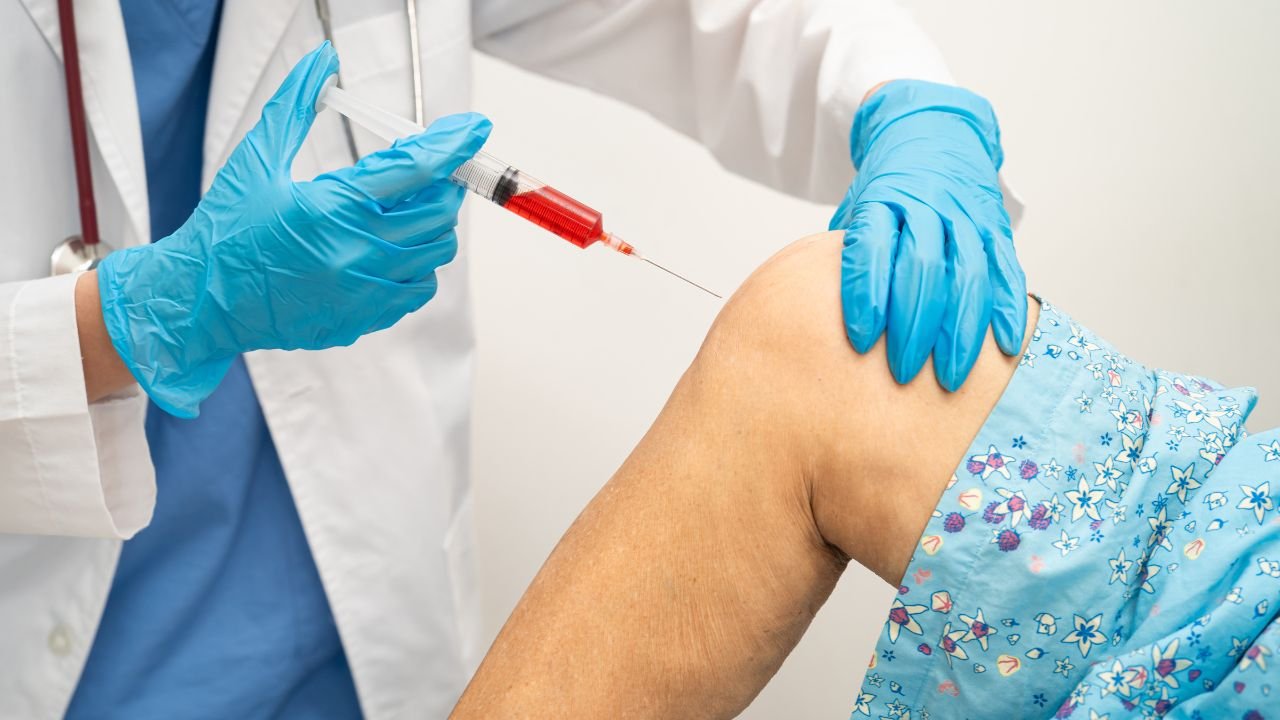
Knee pain injections represent a growing category of interventions that bridge conservative care and surgery. Both PRP and hyaluronic acid offer non surgical knee treatment alternatives for individuals seeking relief without lengthy recovery periods or surgical risks.
If you’re exploring options beyond medication and physical therapy but want to avoid surgery, understanding the differences between these two injection therapies helps you make informed decisions about your care. Each approach works through distinct mechanisms and offers different timelines for relief.
Key Takeaways:
- PRP injections support tissue healing processes with effects potentially lasting 12-18 months, while hyaluronic acid provides faster initial relief that may diminish after 6 months
- Clinical studies show many patients experience significant pain reduction from PRP, with improvement often peaking around 6 months post-injection
- PRP typically costs $2,000-$3,600 for a series and is often not covered by insurance, compared to HA’s $1,500-$6,000 series cost with better insurance coverage
- The PRP market is growing at 13.2% annually, reflecting increasing patient interest in regenerative medicine approaches
- Treatment selection depends on age, activity level, osteoarthritis severity, and personal preferences around relief duration and investment
What’s The Difference Between PRP And Hyaluronic Acid Injections?
PRP and hyaluronic acid represent two distinct approaches to managing knee pain through injection therapy. Each uses different biological mechanisms to address joint dysfunction and reduce discomfort in patients with osteoarthritis or related conditions.
Understanding how these therapies work helps you evaluate which option aligns with your treatment goals. The choice between PRP vs hyaluronic acid often depends on your priorities around outcomes, budget, and willingness to accept different recovery timelines.
How Does PRP Work For Knee Pain?
Platelet-Rich Plasma therapy uses concentrated blood components drawn from your own body to support healing processes. The platelets release growth factors that may help reduce inflammation in damaged joint structures.
This autologous approach means the treatment uses biological material from your body rather than synthetic substances. A patient’s experience with PRP injections demonstrates how the body’s natural healing response can be supported in chronic knee conditions. At ISPW, we use the APEX Biologix PRP system for superior platelet concentration and optimal therapeutic potential.
How Do Hyaluronic Acid Injections Function?
Hyaluronic acid functions as a viscosupplementation therapy designed to support natural joint lubrication in arthritic knees. The substance mimics synovial fluid properties, providing shock absorption and reducing bone-on-bone friction during movement.
This approach primarily addresses mechanical symptoms rather than supporting biological tissue healing. FDA approval for knee osteoarthritis makes HA injections a widely accessible option, accounting for 92% of viscosupplementation use.
Choose PRP if: You want to support long-term tissue healing and are willing to wait weeks for gradual improvement.
Choose hyaluronic acid if: You need faster symptom relief and prefer established insurance coverage options.
What Knee Conditions Respond To These Injection Therapies?
Both therapies primarily target knee osteoarthritis, though PRP applications may extend to other joint conditions. Clinical evidence supports their use when conservative measures like physical therapy and oral medications provide insufficient relief.
Patients with moderate joint degeneration often achieve optimal results from these interventions before structural damage becomes severe. Early intervention can delay or eliminate the need for more invasive procedures through timely treatment.
How Effective Are PRP vs. Hyaluronic Acid Injections?
Clinical outcomes between these two injection types show significant differences in both relief duration and mechanism. Research comparing these therapies reveals distinct efficacy patterns that influence treatment selection for different patient populations.
Understanding these differences allows better matching of therapy to individual patient priorities and clinical circumstances. The evidence helps set realistic expectations about what each treatment may accomplish.
What Results Can You Expect From Each Treatment?
PRP injections show potential for significant pain reduction in many patients, with effects developing gradually over several months. Studies suggest sustained improvement extending 12-18 months for responsive patients.
Platelet-rich plasma for chronic pain provides reliable outcomes with a well-established safety profile across diverse patient populations. Many patients experience noticeable improvement within days of injection, though the magnitude of relief may vary.
How Long Does Relief Last With PRP vs. Hyaluronic Acid?
PRP demonstrates gradual improvement that often peaks around 6 months post-injection, with sustained effects potentially extending 12-18 months. This timeline reflects biological processes rather than immediate mechanical lubrication.
Hyaluronic acid delivers faster initial relief, but effects may diminish after 6 months for many patients. The declining efficacy necessitates repeat injections more frequently than PRP to maintain symptom control.
Expected Timeline:
- PRP: Improvement begins at 4-6 weeks, peaks at 6 months, lasts 12-18 months
- Hyaluronic Acid: Relief within days, peaks at 1-2 months, lasts 4-6 months
What Are The Safety Profiles And Potential Side Effects?
PRP therapy commonly causes post-injection soreness lasting several days as healing responses activate. Because the treatment uses autologous blood products, allergic reactions and immune responses remain extremely rare.
Hyaluronic acid injections carry minimal risk profiles with occasional mild swelling or temporary discomfort at injection sites. Both therapies avoid the systemic side effects associated with oral medications or the complications inherent in surgical interventions.
Who Typically Chooses PRP Or Hyaluronic Acid Injections?
Demographic patterns reveal distinct adoption rates across age groups and income brackets for these advanced therapies. Younger generations show stronger preference for regenerative medicine, while older patients balance cost against proven track records.
Geographic location and access to specialized providers significantly influence treatment availability and patient awareness. These factors create disparities in who receives cutting-edge pain management versus traditional conservative care.
How Do Age And Activity Level Influence Treatment Selection?
Millennials aged 25-40 demonstrate strong preference for non-opioid options, with significant interest in PRP. This group prioritizes treatments designed to address root causes rather than merely masking symptoms with medications.
Generation X shows high preference for non-opioid solutions as they confront early-onset joint issues. Baby Boomers maintain preference for non-opioid approaches but show greater willingness to consider surgical options when conservative measures fail.
Active individuals who golf, play pickleball, or participate in other demanding activities often gravitate toward PRP for its potential to support return to sport. Those with lower activity demands may find hyaluronic acid sufficient for daily function needs.
What Priorities Drive Patient Decisions About Injection Therapy?
Effectiveness and pain relief drive treatment decisions for the vast majority of patients, making clinical outcomes the primary selection criterion. Long-term relief ranks second, reflecting desire for sustained improvement rather than temporary symptom suppression.
Recovery time concerns influence many patients, while side effects and safety considerations factor significantly into decisions. Cost affects choices despite ranking below clinical effectiveness, particularly for therapies not covered by insurance.
The comparison between PRP therapy vs cortisone injections reveals similar decision frameworks around immediate versus sustained benefits.
How Do Income And Geographic Location Affect Access?
Urban populations report significantly higher access to comprehensive pain management services compared to rural areas. The Northeast leads advanced injection therapy adoption, while the West Coast shows strong preference for physical therapy and regenerative approaches.
Income disparities create substantial access barriers, with high-income households reporting full treatment spectrum availability. Lower-income populations often remain limited to basic insurance-covered options, excluding many innovative therapies.
When Should You Consider Injection Therapy For Knee Pain?
Clinical guidelines position injection therapies within a stepped care approach after first-line conservative measures. Most medical organizations recommend exhausting simpler interventions before progressing to more invasive or costly treatments.
Patient response to initial therapies and disease severity determine appropriate timing for injection consideration. Premature use wastes resources, while delayed intervention may miss optimal treatment windows when tissue damage remains more manageable.
Where Do Injections Fit In Your Treatment Plan?
Injection therapies occupy an intermediate position between oral medications and surgical intervention in treatment progression. They serve as bridge options when physical therapy and NSAIDs provide inadequate relief but structural damage doesn’t yet warrant replacement.
Strong consumer preference for non-narcotic pain management drives increased adoption of these middle-ground approaches. Combining injections with continued physical therapy often produces superior outcomes compared to either intervention alone.
What Do Guidelines Say About Using PRP And Hyaluronic Acid?
The American College of Rheumatology recommends exercise, weight management, and oral NSAIDs as first-line osteoarthritis treatments. Injection therapies receive conditional recommendations for patients who don’t achieve adequate relief from these foundational approaches.
Clinical guidelines emphasize that injections supplement rather than replace lifestyle modifications and physical therapy. The sequential approach prevents premature use of advanced therapies while ensuring timely access for appropriate candidates.
Exploring arthritis relief without meds provides additional context for non-pharmaceutical approaches.
How Do Injections Compare To Other Conservative Options?
Physical therapy commands significant market share among non-surgical interventions, while injections account for growing utilization. Consumer preference for non-surgical interventions encompasses all these modalities as complementary rather than competing options.
Injections often enhance physical therapy effectiveness by reducing pain during exercise protocols and improving range of motion. This combined approach aligns with increased physical therapy referrals as patients prioritize functional restoration.
What Are The Costs And Recovery Considerations?
Financial considerations significantly influence treatment selection, particularly for therapies with limited insurance coverage. Understanding total series costs rather than single-injection pricing provides clearer economic comparison between these options.
Recovery timelines affect both direct medical costs and indirect expenses from missed work or activity restrictions. These factors weigh heavily for active individuals prioritizing rapid return to sports or demanding occupations.
How Do Costs Compare Between PRP And Hyaluronic Acid?
PRP pricing ranges from $500-$600 budget tier to $1,500-$2,500 premium tier per injection, with typical series costing $2,000-$3,600. Insurance rarely covers PRP, resulting in higher out-of-pocket expenses that may deter some patients despite potentially superior long-term outcomes.
Hyaluronic acid costs $500-$700 budget tier to $1,000-$1,200 premium tier per injection, with series totaling $1,500-$6,000. More frequent injections required with HA can ultimately exceed PRP total costs despite better insurance coverage.
Cost Comparison:
- PRP: $2,000-$3,600 per series, minimal insurance coverage, 12-18 month duration
- Hyaluronic Acid: $1,500-$6,000 per series, better insurance coverage, 4-6 month duration, requires repeat series
What’s the Typical Treatment Schedule And Recovery Time?
PRP protocols typically involve three injections spaced weeks apart, with gradual improvement beginning around week 6. Patients report significant pain reduction at 6 months, successfully returning to activities like jogging and golf.
Hyaluronic acid commonly requires 3-5 weekly injections, with relief beginning within days but necessitating repeat series every 6 months. The faster initial response appeals to patients needing immediate symptom control, while the maintenance schedule may deter those preferring less frequent interventions.
How Do These Factors Shape Your Decision?
Cost-effectiveness calculations favor PRP for patients able to absorb upfront expenses and prioritize extended relief duration. Insurance coverage limitations make HA more accessible despite potentially higher cumulative costs from repeated series over the years.
Recovery timeline preferences separate candidates, with HA suiting those requiring rapid relief versus PRP for patients accepting gradual improvement. Your personal circumstances around time, budget, and treatment goals drive the final decision.
What Are Current Trends In Knee Pain Injection Therapies?
Market dynamics show accelerating growth in regenerative therapies compared to traditional viscosupplementation approaches. Patient demand increasingly drives clinical adoption as awareness of biological treatment options expands through digital health information.
Economic projections reflect both consumer preferences and clinical evidence supporting specific therapy categories. These trends indicate shifting treatment preferences rather than temporary fluctuations in healthcare delivery patterns.
How Fast Is The PRP Market Growing?
The global PRP market reached $650.13 million in 2025 and projects 13.2% annual growth through 2033, reaching $1.75 billion. This acceleration reflects increasing clinical acceptance and patient awareness of regenerative options.
Hyaluronic acid injection markets project reaching $2.41 billion by 2026 with moderate 5.6% annual growth through 2036. The larger current market size but slower growth rate suggests HA represents an established technology facing competition from emerging alternatives like stem cell therapy for knee pain and Regenokine for knee pain.
How Has Patient Demand Changed Recently?
Non-opioid adoption increased dramatically from 2022 to 2025, demonstrating rapid shift away from narcotic-based pain management. Physical therapy referrals jumped post-pandemic as patients prioritized functional restoration approaches.
Surgical interventions as first-line options declined as patients increasingly pursue conservative measures through advanced treatment options. This trend reflects both improved injection therapy outcomes and growing patient reluctance to accept surgical risks when alternatives exist.
What Does Real-World Evidence Show?
Real-world data confirms clinical findings showing PRP potential for long-term functional outcomes in appropriate candidates. Patient experience in community practice settings validates controlled research results.
Patient satisfaction surveys increasingly weigh duration of relief over speed of onset when evaluating injection therapies. This shift in priorities aligns with patients prioritizing long-term relief in treatment decision-making.
What Do Medical Experts Recommend?
Clinical guidelines provide a framework for appropriate therapy selection based on disease severity and patient characteristics. Professional organizations balance evidence quality against practical considerations, including cost, access, and individual patient values.
Expert consensus emphasizes individualized treatment planning rather than universal protocols for all knee pain presentations. This personalized approach requires thorough evaluation of medical history, imaging findings, functional goals, and resource availability.
What Do Professional Guidelines Say About Injection Use?
The American Academy of Orthopaedic Surgeons recommends exhausting conservative measures, including exercise and weight management, before considering injections. Guidelines position both PRP and HA as appropriate options for patients with inadequate response to first-line treatments.
The American College of Rheumatology provides conditional recommendations for injection therapies in osteoarthritis management. These guidelines emphasize shared decision-making that incorporates patient preferences alongside clinical evidence when selecting specific injection types.
How Does The Evidence Compare PRP To Hyaluronic Acid?
Comparative effectiveness research demonstrates potential PRP advantages in functional scores at 12-month follow-up compared to hyaluronic acid. Studies consistently show sustained improvement with PRP extending beyond the 6-month window typical for HA.
Research suggests higher rates of clinically significant pain reduction with PRP despite a slower onset of benefits. The evidence base supports PRP as a potential preferred option for patients prioritizing long-term outcomes over immediate symptom relief.
Which Situations Favor One Treatment Over The Other?
PRP may suit younger, active patients willing to invest in tissue support and extended relief duration without insurance coverage. The therapy works optimally in mild-to-moderate osteoarthritis before cartilage damage becomes too extensive.
Hyaluronic acid serves patients requiring rapid symptom relief with predictable insurance coverage for multiple injection series. Advanced osteoarthritis candidates may benefit from HA’s mechanical lubrication properties.
Choose PRP when:
- You’re under 60 and highly active
- You want to support long-term tissue healing
- You can afford $2,000-$3,600 upfront investment
- You’re willing to wait 4-6 weeks for initial improvement
- You have mild-to-moderate osteoarthritis
Choose hyaluronic acid when:
- You need faster symptom relief (days vs. weeks)
- Insurance coverage is essential to your decision
- You prefer established, FDA-approved options
- You have more advanced osteoarthritis
- You don’t mind repeat series every 6 months
Finding The Right Knee Pain Injection Solution For You
Both PRP and hyaluronic acid provide valuable alternatives to surgery for patients with knee osteoarthritis and related conditions. The choice between these therapies depends on your individual priorities around cost, recovery timeline, and desired duration of relief.
PRP demonstrates potential for superior long-term outcomes for appropriate candidates willing to accept gradual improvement and higher upfront costs. Hyaluronic acid offers faster relief with established safety profiles and better insurance coverage despite requiring more frequent maintenance.
Your treatment goals, financial resources, and activity demands should guide your decision. At Integrated Spine, Pain & Wellness, Dr. Ashu Goyle, a Cleveland Clinic-trained, double board-certified anesthesiologist and pain medicine specialist, combines advanced regenerative techniques with Arizona’s only Regenokine® therapy and state-of-the-art MLS M7 laser technology to help Scottsdale patients reclaim active lifestyles.
We don’t just manage pain, we help you heal it. Every treatment plan is personalized to your unique condition, activity level, and goals, ensuring you receive the right therapy at the right time.
Contact our team today to schedule a comprehensive evaluation and discover which injection therapy best suits your path to pain-free living.


