
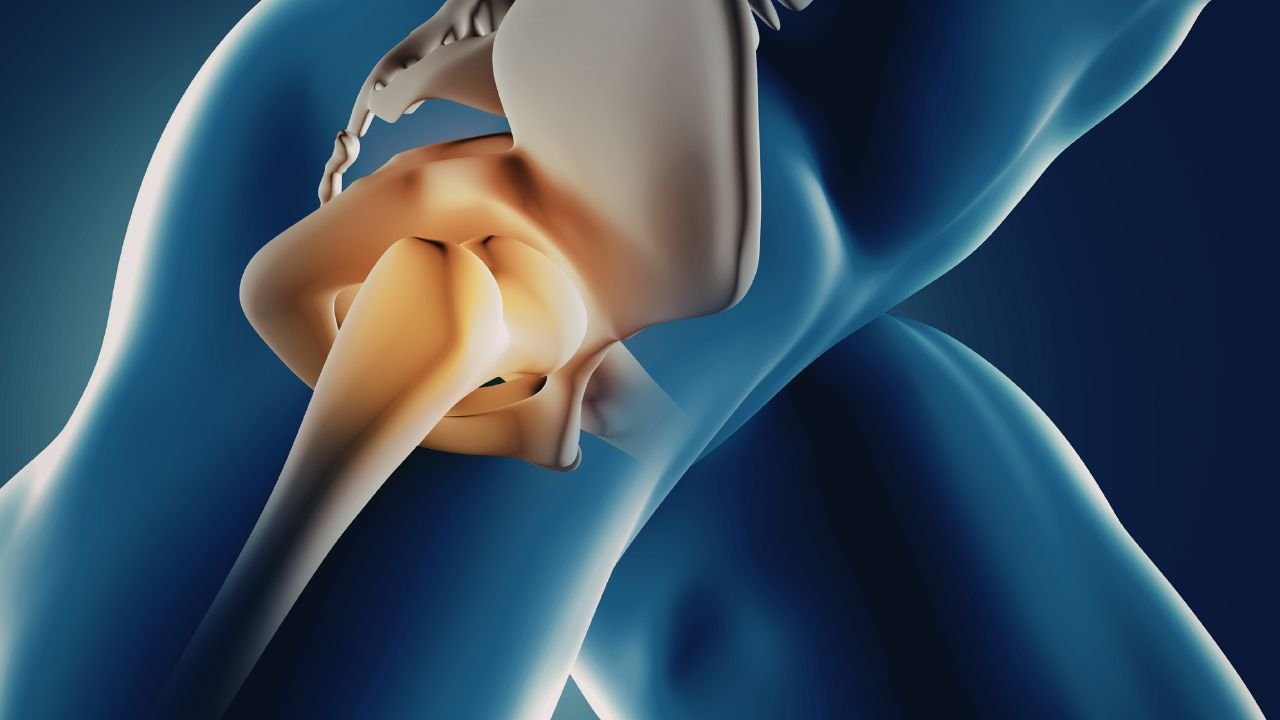
Buttock pain that worsens when standing from a chair, climbing stairs, or getting out of your car may signal sacroiliac joint dysfunction, a frequently misdiagnosed condition that affects the critical connection between your spine and pelvis. Unlike sciatica, which radiates below the knee, sacroiliac joint pain typically stays localized to the buttock and upper posterior thigh. Because this pain pattern overlaps with lumbar disc problems, hip arthritis, and other common conditions, accurate diagnosis requires specific provocative tests and sometimes diagnostic injections.
Understanding the pain causes, how SI joint dysfunction differs from similar conditions, and which non-surgical treatment options may provide relief can help you make informed decisions about your care.
Key Takeaways
- SI joint pain typically stays above the knee: Unlike sciatica, pain from the sacroiliac joint radiates to the buttock and posterior thigh but usually does not extend below the knee, a critical differentiating feature
- Diagnosis requires more than imaging: Three or more positive provocative tests (Gaenslen, FABER) suggest SI joint involvement; a diagnostic injection showing 50-75% pain reduction confirms the joint as the pain source
- Conservative treatment takes 6-12 weeks: Physical therapy focusing on core and hip strengthening requires consistent effort over weeks to months before significant improvement appears
- SI belts provide affordable support: External compression devices costing $30-$80 can stabilize hypermobile joints during acute flares, pregnancy, or postpartum recovery
- Advanced interventions exist when conservative care fails: Corticosteroid injections provide 40-70% pain reduction lasting 3-6 months; radiofrequency ablation targeting L4-S3 nerves may provide 6-12 months of relief for appropriate candidates
What Is Sacroiliac Joint Pain?
The sacroiliac joints connect your sacrum (the triangular bone at the base of your spine) to your ilium bones (the large pelvic bones on either side). These ligamentous, weight-bearing structures span only 2-4mm but carry tremendous responsibility: transferring load between your spine and lower body with every step, turn, and movement.
SI joint pain often mimics other conditions because the L4-S3 nerve roots that innervate this region also supply nearby structures. Patients frequently mistake SI joint dysfunction for low back pain, hip arthritis, or sciatica, making an accurate diagnosis essential before pursuing chronic pain management strategies.
Why Does Sacroiliac Joint Pain Happen?
Sacroiliac joint pain develops when mechanical stress, inflammation, or structural changes disrupt joint stability and normal load distribution through the pelvis.
Common causes include:
- Inflammation: Ankylosing spondylitis and other inflammatory conditions affecting joint tissues
- Pregnancy or postpartum pelvic changes: Relaxin hormone causes ligament laxity and hypermobility during and after pregnancy
- Trauma or sports injury: Direct falls onto the buttock or pelvis; acute rotational injuries
- Arthritis or degenerative joint changes: Hypomobility from age-related degeneration and cartilage breakdown
- Gait or muscle imbalance: Asymmetric loading patterns from weak core or hip stabilizers
- Leg-length differences: Biomechanical stress from structural asymmetry creating uneven pelvic forces
- Increased SI joint stress after lumbar fusion: Altered load distribution post-surgery transfers additional stress to the sacroiliac joints
What Are The Symptoms Of Sacroiliac Joint Pain?
SI joint pain typically presents as unilateral buttock discomfort near the posterior superior iliac spine (PSIS), worsening with specific movements and prolonged positions. Unlike sciatica, SI joint pain rarely extends below the knee.
Common symptoms and aggravating factors:
- Pain location: Buttock region directly over or near the PSIS (the bony prominence you can feel in your lower back)
- Radiation pattern: Posterior thigh; typically does NOT extend below the knee
- Worse with standing and stair climbing: Weight-bearing activities increase joint stress
- Worse with prolonged sitting, then sitting-to-stand transitions: Static positions followed by movement
- Transitional movements: Getting in/out of car, rolling over in bed
- One-sided loading: Single-leg stance, carrying weight asymmetrically
- Provocative exam findings: Three or more positive stress tests (Gaenslen, FABER) suggest SI joint involvement
- Relief pattern: Pain often improves when lying down and unloading the joint
Red-flag symptoms requiring urgent evaluation:
- Fever
- Significant weakness or numbness
- Severe trauma
- Bowel or bladder changes
- Progressive neurological decline
How Do Doctors Diagnose Sacroiliac Joint Pain?
Clinicians diagnose SI joint pain through detailed history, symptom pattern analysis, and physical examination. Because imaging alone cannot confirm the SI joint as the pain source, provocative maneuvers and diagnostic injections remain essential.
Common exam clues and provocative maneuvers:
- Tenderness at PSIS (posterior superior iliac spine)
- Three or more positive provocative tests required for clinical suspicion:
- Gaenslen test (hip extension with opposite hip flexion)
- FABER test (Patrick’s test: flexion, abduction, external rotation)
- Additional SI joint stress tests (thigh thrust, compression, distraction)
- History factors: Pregnancy, trauma, or previous lumbar fusion surgery
Imaging And Diagnostic Tools Comparison
| Tool | What It May Help Identify | Limitations |
| X-ray (pelvis) | Gross structural changes, advanced arthritis | Limited diagnostic value for SI joint pain; cannot visualize soft tissue inflammation or early degenerative changes |
| MRI | Inflammation, bone marrow edema, structural abnormalities | Does not confirm pain source; may show incidental findings unrelated to symptoms |
| CT | Bony anatomy, fractures, advanced arthritis | Radiation exposure; poor soft tissue detail; does not assess functional pain or joint instability |
| Diagnostic injection (intra-articular) | 50-75% pain reduction confirms SI joint as pain source | Invasive; requires image guidance; temporary effect |
Why imaging alone usually does not confirm SI joint pain: Structural changes visible on X-ray, MRI, or CT do not always correlate with symptoms. Many patients show degenerative changes without pain, while others experience significant pain with minimal imaging findings. The diagnostic injection, delivering anesthetic directly into the SI joint under fluoroscopic guidance, remains the gold standard for confirming the sacroiliac joint as the true pain generator.
A positive response (50-75%+ pain reduction) provides functional confirmation that the joint itself is responsible for symptoms.
What Non-Surgical Treatments May Help Sacroiliac Joint Pain?
Treatment typically begins with conservative care, activity modification, physical therapy, and symptom management, before clinicians consider more advanced interventions. Most patients benefit from a structured approach that addresses both immediate joint relief and long-term joint stability.
Main Non-Surgical Treatment Options
| Treatment Option | What It Is | When It May Help | Practical Limitations or Notes |
| Activity modification | Avoiding aggravating movements | Acute flares, preventing re-injury | Requires patient education; may limit lifestyle temporarily |
| Ice or heat | Local temperature therapy | Acute pain (ice), chronic stiffness (heat) | Temporary symptom relief only |
| NSAIDs or other pain-relief medicines | Anti-inflammatory medications | Reducing inflammation and pain | GI side effects; does not address mechanical causes |
| Physical therapy | Core/hip strengthening, stabilization exercises | Improving joint stability and muscle balance | Timeline: 6-12 weeks before significant improvement; requires patient compliance |
| Stretching and strengthening | Targeted muscle rebalancing | Addressing hypermobility or muscle weakness | Must be individualized to avoid aggravation |
| SI belts or pelvic braces | External compression support | Hypermobility, pregnancy-related pain, acute flares | Cost: $30-$80; may be uncomfortable for prolonged wear |
| Manual therapy or movement retraining | Chiropractic, osteopathic manipulation, movement pattern correction | Restoring joint mobility, addressing asymmetries | Results vary; requires skilled practitioner |
What Happens If Early Non-Surgical Treatment Does Not Help?
When conservative care fails to provide adequate relief after 6-12 weeks, clinicians may recommend image-guided injections or radiofrequency ablation as SIJ therapy. These advanced interventions target specific pain sources with greater precision than oral medications or generalized physical therapy.
Advanced Non-Surgical Interventions
| Treatment | What It Does | Who It May Help | How It Is Typically Used | Key Limitations or Expectations |
| Corticosteroid injections | Delivers anti-inflammatory medication directly into SI joint | Patients with inflammation or failed conservative care | Image-guided (intra-articular) | Cost: $300-$800; Duration: 3-6 months; Effectiveness: 40-70% of patients |
| Prolotherapy | Stimulates healing response in ligaments | Patients with ligament laxity or hypermobility | Series of injections over weeks/months | Cost: $800-$1,500; Evidence base varies |
| PRP injections | Uses patient’s own platelets to support tissue repair | Degenerative changes, chronic pain | Image-guided injection | Cost: $1K-$2K; Investigational for SI joint; not covered by insurance |
| Radiofrequency ablation (RFA) | Disrupts pain signals from L4-S3 nerve branches supplying SI joint | Patients with confirmed SI joint pain via diagnostic injection | Image-guided procedure targeting lateral branch nerves | Cost: $2K-$5K; Duration: 6-12 months; May need repeat treatment |
Patients considering regenerative medicine options should understand that while PRP and BMAC show promise for degenerative joint conditions, evidence for SI joint applications remains investigational. Similarly, those frustrated with repeated cortisone shots may explore advanced biologics, though standard corticosteroid injections remain the most established interventional approach for SI joint inflammation.
How Can You Manage Sacroiliac Joint Pain Day To Day?
Effective day-to-day management focuses on controlling symptoms during flares while reducing repetitive strain that perpetuates the cycle. Small adjustments to movement patterns and positioning often provide significant relief.
Practical self-management strategies:
- Modify aggravating activities: Avoid prolonged single-leg standing; minimize sitting-to-stand transitions
- Stay gently active: Walking, swimming, or other low-impact activities maintain mobility without overloading the joint
- Adjust sitting positions: Use lumbar support, avoid slouching, and take frequent breaks every 30-45 minutes
- Adjust sleeping positions: Side-lying with a pillow between knees; avoid stomach sleeping
- Improve posture and body mechanics: Equal weight distribution when standing; avoid twisting while carrying loads
- Use lying positions for symptom relief: Horizontal rest reduces SI joint loading and often provides immediate pain reduction
- Return to activity gradually: Avoid sudden increases in intensity or duration after periods of rest
What Conditions Can Be Confused With Sacroiliac Joint Pain?
| Condition | Pain Location | Common Triggers | Overlapping Symptoms | Clues That Make SI Joint Pain More Likely | Clues That Make SI Joint Pain Less Likely |
| Sciatica (lumbar radiculopathy) | Radiates from low back down leg, often below knee | Flexion, prolonged sitting | Buttock and posterior thigh pain | Pain stays above knee; relieved by lying; 3+ positive SI tests | Pain extends below knee; positive straight leg raise; dermatomal distribution |
| Hip pain (osteoarthritis, labral tear) | Groin, lateral hip, anterior thigh | Hip rotation, weight bearing | Difficulty with stairs, standing | Pain at PSIS (posterior), not groin; positive SI provocation tests | Pain in groin or lateral hip; limited hip internal rotation; positive hip impingement tests |
| Lumbar disc problems | Low back, may radiate to leg | Flexion, lifting, twisting | Back and leg pain | Pain worse with sitting-to-stand; tenderness at PSIS; 3+ positive SI tests | Centralized back pain; worse with flexion; positive neural tension signs |
| Inflammatory back conditions (ankylosing spondylitis) | Low back, buttocks, may alternate sides | Prolonged rest, early morning | Stiffness, buttock pain | Morning stiffness >30 min; alternating buttock pain; MRI shows sacroiliitis | Absence of inflammatory markers; no family history; normal MRI |
Patients with radicular symptoms extending below the knee may benefit from epidural steroid injections targeting nerve root compression rather than SI joint-focused treatments. Those with chronic degenerative joint pain in multiple locations might explore BMAC therapy as a comprehensive regenerative approach.
Which Non-Surgical Treatments May Help Different Types Of Patients?
Treatment selection depends on pain triggers, duration, and underlying cause. Matching interventions to individual scenarios improves outcomes and prevents unnecessary procedures.
Patient Scenario Matching
| Patient Scenario | Treatment Options That May Fit Best | Useful Modifications | Follow-Up Considerations |
| Acute injury-related SI joint pain | Ice, NSAIDs, activity modification, SI belt | Avoid aggravating activities for 1-2 weeks | If no improvement in 2-4 weeks, add PT |
| Chronic or recurring SI joint pain | PT (core/hip strengthening), manual therapy, NSAIDs, SI belt | 6-12 week PT program; may need ongoing maintenance exercises | Consider corticosteroid injection if failed 6-12 weeks conservative care (40-70% effective) |
| Pregnancy-related or postpartum SI joint pain | PT, SI belt ($30-$80), manual therapy, activity modification | Avoid NSAIDs during pregnancy; focus on pelvic floor and core stability | SI belt particularly helpful; symptoms often improve 3-6 months postpartum |
| SI joint pain after lumbar fusion | PT, activity modification, corticosteroid injection, RF ablation | Altered biomechanics require targeted PT; may need injections earlier | RF ablation (L4-S3) may be appropriate if injections provide temporary relief; surgical fusion <5% of cases |
When Should You See A Specialist For Sacroiliac Joint Pain?
Persistent symptoms despite conservative care, diagnostic uncertainty, or complex presentations warrant specialist evaluation. Interventional pain specialists can perform diagnostic injections and advanced procedures when appropriate.
Referral scenarios:
- Persistent pain despite conservative care: Failed 6-12 weeks of PT, activity modification, and medications
- Suspected inflammatory disease: Positive inflammatory markers, family history of ankylosing spondylitis, alternating buttock pain
- Post-surgical pain: SI joint pain after lumbar fusion requiring advanced evaluation
- Diagnostic uncertainty: Unclear pain source; need for diagnostic injection (50-75% relief confirms SI joint)
- Consideration for interventional treatment: Candidates for corticosteroid injection, prolotherapy, PRP, or RF ablation
- Red-flag symptoms: Progressive weakness, bowel/bladder changes, fever, significant trauma
Surgery Considerations
SI joint fusion surgery remains rare, performed in less than 5% of SI joint pain cases. Surgical intervention is discussed only after appropriate non-surgical options, including conservative care and interventional treatments, have been exhausted. Candidates must have a well-established diagnosis via diagnostic injection showing 50-75%+ pain relief. Fusion is reserved for severe, disabling pain unresponsive to all other treatments.
What Are The Most Important Takeaways About SI Joint Pain And Non-Surgical Relief?
Key clinical insights:
- SI joint pain can mimic other conditions: Pain pattern overlaps with sciatica, hip pain, and lumbar problems; radiation to the posterior thigh, but typically NOT below the knee is a key differentiating clue
- Accurate diagnosis matters: Clinical diagnosis requires 3+ positive provocative tests (Gaenslen, FABER); diagnostic injection showing 50-75% relief confirms SI joint as pain source
- Conservative care is usually first-line: PT (6-12 weeks), SI belt ($30-$80), activity modification, and manual therapy are standard initial approaches
- Treatment works best when matched to cause: Pregnancy-related pain responds to SI belt and PT; post-fusion pain may need earlier interventional treatment; inflammatory conditions require different approaches
- Some patients may need advanced interventions: If conservative care fails after 6-12 weeks, corticosteroid injections (40-70% effective, 3-6 months duration, $300-$800) or RF ablation (6-12 months duration, $2K-$5K) may help
- Surgery is rare: SI joint fusion is considered in <5% of cases, only after all non-surgical options are exhausted and the diagnosis is confirmed via diagnostic injection
Sacroiliac joint pain responds well to targeted conservative care when the diagnosis is accurate, and the treatment matches the underlying cause. Most patients find relief through physical therapy, activity modification, and strategic use of support devices, though some require advanced interventional procedures after conservative options have been exhausted.
If buttock pain is limiting your activities and you’re ready to find the root cause, contact our team to schedule a comprehensive evaluation.


