
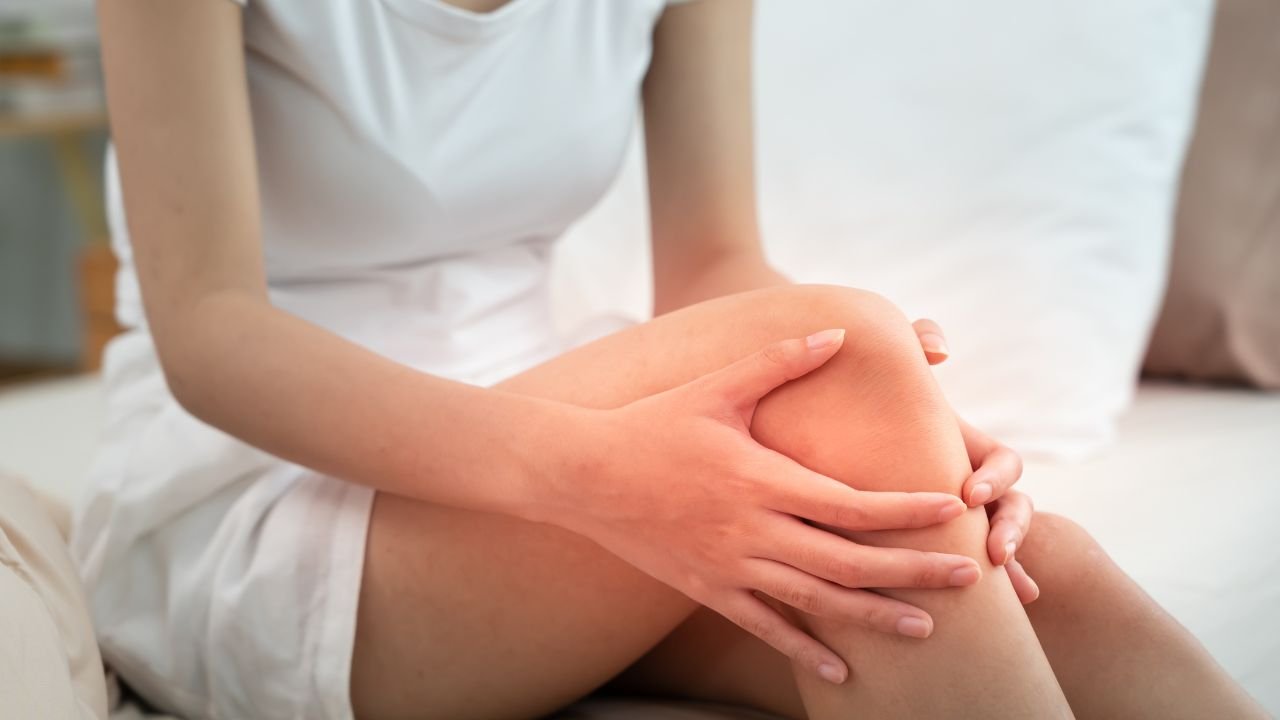
Inner knee pain affects millions of active adults each year, limiting everything from daily walks to favorite sports and recreational activities. Whether you’re experiencing a dull ache after exercise or sharp pain that stops you mid-stride, understanding what’s happening inside your knee is the first step toward effective treatment and lasting relief.
This guide explains the most common knee pain causes, helps you identify warning signs that require immediate attention, and outlines evidence-based treatment options, from conservative self-care to advanced regenerative therapies that can help you avoid surgery and return to the active lifestyle you love.
Key Takeaways
- What causes pain on the inner side of your knee, and which structures are involved
- How to distinguish mild pain from serious conditions requiring specialist evaluation
- Evidence-based treatment approaches from conservative care to regenerative medicine
- When self-care is sufficient and when professional intervention becomes necessary
- Prevention strategies to keep inner knee pain from returning
What Is Inner Knee Pain?
Inner knee pain originates from the medial (inside) portion of the knee joint.
Inner knee pain, also called medial knee pain, refers to discomfort felt on the inside of the knee joint. The medial compartment bears approximately 60–70% of the total load during normal walking, making it particularly vulnerable to injury and degeneration. Pain in this area typically indicates problems with the medial meniscus, medial collateral ligament (MCL), articular cartilage, pes anserine bursa, or synovial plica.
What Causes Inner Knee Pain?
Multiple conditions can produce medial knee pain, from acute injuries to chronic degenerative changes.
Knee osteoarthritis (OA) affects approximately 10% of men and 13% of women over age 60. A body mass index (BMI) over 30 increases OA risk 4-fold, while prior meniscectomy increases risk by 5-fold. Women have 2× higher OA prevalence post-menopause. Among diabetic patients with knee pain, 24–34% have pes anserine bursitis, and up to 75% of patients with knee OA also have co-existing pes anserine bursitis.
Common Causes of Inner Knee Pain
| Cause | What It Is | Where Pain Is Felt | Common Symptoms | Common Triggers | Typical Patient/Situation |
| Medial Meniscus Tear | Tear in the C-shaped cartilage cushion | Medial joint line | Locking, catching, clicking; swelling develops over 24–48 hours | Twisting on a planted foot, deep squatting | Active individuals 20–40 (traumatic); over 40 (degenerative) |
| MCL Injury | Sprain or tear of the medial collateral ligament | Along the inner side of knee | Immediate medial pain/swelling; instability or “giving way” with lateral movements | Direct blow to outside of knee, severe twisting | Contact sports athletes, skiing injuries |
| Medial Compartment Osteoarthritis | Progressive cartilage breakdown and bone-on-bone contact | Diffuse medial compartment | Weight-bearing pain worsening throughout day; morning stiffness <30 min; crepitus (grinding) | Walking, stairs, prolonged standing | Adults over 50, obese individuals, prior knee injury |
| Pes Anserine Bursitis | Inflammation of bursa 2–3 cm below joint line | 2–3 cm below medial joint line (anteromedial proximal tibia) | Point tenderness below joint line; pain climbing stairs or rising from chair | Overuse from repetitive knee flexion/extension; tight hamstrings | Runners, cyclists, obese individuals, diabetics, patients with existing knee OA |
| Overuse or Repetitive Strain | Cumulative microtrauma to medial structures | Variable, often diffuse medial knee | Gradual onset aching; worsens with activity; improves with rest | Sudden increase in activity level; poor biomechanics | Weekend warriors, runners increasing mileage too quickly |
| Inflammatory Arthritis | Autoimmune joint inflammation (rheumatoid, psoriatic) | Entire joint, including medial side | Morning stiffness >30 min; symmetrical joint involvement; systemic symptoms | Immune system flare-ups | Patients with known autoimmune disease; family history |
What Symptoms Can Help Identify The Cause Of Inner Knee Pain?
Specific symptom patterns point toward different underlying conditions.
The pes anserine bursa is located approximately 2–3 cm below the medial joint line, an important landmark for distinguishing bursitis from joint-line pathology. Synovial plicae (embryological folds) are present in approximately 50% of the population but are symptomatic in only about 10%.
Symptom Mapping for Inner Knee Pain
| Symptom | What It May Indicate | Conditions Commonly Associated | How Concerning |
| Swelling (developing over 24–48 hours) | Internal bleeding or inflammatory response to tissue injury | Meniscus tear, MCL sprain, OA flare-up | Moderate , warrants evaluation if persistent |
| Locking or Catching | Mechanical obstruction from displaced tissue | Meniscus tear (bucket-handle type), loose body, plica syndrome | High , suggests structural problem requiring specialist evaluation |
| Knee Giving Way | Ligament instability or muscle weakness | MCL tear (Grade 2–3), chronic meniscus deficiency | High , indicates potential instability requiring treatment |
| Stiffness After Rest (lasting <30 minutes) | Mechanical joint problem rather than inflammatory | Osteoarthritis (degenerative) | Moderate , typical of OA but warrants diagnosis |
| Tenderness in One Spot (2–3 cm below joint line) | Localized bursal or tendon inflammation | Pes anserine bursitis, tendinitis | Low to Moderate , usually responds to conservative treatment |
Why Does Inner Knee Pain Get Worse With Certain Movements?
Different activities place distinct stresses on medial knee structures.
Twisting or pivoting creates rotational shear stress that can exceed the tensile strength of meniscal tissue, particularly in the setting of a tear, and also stresses the MCL and medial capsule. Walking or running applies repetitive loading that exacerbates cartilage wear in OA and increases friction over the inflamed bursa in pes anserine bursitis. Squatting or using stairs compresses the medial compartment and posterior horn of the meniscus while increasing the pes anserine tendon tension and bursal compression.
Pain after sitting or resting occurs when prolonged static positioning causes joint fluid to redistribute and cartilage to deform, characteristic of OA’s “gel phenomenon.” Sports-related flare-ups result from high-impact activities, cutting movements, and sudden directional changes that place peak stress on medial stabilizers (MCL) and shock absorbers (meniscus).
How Can You Tell Whether Inner Knee Pain Is Mild Or Serious?
Severity depends on healing timeline, symptom intensity, and functional impact.
MCL injuries heal at different rates by grade: Grade 1 (mild sprain) in 1–3 weeks, Grade 2 (moderate partial tear) in 3–6 weeks, and Grade 3 (complete rupture) in 6 weeks to 6 months, potentially requiring surgery. Mild inner knee pain typically has a gradual onset with an identifiable cause, improves with rest and ice, involves minimal swelling, preserves full range of motion, and allows weight-bearing without significant difficulty.
Warning signs suggesting serious problems include sudden, severe pain following specific injury (acute structural damage), inability to fully straighten or bend the knee (mechanical obstruction), significant swelling within 2 hours (hemarthrosis from ligament or bone injury), knee giving way or buckling during weight-bearing (ligamentous insufficiency), persistent pain lasting >6–8 weeks despite conservative treatment (requires specialist evaluation), and severe point tenderness over bone (possible fracture or osteonecrosis).
When Is It Time To See A Specialist For Inner Knee Pain?
Specialist evaluation is warranted when conservative treatment fails or structural damage is suspected.
A specialist referral becomes necessary if pain does not improve with 6–8 weeks of conservative treatment (physical therapy, NSAIDs, activity modification, bracing), you cannot bear weight on the affected leg following injury, you experience true mechanical locking (inability to fully extend the knee), or you have recurrent instability or giving way.
Additional indications include severe, persistent swelling with warmth or redness (raises concern for infection or inflammatory arthritis), suspected structural damage on imaging (meniscal tear, ligament rupture, or advanced cartilage loss), and functional impairment preventing activities of daily living, work, or recreational activities.
When Is Inner Knee Pain An Emergency?
Certain presentations require immediate medical attention to prevent serious complications.
Urgent medical attention required if you experience:
Severe, rapidly developing swelling (particularly with warmth, erythema, or fever, suggests septic arthritis or hemarthrosis), visible deformity of the knee joint (dislocation or fracture), fever with knee pain, swelling, and redness (septic arthritis is a surgical emergency), sudden inability to walk or bear any weight following trauma, complete inability to move the knee (suggests severe structural disruption), or paresthesias, pallor, or absent pulses distal to the knee (neurovascular compromise requiring immediate intervention).
How Do Specialists Diagnose Inner Knee Pain?
Accurate diagnosis combines clinical history, physical examination, and targeted imaging.
Specialists ask about onset (sudden versus gradual), mechanism (valgus contact, twisting, insidious), age and BMI (younger patients favor traumatic pathology; older and obese patients favor OA and bursitis), activity level (high-impact sports versus sedentary), and prior treatments (previous injections, physical therapy, surgeries).
Physical examination includes inspection (alignment, swelling, muscle atrophy), palpation (joint line, MCL, pes anserine region, plica), range of motion assessment, and special diagnostic tests.
Physical Examination Tests:
| Test | Condition Evaluated | Sensitivity | Specificity | Clinical Note |
| McMurray Test | Meniscus tear | 70% | 71% | Flex knee, externally rotate tibia, apply valgus, extend |
| Valgus Stress Test (30°) | MCL sprain | 78–91% | 49–67% | Apply valgus force at 30° flexion |
| Thessaly Test | Meniscus tear | 90% | 97% | Stand on one leg at 20° flex, rotate body |
| Mediopatellar Plica Test | Plica syndrome | 89.5% | 88.7% | Medially displace patella, flex/extend |
X-rays serve as first-line imaging for suspected OA. Standing weight-bearing views are essential (reflect true functional joint space), with the Rosenberg view (PA weight-bearing at 45° flexion) most sensitive for detecting early joint space narrowing. X-rays grade OA severity using the Kellgren-Lawrence (KL) system at a cost of $50–200 per view.
MRI is needed when soft tissue injury is suspected (meniscus, ligament, cartilage) or diagnosis remains unclear after X-ray. MRI provides excellent visualization of meniscus, ligaments, cartilage, and bone marrow, with 90–95% sensitivity and 85–90% specificity for medial meniscal tears compared to arthroscopy. Cost ranges from $400–3,500 depending on facility and location.
Kellgren-Lawrence (KL) Osteoarthritis Grading Scale:
- KL Grade 0: Normal joint
- KL Grade 1: Doubtful joint space narrowing (possible osteophyte formation)
- KL Grade 2: Mild OA with definite osteophytes (bone spurs) and possible joint space narrowing
- KL Grade 3: Moderate OA with definite joint space narrowing, multiple osteophytes, possible sclerosis
- KL Grade 4: Severe OA with marked joint space narrowing, large osteophytes, severe sclerosis, bone-on-bone appearance
What Can You Do at Home for Inner Knee Pain?
Self-care strategies can effectively manage mild to moderate inner knee pain and support recovery.
Rest activities that worsen pain (twisting, high-impact sports, prolonged standing) while maintaining gentle range-of-motion exercises to prevent stiffness. Apply ice for 15–20 minutes every 2–3 hours during the first 48–72 hours to reduce inflammation. Use compression (elastic bandage or sleeve) to reduce swelling and elevate your leg above heart level when resting to promote fluid drainage. Over-the-counter NSAIDs (ibuprofen, naproxen) address pain and inflammation, while acetaminophen provides pain relief without an anti-inflammatory effect; consult a healthcare provider if needed for >7–10 days.
Avoid twisting or pivoting movements, deep squatting or kneeling, high-impact activities (running, jumping), and prolonged sitting or standing in one position until symptoms resolve. Weight management significantly impacts knee stress; every 1 pound of body weight equals approximately 4 pounds of force on the knee joint during walking, so weight loss can substantially reduce mechanical stress on the medial compartment.
Compression sleeves provide mild support and proprioceptive feedback for mild pain or OA. Unloader braces (valgus/varus correction) offload the damaged compartment in medial compartment OA but require professional fitting. MCL braces provide lateral support during healing for Grade 1–2 sprains. Bracing may not be useful for severe instability (Grade 3 MCL tear), infection, or when it delays necessary medical evaluation.
What Treatments Can Help Inner Knee Pain?
Effective knee treatment depends on condition severity, cause, and patient goals.
Physical therapy is most effective when combined with other treatments and provides an additional 20–30% improvement in outcomes when paired with regenerative therapies, such as PRP. Key components include quadriceps strengthening (particularly vastus medialis oblique/VMO), hamstring flexibility (reduces pes anserine stress), hip abductor strengthening (reduces valgus collapse), proprioceptive training (reduces giving way episodes), and gait retraining (reduces medial compartment loading).
Injections are typically considered after 6–8 weeks of failed conservative treatment in patients with persistent pain and functional limitation. Options include corticosteroid injections for acute inflammatory flare-ups, hyaluronic acid (viscosupplementation) for mild-to-moderate OA, and regenerative therapies (PRP, BMAC) for patients seeking to delay or avoid surgery. Bracing is appropriate for MCL injuries during healing (Grade 1–2 sprains), medial compartment OA (unloader brace to offload the damaged compartment), and mild instability.
Surgery is considered when there is true mechanical locking from a displaced meniscal tear, Grade 3 MCL tear with significant instability, severe bone-on-bone OA (KL Grade 4) with failed conservative and regenerative treatment, or young, active patients with isolated medial compartment OA and varus deformity requiring high tibial osteotomy.
How Does Treatment Change Based On The Cause Of Inner Knee Pain?
Each condition requires a tailored approach based on severity and structural damage.
Treatment by Condition
| Condition | First-Line Treatment | Imaging Commonly Used | When Specialist Care Becomes More Important | When Surgery May Be Considered |
| Meniscus Tear | RICE; NSAIDs; physical therapy focusing on quadriceps strengthening | MRI (90–95% sensitivity, 85–90% specificity for meniscal tears) | If mechanical locking, persistent catching, or failed 6–8 weeks conservative treatment | Displaced tear causing true locking; peripheral (red zone) tear amenable to repair; symptomatic tear in active individual |
| MCL Injury | Grade 1–2: RICE, NSAIDs, MCL brace, physical therapy for 3–6 weeks; protected weight-bearing | X-ray to rule out fracture; MRI if complete tear suspected or concurrent injuries | Grade 3 tear with significant instability; no improvement after 6 weeks of conservative care | Grade 3 complete rupture with persistent instability; “unhappy triad” (MCL + ACL + meniscus tear) |
| Medial Compartment Osteoarthritis | KL 1–2: Physical therapy, weight loss, NSAIDs, activity modification, unloader brace; KL 2–3: Consider PRP (60–80% improvement, 6–12 months duration); KL 3–4: Consider BMAC therapy (50–70% improvement, 12–24+ months duration) | Standing weight-bearing X-rays (Rosenberg view) to grade severity (KL 0–4); MRI if soft tissue pathology suspected | KL Grade 3–4; failed conservative treatment; functional impairment; considering regenerative therapy or surgery | KL Grade 4 bone-on-bone with failed all non-surgical options → Total Knee Replacement (90–95% survivorship at 10 years); younger active patients with isolated medial OA → High Tibial Osteotomy or Unicompartmental Knee Replacement |
| Pes Anserine Bursitis | RICE, NSAIDs, physical therapy (hamstring stretching, quadriceps strengthening), activity modification; corticosteroid injection if conservative treatment fails | Usually clinical diagnosis; X-ray or MRI only if diagnosis uncertain or concurrent OA suspected | If symptoms persist >6–8 weeks despite conservative treatment; if diabetes or obesity complicates recovery | Rarely needed; reserved for refractory cases with severe tendinopathy or chronic bursitis unresponsive to all conservative measures |
Cost comparison for treatment options: PRP series ($1,200–4,000), BMAC ($3,000–8,000), Adipose-derived SVF ($5,000–10,000), Unicompartmental Knee Replacement ($28,000–53,000), Total Knee Replacement ($55,000–100,000+).
Recovery timelines: PRP/BMAC (1–2 weeks minimal downtime), Adipose SVF (2–3 weeks), UKR (6–8 weeks), TKR (3–6 months to full recovery).
Surgical outcomes: TKR survivorship is 90–95% at 10 years and 80–85% at 20 years, with 10–15% requiring revision surgery at 10–15 years. UKR has approximately 15–20% revision rate at 10 years (higher than TKR).
How Can You Prevent Inner Knee Pain From Coming Back?
Prevention focuses on strengthening, mobility, proper biomechanics, and weight management.
Strengthen quadriceps (especially VMO) to stabilize the patella and reduce medial compartment stress, hamstrings to balance knee forces, hip abductors (gluteus medius/minimus) to prevent valgus collapse, and core stability to maintain proper lower extremity biomechanics. Maintain hamstring flexibility (reduces pes anserine stress), hip flexor and IT band stretching (improves knee alignment), and ankle mobility (optimizes force distribution through lower extremity).
Wear proper footwear with adequate arch support, replace running shoes every 300–500 miles, gradually increase activity intensity (no more than 10% increase per week), avoid sudden changes in training surface, and cross-train to reduce repetitive stress on knees. A 5-unit increase in BMI is associated with a 35% higher risk of knee pain, and even modest weight loss (5–10% of body weight) can significantly reduce symptoms. While OA has a genetic component (heritability estimated at 40–65%), modifiable risk factors like weight and activity can still make a substantial difference.
What Should You Remember About Inner Knee Pain?
Understanding common causes and warning signs helps you make informed decisions about comprehensive pain management.
The most common causes are medial meniscus tears (traumatic in younger, degenerative in older patients), MCL sprains (from valgus stress or direct blow to lateral knee), medial compartment osteoarthritis (progressive cartilage breakdown affecting ~10% of men and ~13% of women over 60), and pes anserine bursitis (inflammation of bursa 2–3 cm below joint line, common in runners, diabetics, and patients with existing knee OA).
Do not ignore true mechanical locking (inability to fully extend knee), severe swelling with fever, redness, or warmth (possible infection), inability to bear weight after injury, recurrent giving way or instability, or pain persisting >6–8 weeks despite conservative treatment.
Stop self-treating and book a specialist visit if you experience no improvement after 6–8 weeks of RICE, NSAIDs, and activity modification, mechanical symptoms (locking, catching) suggest structural damage, functional impairment prevents daily activities or work, red flags are present (severe swelling, deformity, fever, neurovascular compromise), imaging shows significant structural pathology (meniscal tear, advanced OA, ligament rupture), or you are considering injection therapy or surgical options and need expert evaluation.
Inner knee pain is common, and many cases respond well to conservative treatment. However, certain conditions, particularly displaced meniscal tears, complete ligament ruptures, and severe osteoarthritis, require specialist intervention to prevent long-term complications and preserve joint function. When in doubt, seek professional evaluation rather than delaying care.
Ready to find lasting relief from inner knee pain? Dr. Ashu Goyle specializes in advanced regenerative treatments that address the root cause, not just the symptoms. Schedule your consultation today and discover how we can help you return to the activities you love.


