
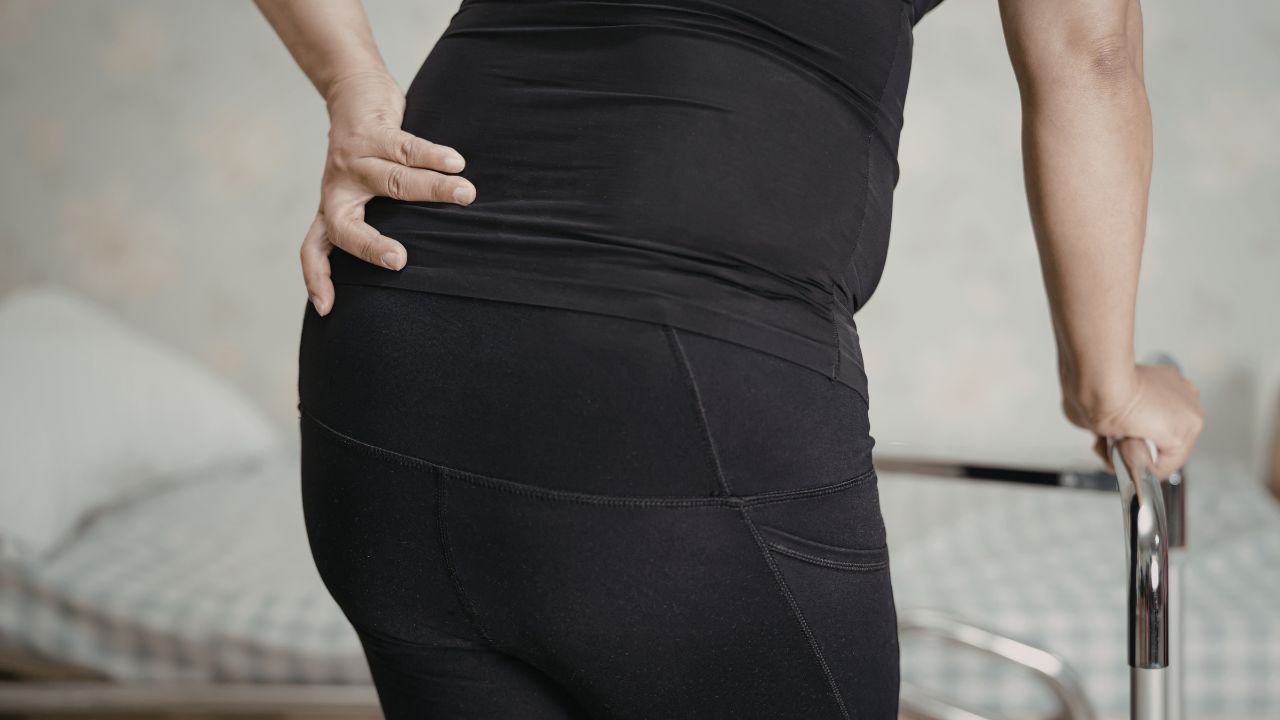
Hip pain is common. Hip pain that shoots, burns, or aches all the way down your leg is something different, and it deserves a more precise answer than “take it easy and see how it feels.” Whether you’re cutting your golf swing short, stepping off the pickleball court early, or struggling to get through a full workday without shifting in your seat, radiating leg pain is your body signaling a structural problem that won’t resolve on its own.
This guide breaks down what causes hip pain to travel down the leg, when it crosses the threshold for specialist care, and what non-surgical options exist, including advanced regenerative therapies available exclusively in Scottsdale at Integrated Spine, Pain & Wellness.
Key Takeaways
- Radiating leg pain has multiple causes, accurate diagnosis determines the right treatment
- Not all radiating pain is an emergency, but some symptoms require immediate evaluation
- Non-surgical options, including PRP, BMAC, and Regenokine, are effective for most patients
- Specialist credentials and technology produce meaningfully different outcomes than general care
- Prevention through lifestyle, posture, and weight management reduces recurrence risk
What Causes Hip Pain To Radiate Down The Leg?
Hip pain that travels down the leg usually signals nerve involvement, joint deterioration, or structural compression along the lumbar spine or pelvis. Identifying the source is the first step toward lasting relief.
Primary conditions that cause hip pain to radiate:
- Sciatica, compression or irritation of the sciatic nerve along the lumbar spine
- Hip osteoarthritis, degenerative joint disease, causes referred pain down the thigh
- Herniated or bulging lumbar discs, displaced disc material pressing on nerve roots
- Spinal stenosis, the narrowing of the spinal canal, compresses nerves
- Piriformis syndrome, piriformis muscle irritating the sciatic nerve
- Sacroiliac (SI) joint dysfunction, inflammation, causing radiating gluteal and leg pain
- Trochanteric bursitis, lateral hip bursa inflammation with referred leg discomfort
- Post-surgical pain, residual nerve involvement after prior hip or spine procedures
How Does Sciatica Cause Radiating Hip Pain?
The sciatic nerve runs from lumbar nerve roots (L4–S1) through the buttock and down each leg. Disc herniations or bone spurs compress these roots, sending pain along the nerve’s full path, producing burning, shooting, or electric sensations. Prolonged sitting worsens compression over time, and activity flare-ups like a golf swing rotation can trigger acute episodes. Piriformis syndrome mimics true sciatica without any spinal cause.
Dr. Goyle’s Functional Spinal Unit Approach addresses the entire functional unit, nerve, disc, joint, and surrounding musculature, rather than targeting a single isolated source.
How Does Hip Osteoarthritis Differ From Other Conditions?
| Condition | Pain Pattern | Key Distinguishing Symptom |
| Hip Osteoarthritis | Groin, thigh, sometimes knee | Morning stiffness; pain with weight-bearing |
| Sciatica | Buttock down to foot | Burning/shooting; numbness or tingling |
| Herniated Disc | Lower back into leg | Radiates below the knee; worse bending forward |
| Spinal Stenosis | Both legs; worse standing/walking | Relief when sitting or leaning forward |
| SI Joint Dysfunction | Buttock, hip, posterior thigh | Worse with prolonged sitting or climbing stairs |
| Piriformis Syndrome | Buttock radiating down leg | Deep buttock tenderness; no spinal imaging findings |
Choose a specialist evaluation when symptoms overlap multiple columns, and combined presentations require imaging to differentiate. Learn more about regenerative medicine options for hip pain at ISPW.
When Should You Seek Medical Help For Hip Pain Radiating Down The Leg?
Not all radiating leg pain needs urgent attention, but some symptoms demand it.
Seek medical attention for:
- Hip pain lasting more than 12 weeks is the clinical threshold for chronic pain
- Progressive worsening rather than gradual improvement
- Loss of mobility: difficulty walking, standing, or climbing stairs
- Loss of bladder or bowel control, seek emergency care immediately (possible cauda equina syndrome)
- Fever combined with back and leg pain (possible infection)
- Pain following traumatic injury or fall
When Is It Serious Enough To Consult A Specialist?
- Severe pain not responding to rest, ice, or OTC anti-inflammatories within 4–6 weeks
- Sudden numbness, tingling, or weakness in the leg or foot
- Recurring flare-ups prevent golf, pickleball, or physical activity
- Desire to avoid surgery or long-term medication
- Concern about opioid dependency from the current treatment
Seeking specialist care is a proactive decision. For patients with hip pain wanting to avoid replacement surgery, non-surgical options are available and effective.
What’s The Difference Between Normal Radiating Pain And Nerve Damage?
| Feature | Normal Radiating Pain | Nerve Damage Signs |
| Sensation | Aching or pressure | Numbness, tingling, or burning |
| Motor Function | Full strength | Muscle weakness or foot drop |
| Reflexes | Normal | Reduced or absent |
| Duration | Improves with rest | Persistent or progressive |
| Bladder/Bowel | No involvement | Changes in control, emergency evaluation needed |
How Do Pain Specialists Diagnose Hip Pain Radiating Down The Leg?
Accurate diagnosis requires more than imaging. A Scottsdale specialist uses a combination of patient history, physical examination, and precision tools to confirm the true source of pain.
Diagnostic methods include:
- Detailed history: duration, location, aggravating and relieving factors
- Physical exam: range of motion, reflex testing, provocative tests (straight leg raise, FABER)
- X-ray: bony structures, joint space, alignment
- MRI: gold standard for disc herniations, nerve compression, joint pathology
- CT scan: detailed bony anatomy when MRI is contraindicated
- Ultrasound-guided assessment: real-time soft tissue visualization
- Fluoroscopy-guided diagnostic injections: confirm pain source by targeting specific structures
How Do Imaging Tests Compare?
| Imaging Test | Best Used For | Limitations |
| X-Ray | Initial bony screening | Cannot visualize soft tissue or nerves |
| MRI | Soft tissue and nerve evaluation | Cost; implant contraindications |
| CT Scan | Post-surgical bony detail | Higher radiation; limited soft tissue vs. MRI |
| Ultrasound | Real-time joint and soft tissue | Limited spine visualization |
| Fluoroscopy (Guided Injection) | Confirming pain generator | Involves radiation; diagnostic and therapeutic |
Choose MRI when soft tissue or nerve involvement is suspected. Choose fluoroscopy-guided injection when the pain generator needs confirmation before committing to a treatment plan.
Dr. Goyle uses advanced ultrasound and fluoroscopy guidance for both diagnosis and precision treatment, a significant advantage over general practice evaluation.
What Are The Treatment Options For Hip Pain Radiating Down The Leg?
Non-surgical approaches, such as bone marrow concentrate therapy are effective for most patients. ISPW focuses on options that support the body’s natural healing processes without opioids or surgery.
Non-surgical treatment options:
- Physical therapy, stretching, core strengthening, and neuromuscular re-education
- NSAIDs, oral or topical, to help reduce inflammation and discomfort
- MLS M7 Laser Therapy, a multi-wave laser that promotes cellular repair and helps reduce inflammation without surgery or medication
- Platelet-Rich Plasma (PRP), concentrated platelets from the patient’s own blood to support natural healing in joints and soft tissue
- Bone Marrow Aspirate Concentrate (BMAC), autologous cells to support tissue repair; learn what to expect during a BMAC procedure
- Regenokine Therapy, ISPW is Arizona’s only provider; uses the body’s own healing factors for advanced regenerative support
How Do Medications Compare?
| Medication Class | Primary Use | Key Consideration |
| NSAIDs | Reduce inflammation and pain | GI risk with prolonged use |
| Corticosteroids (Injectable) | Targeted joint or nerve inflammation | Limited per year; precision-guided at ISPW |
| Muscle Relaxants | Relieve spasm | Sedating; short-term only |
| Neuropathic Agents | Reduce nerve burning/tingling | Dizziness; requires titration |
| Topical Analgesics | Localized relief | Lower risk; good adjunct |
Dr. Goyle’s focus is non-narcotic, opioid-free care, using regenerative and interventional approaches for lasting relief rather than ongoing medication dependency.
What Physical Therapy And Conservative Methods Help?
Physical therapy addresses root mechanics: piriformis and hip flexor stretching reduces nerve pressure; core strengthening stabilizes the lumbar spine; neural mobilization (“nerve flossing”) reduces sciatic tension; glute and hip abductor strengthening offloads the spine.
Chiropractic care, spinal manipulation, soft tissue release, and joint mobilization are viable conservative options for mechanical issues. When it hasn’t delivered lasting results, ISPW’s interventional and regenerative approach provides a more comprehensive path, targeting the underlying biological environment.
When Should You See A Scottsdale Pain Specialist For Hip Pain?
Primary care is a starting point, not the destination for persistent radiating leg pain. A Scottsdale specialist brings diagnostic precision and treatment options that general practice doesn’t offer.
What Questions Should You Ask Before Selecting A Pain Specialist?
- What are your credentials, and where did you train?
- Do you specialize in interventional pain, regenerative medicine, or both?
- Do you offer ultrasound or fluoroscopy-guided evaluation?
- Are your regenerative treatments autologous or third-party?
- What is your philosophy on opioids?
- How do you personalize treatment plans?
- Are you the only provider in the region offering this specific treatment?
At ISPW, every one of these questions has a concrete answer, and most point to capabilities competitors can’t match.
How Are Treatment Plans Tailored Based On The Cause Of Pain?
| Condition | First-Line Approach | Advanced Options | ISPW Differentiator |
| Sciatica | Activity modification, PT, nerve mobilization | Epidural injection (fluoroscopy-guided), PRP | Functional Spinal Unit Approach |
| Herniated Disc | PT, core strengthening, NSAIDs | Epidural steroid injection, BMAC | Autologous biologics; non-surgical first |
| Hip Osteoarthritis | PRP, laser therapy, PT | BMAC for advanced joint involvement | APEX Biologix PRP; MLS M7 Laser |
| Spinal Stenosis | PT, posture work, facet injections | Epidural, Regenokine | AZ’s only Regenokine provider |
| SI Joint Dysfunction | PT, joint injection | PRP under imaging guidance | Fluoroscopy-guided precision |
| Piriformis Syndrome | Stretching, massage, PT | Ultrasound-guided piriformis injection | Real-time ultrasound accuracy |
Choose conservative first-line approaches when symptoms are recent and not progressing. Choose advanced options when first-line care hasn’t delivered lasting relief.
What Are The Potential Surgical Options For Hip Pain That Radiates Down The Leg?
Surgery is appropriate in specific, well-defined circumstances, and most patients don’t reach this stage with the right non-surgical care in place.
Indicators that surgery may be necessary:
- Failure of conservative care after 3–6 months
- Progressive neurological deficit: worsening weakness or expanding numbness
- Cauda equina syndrome: loss of bladder or bowel control, emergency intervention required
- Structural instability: fracture, significant spondylolisthesis, or severe myelopathy
- Intractable pain despite all non-surgical options
How Do Surgical Options Compare?
| Surgical Procedure | Indicated For | Recovery | Key Consideration |
| Microdiscectomy | Herniated disc on nerve root | 4–6 weeks | High success for leg pain |
| Laminectomy | Spinal stenosis | 6–12 weeks | May require fusion |
| Spinal Fusion | Instability, failed disc surgery | 3–6 months | Limits motion; adjacent segment risk |
| Hip Replacement | End-stage osteoarthritis | 6–12 weeks | Long lifespan; activity restrictions may apply |
| Nerve Decompression | Piriformis, nerve entrapment | 4–8 weeks | Reserved for refractory cases |
Most patients who appear to be surgical candidates are successfully managed without surgery using regenerative and interventional approaches. We’re not a fit when you haven’t yet completed an appropriate trial of non-surgical care.
How Can You Prevent Hip Pain From Radiating Down The Leg?
Structural and lifestyle habits directly influence whether radiating hip pain develops, or returns.
Prevention strategies:
- Maintain a healthy weight, excess load accelerates disc degeneration and hip joint wear
- Stay active with low-impact exercise, walking, swimming, and cycling preserve joint mobility
- Avoid prolonged sitting, stand or stretch every 30–45 minutes
- Warm up before sport, essential for golfers and pickleball players
- Anti-inflammatory nutrition, omega-3s, antioxidants, and adequate hydration support joint health
- Strengthen the posterior chain, glutes, hamstrings, and core to protect the lumbar spine
- Correct posture, anterior pelvic tilt, and head-forward posture both increase lumbar and hip strain over time
How Does Weight Management Affect Hip Pain And Radiating Leg Symptoms?
| Factor | Impact of Excess Weight | Benefit of Weight Management |
| Lumbar Disc Pressure | ~4 lbs of force per extra pound on lower lumbar discs | Reduces disc compression and herniation risk |
| Hip Joint Load | Accelerates cartilage wear and osteoarthritis | Slows degeneration; may reduce treatment frequency |
| Inflammatory Markers | Adipose tissue increases pro-inflammatory cytokines | Lowers systemic inflammation; supports nerve health |
| Treatment Outcomes | Higher BMI slows tissue recovery | Healthy weight improves regenerative therapy results |
Weight management isn’t separate from pain care; it’s part of the same equation. ISPW’s Medically Supervised Weight Loss and Diet & Lifestyle Optimization services complement regenerative treatment outcomes as part of a whole-body approach.
Key Steps In Managing Hip Pain And Improving Quality Of Life
Radiating hip pain is disruptive, but it’s also highly treatable with the right diagnosis and the right care sequence.
Essential strategies:
- Seek an accurate diagnosis early; the cause determines the treatment
- Start with conservative care before escalating
- Explore regenerative options before considering surgery
- Commit to your plan, progress builds over 4–12 weeks, with continued improvement at 3–6 months
- Address lifestyle factors; they work synergistically with clinical treatment
- Choose a specialist with the credentials and tools to deliver individualized care
Why You Should Consult A Scottsdale Pain Specialist Before Your Pain Gets Worse
The window for the most effective, least invasive intervention narrows as pain progresses. Early specialist involvement prevents acute pain from crossing into the chronic threshold. Timely intervention may prevent lasting nerve damage. And the longer the radiating leg pain goes unaddressed, the more likely neural sensitization makes it resistant to conservative care.
Dr. Goyle’s Cleveland Clinic fellowship training, double board certification, and Functional Spinal Unit Approach address root causes, not just symptoms. ISPW’s opioid-free philosophy means meaningful relief without dependency risk.
Ready to stop managing and start healing? Schedule your Pain Analysis Consult and find out what’s driving your pain, and what can be done about it.


