
Key Takeaways
- Uses your own cells, not donor products. BMAC (bone marrow aspirate concentrate) harvests healing cells from your own bone marrow—no third-party biological materials.
- Regenerative approach, not just symptom masking. Unlike medications or cortisone that provide temporary relief, bone marrow therapy is designed to support your body’s natural processes.
- Best suited for mild to moderate conditions. Ideal candidates typically have earlier-stage knee concerns who haven’t found adequate relief from conservative treatments. Severe, end-stage arthritis may require surgical intervention.
- May help delay or avoid surgery for some patients. For appropriate candidates, bone marrow therapy offers a minimally invasive option worth exploring before considering joint replacement.
- Gradual response with favorable safety profile. The body’s response develops over weeks to months. The procedure is generally well-tolerated when performed by qualified specialists using proper technique.
New to bone marrow therapy? You may have seen it searched online as “stem cell therapy.” Here’s the simple version: your body already makes cells that help calm swelling and repair worn tissue. We take a small sample of your own bone marrow from the back of your hip, concentrate those natural healing cells, and place them right where your knee hurts — so your own body can do the healing. No medication, no donor products, and no surgery.
Exploring Options for Chronic Knee Pain
Chronic knee pain affects millions of people, limiting mobility and diminishing quality of life. Traditional treatments like medications, cortisone injections, and physical therapy often provide temporary relief, leaving surgery as the eventual consideration for many patients.
bone marrow therapy offers a different approach—one that works with your body’s own regenerative potential rather than simply masking symptoms. This minimally invasive treatment uses cells harvested from your own bone marrow to support your body’s natural processes in the affected knee joint.
This guide explores how bone marrow therapy works for knee concerns, who may benefit most, what to expect during treatment, and how to determine whether it might be appropriate for your situation.
What Is Bone Marrow Therapy for Knee Pain?
bone marrow therapy—specifically BMAC (bone marrow aspirate concentrate)—is a regenerative approach that uses your body’s own cells to address knee discomfort.
Understanding BMAC for the Knee
At Integrated Spine, Pain, and Wellness, we exclusively use autologous bone marrow concentrate—cells harvested directly from your own body. This is an important distinction from clinics offering third-party products from umbilical cord tissue, amniotic fluid, or other donor sources.
When we harvest bone marrow from your hip bone (iliac crest), we obtain a sample containing:
- Mesenchymal healing cells (MSCs): Multipotent cells found naturally in your bone marrow
- Growth factors: Proteins involved in cellular signaling
- Cytokines: Molecules that play roles in cellular communication
- Other regenerative components: Various cells and proteins that support your body’s natural processes
This sample is processed and concentrated in our office to increase the density of these beneficial components, then precisely delivered into your knee joint using image guidance.
How BMAC May Support the Knee
Once delivered to the knee joint, the concentrated bone marrow cells interact with the local environment through several potential mechanisms:
- Cellular signaling: Growth factors and cytokines communicate with surrounding tissues
- Supporting the local environment: The concentrated cells may help create conditions favorable for your body’s natural processes
- Gradual response: Unlike medications that work immediately, the body’s response to BMAC develops over weeks to months
The Important Distinction: Your Cells vs. Third-Party Products
When researching bone marrow therapy for knee pain, you’ll encounter clinics advertising various “bone marrow” products. Understanding the differences is essential for making an informed decision.
What We Offer: Bone Marrow Concentrate (BMAC)
- Harvested from your own bone marrow
- Processed fresh in our office on your treatment day
- Contains your own living mesenchymal healing cells
- No risk of rejection or immune response
- FDA-compliant when used appropriately
What We Don’t Use:
Many clinics offer products derived from:
- Umbilical cord tissue
- Amniotic fluid
- Adipose (fat) tissue from donors
- Other third-party sources
These products raise important questions about cell viability after processing and storage, quality control, and regulatory status. At Integrated Spine, Pain, and Wellness, Dr. Goyle has chosen to exclusively use autologous BMAC because you know exactly what you’re receiving—your own cells, processed fresh, and delivered the same day.
Who May Be a Good Candidate for Bone Marrow Therapy for the Knee?
Patient selection significantly influences outcomes. The best candidates typically have certain characteristics, while others may be better served by different approaches.
Characteristics of Potential Candidates:
- Mild to moderate knee osteoarthritis or degenerative changes
- Have not found adequate relief from conservative treatments (physical therapy, anti-inflammatory medications, cortisone injections)
- Good overall health
- Non-smokers or willing to stop smoking
- No active infections
- Realistic expectations about the gradual nature of response
Who May Not Be Ideal Candidates:
- Severe, end-stage “bone-on-bone” arthritis with extensive joint destruction
- Significant mechanical instability requiring structural intervention
- Active infection or certain immune conditions
- Those expecting immediate or possible results
For patients with advanced arthritis, the structural damage may exceed what regenerative approaches can reasonably address. In these cases, surgical options like knee replacement may be more appropriate.
The Importance of Honest Evaluation
During your consultation, Dr. Goyle will thoroughly evaluate your condition—including review of imaging studies—to determine whether bone marrow therapy may be appropriate for your specific situation. We believe in honest conversations about candidacy rather than treating everyone who walks through the door.
What to Expect: The Treatment Process
Understanding what happens before, during, and after treatment helps you prepare and set appropriate expectations.
Initial Consultation and Evaluation
Your journey begins with a comprehensive consultation with Dr. Goyle. During this visit:
- We review your complete medical history and current symptoms
- Dr. Goyle performs a physical examination of your knee
- We review diagnostic imaging (X-rays, MRI) to assess the condition
- We discuss your goals, expectations, and previous treatments
- Dr. Goyle determines whether BMAC therapy may be appropriate
This thorough evaluation ensures you’re a suitable candidate and establishes a baseline for monitoring your response.
The BMAC Procedure
If you proceed with treatment, here’s what happens on your treatment day:
- Bone marrow aspiration: Using local anesthesia for comfort, Dr. Goyle extracts a small sample of bone marrow from your posterior iliac crest (back of your hip bone). Most patients tolerate this well.
- Processing: The bone marrow sample is processed in our office using specialized equipment to concentrate the mesenchymal healing cells and growth factors.
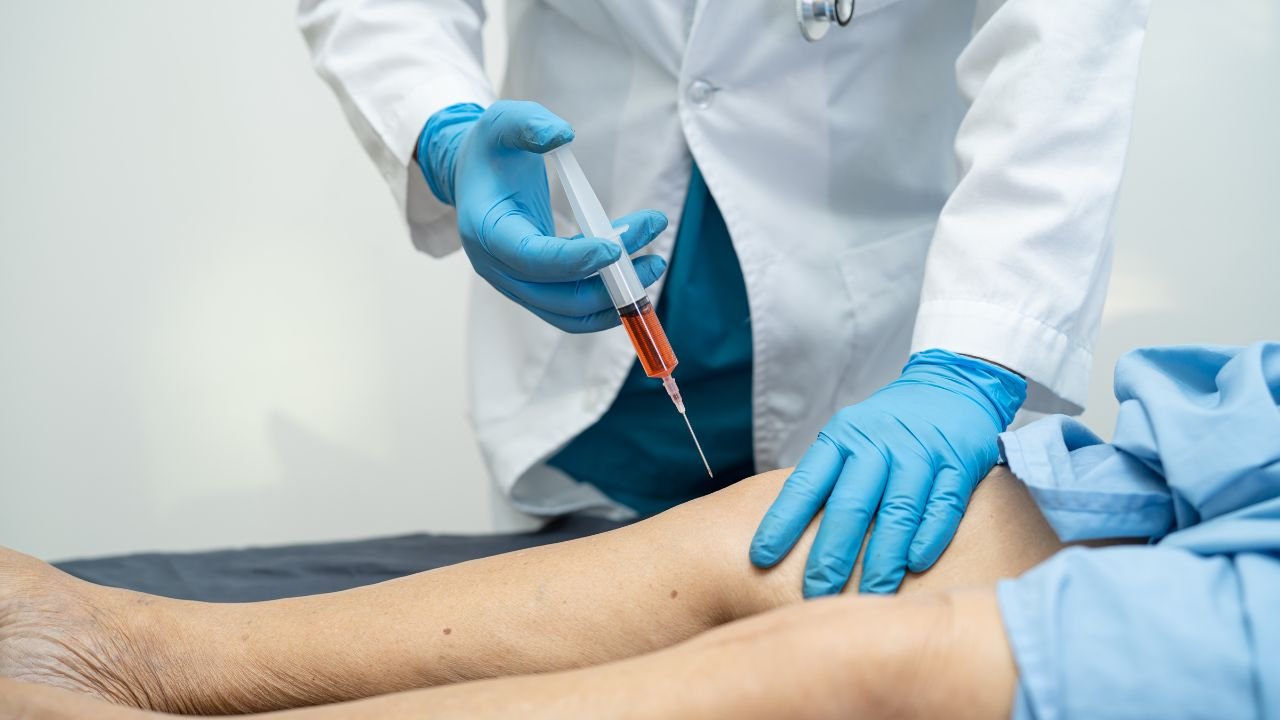
- Precise injection: Using ultrasound or fluoroscopy (real-time X-ray) guidance, Dr. Goyle delivers the concentrated BMAC directly into your knee joint. This image-guided approach ensures accurate placement.
The entire procedure typically takes one to two hours, and most patients return home the same day.
Recovery and Timeline
- First 1-2 weeks: Some discomfort at the injection and aspiration sites is normal. Avoid anti-inflammatory medications (NSAIDs) as directed, as these may interfere with the process.
- Weeks 2-6: Many patients begin noticing gradual changes during this period as initial responses develop.
- Months 1-6: The body’s response continues to develop. This is when many patients report the most noticeable changes.
- Months 6-12 and beyond: Continued gradual response for some patients.
Individual timelines vary significantly. Some patients notice changes within weeks, while others may take several months. During your consultation, Dr. Goyle will discuss realistic expectations based on your specific condition.
How Does This Compare to Other Knee Pain Treatments?
Understanding how bone marrow therapy fits among your options helps you make an informed decision.
Compared to Medications:
Oral pain medications and anti-inflammatories provide symptom relief but don’t address underlying tissue concerns. They require ongoing use and carry potential side effects with long-term use. bone marrow therapy is a one-time procedure designed to support your body’s natural processes.
Compared to Cortisone Injections:
Cortisone provides temporary anti-inflammatory effects, typically lasting weeks to months before wearing off. Many patients require repeated injections, and there are limits to how many can be safely administered. bone marrow therapy takes a different approach—delivering your own regenerative cells rather than synthetic medication.
Compared to Surgery (Knee Replacement):
Total knee replacement is a major surgery with significant recovery time, but it’s highly effective for end-stage arthritis. For patients with mild to moderate conditions, bone marrow therapy offers a minimally invasive option to explore before considering surgery. For some patients, it may help delay the need for replacement. However, it’s not a substitute for surgery when surgery is truly indicated.
Combined with PRP Therapy:
Platelet-Rich Plasma (PRP) therapy—another autologous treatment using your own blood—is sometimes used alongside BMAC. The growth factors in PRP may complement the bone marrow treatment. Dr. Goyle can discuss whether a combined approach might be appropriate for your situation.
Our Complete Regenerative Approach to Knee Pain
bone marrow therapy is one component of our comprehensive approach to knee and joint concerns. Depending on your condition, Dr. Goyle may recommend BMAC alone or in combination with other treatments:
Platelet-Rich Plasma (PRP) Therapy: Another autologous treatment using your own blood, concentrated to increase platelet and growth factor levels. PRP can be used alone or in conjunction with BMAC.
Autologous Conditioned Serum (Regenokine®): Dr. Goyle is one of only nine physicians in the United States—and the only doctor in Arizona—offering the Regenokine® Program. This innovative treatment processes your own blood to create a serum concentrated with anti-inflammatory proteins that target inflammation at its source.
Regenokine® is the treatment professional athletes like the late Kobe Bryant used to return to competition with minimal downtime. For knee concerns, it offers another autologous option that works through a different mechanism than bone marrow therapy.
MLS M8 Class IV Laser Therapy: Our state-of-the-art therapeutic laser delivers light energy to support the body’s natural processes and address inflammation. This non-invasive treatment requires no downtime and can complement regenerative injections.
Interventional Procedures: For certain knee conditions or when knee pain is related to referred sources, Dr. Goyle may recommend other interventional approaches as part of a comprehensive plan.
Potential Risks and Considerations
Like any medical procedure, bone marrow therapy carries potential risks. Being fully informed helps you make the best decision.
Common, Typically Mild Effects:
- Soreness at the bone marrow aspiration site (hip) for several days
- Discomfort, swelling, or stiffness in the knee following injection
- Minor bruising at procedure sites
These effects typically resolve within a few days to two weeks.
Less Common Considerations:
- Infection (rare with proper sterile technique)
- Temporary increase in knee discomfort before improvement
- Results that don’t meet expectations
Important Points:
- Autologous procedures using your own cells carry minimal rejection risk
- Avoiding NSAIDs as directed is important for optimal results
- Following post-procedure activity guidelines supports the process
Dr. Goyle will discuss all potential risks specific to your situation during your consultation.
Why Choose Integrated Spine, Pain, and Wellness
Elite Credentials: Dr. Ashu Goyle is double board-certified in anesthesiology and interventional pain management, with fellowship training from the Cleveland Clinic—one of the nation’s premier medical institutions. This training provides expertise in both the pain management and procedural aspects of regenerative medicine.
Autologous Only: We exclusively use your own biological materials for bone marrow therapy. No third-party donor products, no cells of uncertain origin or viability. You know exactly what you’re receiving.
Image-Guided Precision: Every knee injection is performed using ultrasound or fluoroscopy guidance, ensuring accurate delivery into the joint space.
Exclusive Access: As one of only nine Regenokine® providers nationwide—and the only provider in Arizona—Dr. Goyle offers treatment options unavailable elsewhere in the state.
Honest Evaluation: We don’t treat everyone who asks. Dr. Goyle provides thorough evaluations and honest guidance about whether bone marrow therapy is appropriate for your specific condition. We believe in setting realistic expectations rather than overpromising.
Recognition: Dr. Goyle has been recognized as a Phoenix Magazine “Top Doc” from 2011-2020, reflecting his commitment to excellent patient care.
Is bone marrow therapy Right for Your Knee?
The right decision depends on your individual situation. Bone Marrow Therapy for Knee Pain may be worth exploring if:
- You have mild to moderate knee osteoarthritis or degenerative changes
- Conservative treatments haven’t provided adequate relief
- You want to explore minimally invasive options before considering surgery
- You prefer an approach using your own biological materials
- You have realistic expectations about the gradual nature of the response
- You’re in reasonably good overall health
The best way to determine whether BMAC therapy is appropriate for your knee is a consultation with Dr. Goyle. During this visit, we’ll evaluate your condition, review your imaging, discuss your goals, and provide honest guidance about your options.
Take the Next Step
Chronic knee pain doesn’t have to define your life. If you’re exploring regenerative options that work with your body’s own healing potential, we’re here to help you understand whether bone marrow therapy may be appropriate for your situation.
At Integrated Spine, Pain, and Wellness in Scottsdale, every patient receives a thorough evaluation and honest guidance. We’ll assess your knee condition, explain your options, and help you make the decision that’s right for you.
Contact Integrated Spine, Pain, and Wellness today to schedule your consultation.
Frequently Asked Questions
What type of bone marrow therapy do you use for knee pain?
We exclusively use autologous bone marrow aspirate concentrate (BMAC)—healing cells harvested from your own bone marrow, processed fresh in our office, and delivered the same day. We do not use third-party products from umbilical cord tissue, amniotic fluid, or other donor sources. Using your own cells reduces concerns about rejection and ensures you’re receiving viable, living cells.
How do I know if I’m a good candidate for Bone Marrow Therapy for the Knee?
The best candidates typically have mild to moderate knee osteoarthritis who haven’t found adequate relief from conservative treatments like physical therapy, medications, or cortisone injections. Patients with severe, end-stage “bone-on-bone” arthritis may be better served by surgical options. During your consultation, Dr. Goyle will evaluate your imaging, examine your knee, and provide honest guidance about whether BMAC therapy is appropriate for your specific situation.
How long before I might notice changes in my knee?
The body’s response to BMAC therapy develops gradually over weeks to months. Some patients notice initial changes within 2-6 weeks, with continued response over 3-6 months or longer. Individual timelines vary significantly. During your consultation, Dr. Goyle will discuss realistic expectations based on your specific condition.
Is the procedure painful?
Most patients tolerate the procedure well. Both the bone marrow aspiration site (hip) and the knee injection are numbed with local anesthesia. You may feel pressure during the procedures and soreness afterward, but significant pain is uncommon. Discomfort at the aspiration and injection sites typically resolves within a few days to two weeks.
Can Bone Marrow Therapy for the Knee replace the need for knee replacement surgery?
For some patients with mild to moderate conditions, bone marrow therapy may help delay or potentially avoid knee replacement. However, it’s not a substitute for surgery when surgery is truly indicated—particularly for severe, end-stage arthritis with significant structural damage. Dr. Goyle will provide honest guidance about whether regenerative therapy is appropriate or whether surgical consultation would be more beneficial.
What is Regenokine® and is it used for knee pain?
Yes, Regenokine® can be used for knee concerns. It’s an autologous conditioned serum therapy that processes your own blood to concentrate anti-inflammatory proteins. Dr. Goyle is one of only nine physicians in the U.S.—and the only doctor in Arizona—offering this treatment. It’s the approach professional athletes like the late Kobe Bryant used to return to competition. Regenokine® works through a different mechanism than bone marrow therapy and may be appropriate for different situations or used in combination. Dr. Goyle can discuss which approach might be best for your knee.
How does this compare to PRP for knee pain?
Both BMAC and PRP are autologous treatments using your own biological materials. PRP concentrates platelets and growth factors from your blood, while BMAC concentrates mesenchymal healing cells and growth factors from your bone marrow. They work through related but distinct mechanisms and are sometimes used together. Dr. Goyle can discuss which approach—or combination—might be most appropriate for your situation.
What are Dr. Goyle’s qualifications?
Dr. Ashu Goyle is double board-certified in anesthesiology and interventional pain management. He completed his fellowship training at the Cleveland Clinic—one of the nation’s premier medical institutions. He has been recognized as a Phoenix Magazine “Top Doc” from 2011-2020 and is one of only nine Regenokine® providers in the country—the only one in Arizona.
This article is for general education and is not medical advice. Bone marrow therapy may not be appropriate for everyone, individual results vary, and it is not a cure for any disease. Please talk with Dr. Goyle to see whether it may be right for your situation.


